举一反三 (ju yi fan san idiom). If you’ve ever struggled to apply a new skill or concept to similar situations, the ju yi fan san idiom holds the key to understanding this critical thinking skill.
For anyone learning Chinese idioms (a core part of the language’s rich cultural heritage), mastering ju yi fan san is more than just memorizing a phrase—it’s grasping a fundamental approach to learning that has shaped education for over two millennia. This guide will break down the origin, meaning, usage, and importance of ju yi fan san, helping you use it correctly in both casual and formal contexts.
Quick Answer: What Does Ju Yi Fan San Mean?
Ju Yi Fan San (举一反三) means learning from one example and inferring how the same principle applies to other related cases. The phrase comes from a teaching passage in the Analects and praises active reasoning rather than rote repetition.
Basic Facts
| Chinese | 举一反三 |
|---|---|
| Pinyin | jǔ yī fǎn sān |
| Meaning | Infer related cases from one example |
| Source | Analects, Shu Er |
Quick reference: use it for transferable understanding, not merely for doing three separate things.
In plain English, the ju yi fan san meaning is to understand a principle from one example and transfer it thoughtfully to other comparable situations.

The Story Behind ju yi fan san idiom
This idiom’s origin dates back to the Spring and Autumn Period (770–476 BCE), a time when China’s great philosophers, including Confucius, laid the foundation for ethical and educational thought. The phrase first appears in *The Analects* (Lunyu), a collection of Confucius’s teachings and conversations with his disciples.
In Book 7, known as “Shu Er,” Confucius discusses his approach to teaching, emphasizing the need for students to think independently rather than passively absorbing information. The exact quote is: “不愤不启,不悱不发,举一隅不以三隅反,则不复也.” Translated to English, this means: “I do not enlighten those who are not eager to learn, nor do I help those who are not earnest.
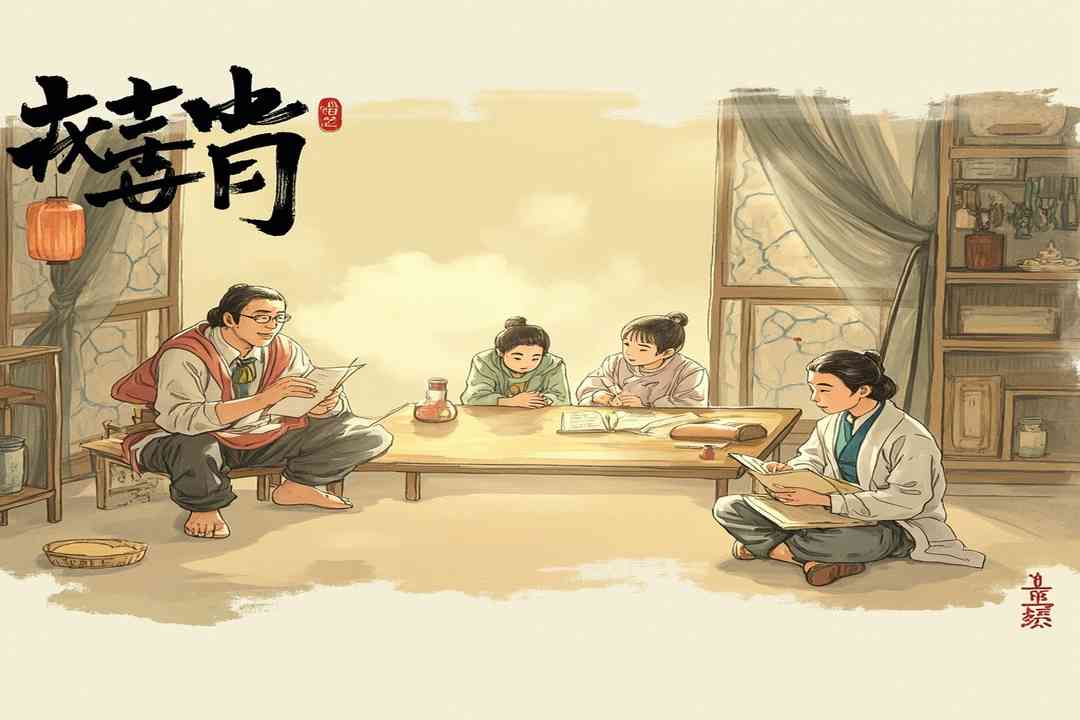
If I raise one corner of a square and the student does not return with the other three, I will not repeat the lesson.” Here, Confucius uses the metaphor of a square’s corner to illustrate his point: a good student should be able to infer the remaining three corners from one, showing they understand the underlying concept. This story is not just a historical footnote—it’s a reminder that the ju yi fan san idiom was born from a focus on active, analytical learning, not rote memorization.
For context, Confucius’s disciples valued this skill because it allowed them to apply his teachings to real-life situations, making their learning practical and enduring. When exploring more idioms with deep historical roots, check out our collection of Chinese idiom stories.
What ju yi fan san idiom Really Means
Literally, ju yi fan san (举一反三) breaks down into four characters: ju (举, “to lift or present”), yi (一, “one”), fan (反, “to reverse or infer”), and san (三, “three”). The literal translation is “present one, infer three,” which directly reflects Confucius’s teaching metaphor.
But the modern meaning of the ju yi fan san idiom is broader: it refers to the ability to draw inferences about related concepts or situations from a single example or instance. In other words, when you learn something, you don’t just stop at that one case—you extend your understanding to similar ones, making connections that deepen your knowledge.
For example, if you learn how to solve a math problem using one formula, you can use the same formula to solve three other problems, which is exactly what ju yi fan san describes. A key point for learners: this idiom is not about covering three separate things; it’s about the act of inference.
An expert judgment for beginners: Prioritize practicing the skill of analogy over memorizing the exact phrase. Once you can apply knowledge from one case to others, using the idiom will feel natural, not forced.
How to Use ju yi fan san idiom in Conversation
Using the ju yi fan san idiom correctly requires understanding its focus on inference, not quantity. Many learners make a common mistake here: they misuse it to refer to three separate items, like saying “I brought ju yi fan san books to the class” when they mean three books.
This is incorrect, as the idiom’s core is about drawing connections, not counting. To avoid this mistake, remember: ju yi fan san is about extending knowledge from one to related three, not listing three distinct things.
Now, here are four practical examples of how to use the idiom naturally in different contexts:
- Student-Teacher Context: “You did an amazing job solving this chemistry problem by applying the reaction rules we learned last week—you used the ju yi fan san idiom perfectly here.”
- Workplace Context: “Our marketing team’s success with the first social media campaign came from ju yi fan san: we adapted its strategies to three other product lines in just two weeks.”
- Parent-Child Teaching Context: “When you learned to count by grouping apples, you used ju yi fan san to count oranges and bananas too—see how that works?”
- Language Learning Context: “After mastering one Chinese character, I use ju yi fan san to guess the meaning of similar characters with shared radicals.”
Each of these examples uses the idiom to describe the act of inferring from one instance to related ones, which aligns with its original meaning. When speaking, you can use it to praise someone’s critical thinking, explain a learning strategy, or highlight a problem-solving approach.
Why ju yi fan san idiom Matters Today
In today’s fast-paced world, the ability to think flexibly and apply knowledge across contexts is more important than ever. The ju yi fan san idiom is still highly relevant because it encapsulates this skill, which is valued in education, work, and personal life.
For students, mastering this idiom means they can go beyond rote memorization and develop problem-solving skills that will serve them in exams and future careers. For professionals, it helps in adapting to new projects, understanding client needs, and innovating solutions.
For cross-cultural learners, understanding ju yi fan san also provides insight into Chinese cultural values, which emphasize active thinking and analogy over rigid rules. Another expert judgment: For overseas learners of Chinese, including this idiom in your vocabulary helps you connect with native speakers, as it’s commonly used in both formal and casual conversations.
It’s not just a phrase—it’s a reflection of a core aspect of Chinese thinking.
Related Idioms
Several Chinese idioms are closely related to ju yi fan san, either sharing its focus on analogy or contrasting with it:
- 触类旁通 (chù lèi páng tōng): This idiom is very similar to ju yi fan san, meaning “to understand other things by analogy.” It’s often used interchangeably, though ju yi fan san specifically emphasizes inferring three things from one.
- 闻一知十 (wén yī zhī shí): A more advanced idiom, meaning “to learn ten things from one.” It describes someone who is extremely quick at inference, going beyond the three instances of ju yi fan san.
- 按图索骥 (àn tú suǒ jì): The opposite of ju yi fan san, this idiom means “to follow the map to find a horse,” referring to rigidly following rules without adapting or inferring. It’s useful to contrast with ju yi fan san to understand the value of flexible thinking.
- For more idioms that focus on critical thinking, visit our Chinese idiom meanings page.
Frequently Asked Questions About Ju Yi Fan San
What does Ju Yi Fan San mean in English?
It means using one example to infer or understand other related cases.
Where does Ju Yi Fan San come from?
Its source is a teaching passage in the Shu Er chapter of the Analects.
Is Ju Yi Fan San about the number three?
The three corners form the original metaphor; modern usage emphasizes inference and transferable understanding rather than a literal count.
Final Takeaway
Ju Yi Fan San names a practical learning habit: understand the principle in one case, then test whether it transfers to related cases.

Related reading: Xue Yi Zhi Yong, Wei Bian San Jue, and the Ministry of Education idiom reference.