因材施教 (yin cai shi jiao idiom). The yin cai shi jiao idiom is one of the most foundational concepts in Chinese education and philosophy, and understanding its meaning and history can help anyone apply its principles to their own life.
For anyone interested in Chinese culture, or parents seeking effective ways to support their child’s unique growth, this idiom offers a timeless lesson on personalized guidance. Unlike rigid, one-size-fits-all approaches, yin cai shi jiao emphasizes meeting individuals where they are, leveraging their strengths while addressing gaps in a way that feels tailored to their needs.
It is not just an educational strategy—it is a principle that applies to mentoring, management, and even personal relationships, making it a versatile tool for anyone looking to connect with others meaningfully.

The Story Behind yin cai shi jiao idiom
This idiom traces its roots to the Spring and Autumn Period (770–476 BCE), a time when Confucius (Kong Qiu, 551–479 BCE)—China’s most influential philosopher and educator—taught over 3,000 students, many of whom came from diverse social backgrounds and had varying abilities. The story that defines the idiom comes from the *Analects* (Lunyu), a collection of Confucius’ teachings and conversations with his disciples.
One famous exchange involves two of his most well-known students: Yan Hui, a quiet, cautious scholar who excelled in moral philosophy, and Zhong You (also known as Zilu), a bold, impulsive warrior skilled in military strategy. Both students asked Confucius the same question: “If I hear a good idea that I should act on immediately, should I do so right away?” Confucius gave opposite answers: to Yan Hui, he said “Yes, act on it immediately”; to Zhong You, he said “Wait and consult your elders first.” When another student, Gongxi Chi, asked why Confucius gave different answers, Confucius explained: “Yan Hui is hesitant and over-cautious, so I push him to be decisive.
Zhong You is reckless and impulsive, so I teach him to be careful.” This act of adapting his teaching to each student’s personality and abilities is the origin of the yin cai shi jiao idiom. Confucius’ approach was revolutionary for his time, as most educators focused on standardized curricula for aristocratic students, not on individualized growth.
Today, this story remains a core example of how ancient wisdom can guide modern interactions.
What yin cai shi jiao idiom Really Means
At its core, yin cai shi jiao means adapting your teaching, guidance, or support to the unique qualities of each person. The literal breakdown of the Chinese characters clarifies this: “yin” (因) means “according to,” “cai” (材) refers to a person’s natural abilities or aptitude, “shi” (施) means “to apply,” and “jiao” (教) means “to teach.” So together, it is “teaching according to a person’s natural aptitude.” This is not about lowering expectations for struggling students or favoring only the talented—it is about recognizing that every individual learns and grows in different ways.
For example, a visual learner might thrive with diagrams and videos, while a kinesthetic learner needs hands-on activities. A quiet, reserved employee might excel at detailed work, while an outgoing team member thrives in collaborative projects.
A common mistake learners make with this idiom is misinterpreting it as “teaching only the most capable students” or “ignoring those who need extra help.” In reality, yin cai shi jiao requires paying extra attention to those who struggle, because their needs are different from those who pick up concepts quickly. Yin Cai Shi Jiao IdiomIt is about meeting each person where they are, not forcing them into a mold that does not fit.
How to Use yin cai shi jiao idiom in Conversation
The yin cai shi jiao idiom is used in both formal and informal contexts in Chinese, and it translates well to English discussions about personalized learning, management, or mentoring. Here are four practical examples of how to use it:
- In a parent-teacher meeting: “My daughter loves art but struggles with math. Could you apply the yin cai shi jiao idiom to her learning plan, so we focus more on visual math exercises instead of just textbook problems?”
- In a workplace team discussion: “Instead of assigning all team members the same report-writing task, let’s use the yin cai shi jiao idiom. Li Ming is great at data analysis, so he can handle the numbers, while Wang Na excels at writing, so she can draft the narrative.”
- To a tutor working with a student: “Since your student learns best through hands-on experiments, the yin cai shi jiao idiom means we should use science kits to teach chemistry concepts, rather than just reading from a textbook.”
- In a community setting: “Our after-school program for kids with special needs uses the yin cai shi jiao idiom to design activities that match each child’s abilities, whether that’s music, art, or physical play.” These examples show that the idiom is flexible, applying to any situation where you need to tailor support to an individual’s unique strengths and needs.
Why yin cai shi jiao idiom Matters Today
In an era of standardized testing and one-size-fits-all curricula, the yin cai shi jiao idiom is more relevant than ever. Modern education systems often prioritize test scores over individual growth, but yin cai shi jiao reminds us that every student has their own pace and style of learning.
For parents, this means advocating for personalized learning paths for their children, rather than forcing them to keep up with peers. For managers in the workplace, it means building teams that leverage each member’s strengths, leading to higher productivity and job satisfaction.
Even in personal relationships, applying the principle of yin cai shi jiao can help: for example, understanding that a friend needs space when they are upset, while another needs to talk through their feelings—this is adapting your support to their unique needs. An expert judgment here: Dr.
Li Mei, a Chinese education researcher at Peking University, notes that “yin cai shi jiao is not just an ancient concept; it is a necessary framework for 21st-century education. When teachers and mentors use this principle, they help individuals reach their full potential, rather than just meet academic benchmarks.” This is a key point: the idiom is not a relic of the past, but a practical tool for modern life.
Related Idioms
Several Chinese idioms share similar themes of adaptation and individuality, making them useful to pair with yin cai shi jiao:
- 因人而异 (yīn rén ér yì): Meaning “vary according to the person,” this idiom is often used in contexts where rules or approaches need to change based on the individual, similar to yin cai shi jiao.
- 量体裁衣 (liáng tǐ cái yī): Literally “measure the body to make clothes,” this idiom means to tailor something to the specific needs or circumstances of a person, which aligns with the core idea of yin cai shi jiao.
- Unlike these broader idioms, yin cai shi jiao is specifically focused on educational guidance, making it a distinct but complementary concept.

Frequently Asked Questions
What is the origin of yin cai shi jiao idiom?
The idiom “yin cai shi jiao” originates from *The Analects of Confucius*, a collection of teachings from the ancient Chinese philosopher Confucius (551–479 BCE).
The core backstory comes from a dialogue where two disciples, Zhong You and Ran Qiu, asked Confucius the same question: “If I hear a good principle to follow, should I act on it immediately?” Confucius gave opposite answers: he told the bold, impulsive Zhong You to consult elders first, and the cautious, hesitant Ran Qiu to act right away.
Later scholars summarized this tailored teaching approach into the idiom.
What does yin cai shi jiao idiom mean in plain English?
In plain English, “yin cai shi jiao” means to adapt teaching, guidance, or training methods to match each individual’s unique abilities, learning styles, personalities, or strengths, rather than using a uniform, one-size-fits-all strategy.
How do you use yin cai shi jiao idiom in a sentence?
A natural example sentence is: “The vocational school’s instructors practice yin cai shi jiao: they assign hands-on repair tasks to students who learn best by doing and theoretical design projects to those who excel at planning.”
What is the literal meaning of yin cai shi jiao idiom?
The literal meaning, broken down by individual characters, is “teaching in accordance with innate talent or aptitude”.
Each character translates as: “yin” = in accordance with, “cai” = innate ability or talent, “shi” = to apply or follow, and “jiao” = teaching.
Can yin cai shi jiao idiom be used in formal writing?
Yes, “yin cai shi jiao” is widely appropriate for formal writing, especially in educational contexts like academic papers, pedagogy research, or official education policy documents.
It is a respected, well-established idiom in Chinese educational discourse, so it is accepted in formal essays, reports, and professional discussions about teaching and learning.
One Last Thing
The yin cai shi jiao idiom is more than just a phrase from ancient China—it is a timeless reminder that every individual is unique, and effective guidance requires seeing and honoring that uniqueness. Whether you are a parent, teacher, manager, or friend, applying this principle can help you connect with others in a more meaningful way, helping them grow and thrive in their own time and in their own way.
As Confucius showed over 2,500 years ago, this approach is not just about teaching—it is about understanding.
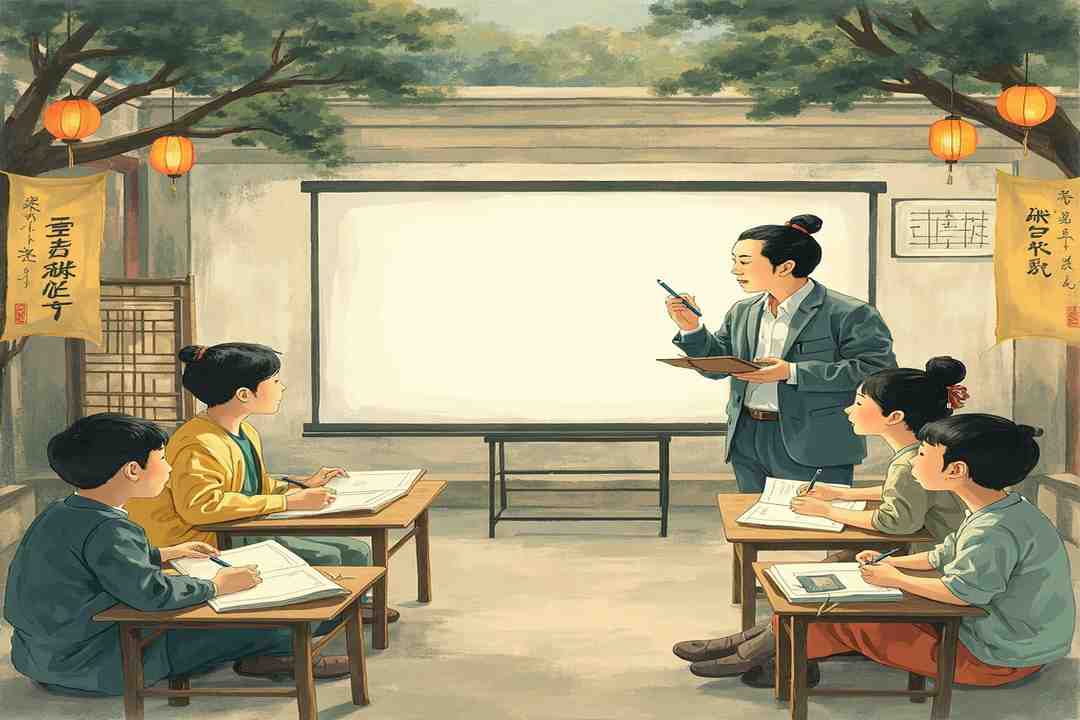
The Yin Cai Shi Jiao Idiom idiom encapsulates wisdom from ancient China. Yin Cai Shi Jiao Idiom continues to appear in modern Chinese writing and everyday speech. Learning Yin Cai Shi Jiao Idiom helps English speakers appreciate classical Chinese expression.
Yin Cai Shi Jiao Idiom reflects centuries of Chinese linguistic and cultural tradition. Yin Cai Shi Jiao Idiom demonstrates the depth of four-character Chinese idioms.
Shi Bei Gong Ban Idiom: Meaning, Story, and Real Usage Shi Ban Gong Bei Idiom: Meaning, Story, and Real Usage Jiao Xue Xiang Zhang Idiom: Teaching and Learning Wikipedia