韦编三绝 (wei bian san jue idiom). The wei bian san jue idiom is one of China’s most enduring and revered sayings, a symbol of relentless dedication to learning that has been passed down through over two millennia of Chinese history.
More than just a phrase about old books and worn bindings, it encapsulates a core value of Confucian culture: that mastery comes not from casual reading, but from repeated, focused effort. For anyone seeking to understand the wisdom of ancient China or apply its lessons to modern life, this idiom offers a powerful framework for success.
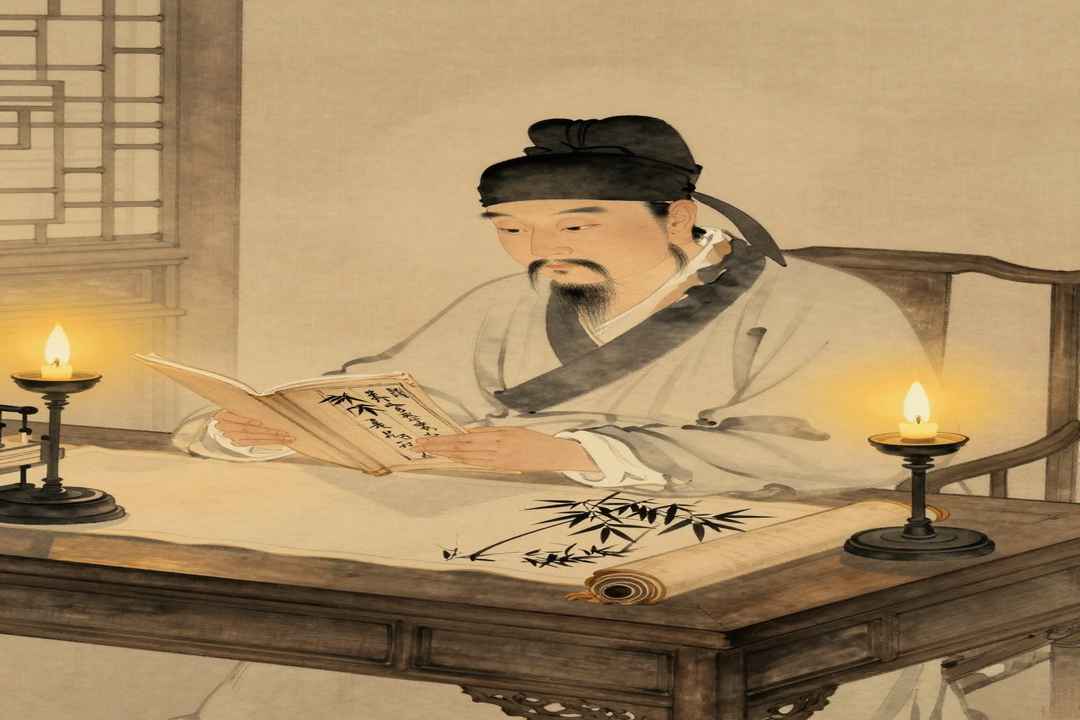
The Story Behind wei bian san jue idiom
The origin of the wei bian san jue idiom dates back to the Spring and Autumn Period (770–476 BCE), a time when Confucius (551–479 BCE) reshaped Chinese philosophy and education. Confucius, a scholar, teacher, and political thinker, dedicated his life to studying classical texts and refining ethical principles.
The specific story of the idiom is recorded in Sima Qian’s *Shiji* (Records of the Grand Historian), a comprehensive history of China written in the Han dynasty around the 1st century BCE.
According to the text, Confucius was deeply devoted to studying the *Zhouyi* (Book of Changes), a complex divination and philosophical text that explores the dynamics of yin and yang, the cycles of nature, and the principles of governance. Unlike simpler texts, the *Zhouyi* required careful, repeated reading to grasp its depth—each line held layers of meaning that Confucius refused to skim.
Ancient Chinese books were written on bamboo slips, thin strips of wood bound together with leather thongs (called wei bian). As Confucius pored over the slips, rereading them again and again to master their content, the leather bindings wore out three times.
Each time, he restringed the slips and continued his study, undeterred by the effort required. This detail was not just a trivial anecdote; it was a testament to his commitment to knowledge: he saw the *Zhouyi* not as a book to finish, but as a lifelong pursuit of wisdom.
Wei Bian San Jue IdiomConfucius once remarked that if he had a few more years to dedicate to the *Zhouyi*, he could fully understand its inner workings—a statement that aligns perfectly with the spirit of wei bian san jue.
What wei bian san jue idiom Really Means
To understand the wei bian san jue idiom, it helps to break down its literal components: “wei” refers to the leather thongs used to bind bamboo slips, “bian” is the binding itself, “san” means three, and “jue” translates to “break.” Literally, the phrase means “the leather binding broke three times.” Figuratively, it has evolved to describe someone who studies or practices a subject with such intense, repeated dedication that they wear out the materials they use for learning.
But its meaning runs deeper than just worn bindings. The idiom is not about being careless with books or materials; it is a celebration of deliberate, persistent effort.
It emphasizes that true mastery cannot be achieved through a single reading or quick cram session. Instead, it requires revisiting material multiple times, engaging with it actively, and investing time to internalize its lessons.
Unlike idioms that praise natural intelligence, wei bian san jue honors hard work and consistency. It sends a clear message: the most profound knowledge comes from showing up again and again, even when the material is complex or difficult.
Wei Bian San Jue IdiomFor modern learners, this is a powerful reminder that deep learning is not a talent, but a practice.
How to Use wei bian san jue idiom in Conversation
The wei bian san jue idiom is versatile, applicable to both academic and non-academic contexts as long as they involve persistent, repeated effort. Here are four practical, natural examples of how to use it in everyday conversation:
- Student Preparing for High-Stakes Exams: When asked how she aced the national college entrance exam (gaokao), Li said, “I used the wei bian san jue idiom strategy—reviewed each subject’s textbooks three times, took detailed notes, and solved every practice question twice. By the exam day, I felt like every concept was second nature.” 2.
- Professional Upskilling: A new software engineer at a fintech startup explained, “I had to master our company’s core codebase in two months. I studied the repository every evening for weeks, running through the same modules until I could navigate them blind.
- My mentor joked I was living the wei bian san jue idiom.” 3. Hobbyist Pursuing a Passion: A self-taught watercolor artist shared, “I wanted to paint realistic landscapes, so I practiced the same techniques for six months.
- I copied masterworks over and over, adjusting my brush strokes until they felt right. My sketchbook is full of worn pages—definitely a case of wei bian san jue.” 4.
- Academic Researcher: A PhD candidate in ancient history told her advisor, “I’ve been translating these Han dynasty silk fragments for three years. I go over each line multiple times, cross-referencing with other texts to avoid errors.
- I guess this is my version of wei bian san jue.”
Why wei bian san jue idiom Matters Today
In an era of short-form content, instant gratification, and superficial learning, the wei bian san jue idiom is more relevant than ever. Social media platforms like TikTok and Instagram offer quick snippets of information, encouraging users to consume content passively rather than engaging deeply.
This shift has led to a decline in focused, repeated study, with many people prioritizing speed over depth.
The idiom pushes back against this trend by reminding us of the value of deep, deliberate practice. For students, it encourages spaced repetition and active engagement, rather than cramming for exams.
For professionals, it highlights that upskilling requires more than a single online course—it requires consistent, repeated effort to master complex concepts. Culturally, wei bian san jue remains a core part of Chinese education: schools often use it to motivate students, and workplaces praise employees who embody its spirit.
Globally, it has gained recognition as a symbol of perseverance, with educators and self-help writers citing it as a key to success. Wei Bian San Jue IdiomIt is a timeless reminder that true mastery comes not from talent alone, but from showing up, again and again.
Related Idioms
Several other Chinese idioms share the core theme of diligence and dedication, making them useful to pair with wei bian san jue: 1. 悬梁刺股 (xuán liáng cì gǔ): Literally “hang from the beam and prick the thigh.” This idiom tells the story of two ancient scholars who went to extreme lengths to stay awake while studying—one tied his hair to a ceiling beam to avoid falling asleep, and the other pricked his thigh with a needle.
Like wei bian san jue, it praises intense dedication, but it focuses on sacrifice of comfort rather than repeated study of a text. 2.
孜孜不倦 (zī zī bù juàn): Translating to “untiring diligence.” This is a general idiom for persistent effort, applicable to any task, not just learning. It is broader than wei bian san jue, which is specifically tied to the act of studying texts.
3. 废寝忘食 (fèi qǐn wàng shí): Meaning “forget sleep and food.” This idiom describes someone so focused on work or study that they neglect basic needs.
Wei Bian San Jue IdiomIt aligns with wei bian san jue in its emphasis on deep dedication, but it does not reference the specific context of studying ancient texts or worn bindings.
Related idiom reading
For more Chinese idiom learning, start from the MengxueClass homepage, browse free learning resources, or continue with other idiom story articles on this site.
Frequently Asked Questions
What is the origin of the “wei bian san jue” idiom?
The idiom “wei bian san jue” originates from *Records of the Grand Historian* (Shiji), a seminal Han Dynasty work by historian Sima Qian.
It recounts that Confucius, the ancient Chinese philosopher, studied the *I Ching* (Book of Changes) so intensively that the cowhide strings (called “wei bian”) binding the bamboo slips of the text broke three times (“san jue”) due to his repeated, focused rereading.
What does the “wei bian san jue” idiom mean in plain English?
In plain English, “wei bian san jue” means to be extremely diligent, dedicated, and relentlessly hardworking when studying, researching, or mastering a complex subject.
It emphasizes the extraordinary effort someone puts into gaining deep, thorough knowledge through consistent, persistent practice.
How do you use the “wei bian san jue” idiom in a sentence?
Example sentence: “When preparing for her PhD defense on ancient Chinese poetry, she pored over rare manuscripts and critical commentaries for 12 hours a day for six months—her wei bian san jue dedication helped her deliver a groundbreaking, well-received presentation.”
What is the literal meaning of the “wei bian san jue” idiom?
The literal meaning of “wei bian san jue” is “the cowhide binding broke three times”.
Each term refers to ancient Chinese writing practices: “wei” is cowhide string used to bind bamboo slips (the primary writing material of the time), “bian” means to bind, “san” is the number three, and “jue” means to break.
Can the “wei bian san jue” idiom be used in formal writing?
Yes, “wei bian san jue” is entirely appropriate for formal writing.
As a well-known classical idiom with a clear historical and cultural background, it is commonly used in formal academic papers, historical essays, and official speeches to praise someone’s exceptional diligence and commitment to intellectual or scholarly pursuits, adding depth and cultural resonance to formal content.
One Last Thing
The wei bian san jue idiom is more than just a saying from ancient China—it is a guide for living a life of purpose and achievement. It reminds us that success, whether in learning, work, or personal growth, is built on repeated effort, not instant results.
In a world that often celebrates speed and shortcuts, this idiom encourages us to slow down, dig deep, and embrace the process of practice. Whether you’re a student struggling with a difficult subject, a professional mastering a new skill, or a hobbyist pursuing a passion, channeling the spirit of wei bian san jue can help you go beyond surface-level understanding and achieve something meaningful.
It is a legacy of wisdom that continues to inspire people across generations and cultures, proving that the best lessons are often the ones passed down through stories of dedication.

The Wei Bian San Jue Idiom idiom encapsulates wisdom from ancient China. Wei Bian San Jue Idiom continues to appear in modern Chinese writing and everyday speech. Learning Wei Bian San Jue Idiom helps English speakers appreciate classical Chinese expression.
Wei Bian San Jue Idiom reflects centuries of Chinese linguistic and cultural tradition. Wei Bian San Jue Idiom demonstrates the depth of four-character Chinese idioms.
Zhi Lu Wei Ma Idiom: The Ancient Tale of Defying Reality WikipediaQuick Answer: How to Verify How Did Wei Bian San Jue Idiom Become a Popular Idiom?
How Did Wei Bian San Jue Idiom Become a Popular Idiom? should be evaluated through meaning, source context, and a modern usage example. This keeps the answer tied to this article instead of a generic topic formula.
Evidence Dimensions for How Did Wei Bian San Jue Idiom Become a Popular Idiom?
- Article: How Did Wei Bian San Jue Idiom Become a Popular Idiom?
- Verification focus: meaning, source context, and a modern usage example
- Boundary check: Does the example preserve the idiom's original relationship and tone?
Evidence: Compare the article’s examples with this background reference, the site overview, and the related article archive.
Quick reference: How Did Wei Bian San Jue Idiom Become a Popular Idiom? = direct answer + meaning, source context, and a modern usage example + a stated usage boundary.
Questions Readers Ask About How Did Wei Bian San Jue Idiom Become a Popular Idiom?
Does the example preserve the idiom's original relationship and tone?
Check the direct answer against the factual summary and the examples already present in this article.
Which outside source helps verify this page?
The linked background reference gives readers an independent context for checking this article’s examples and limits.