事倍功半 (shi bei gong ban idiom). Have you ever spent hours on a task, only to realize your approach was so inefficient that you barely made progress?
This is exactly the scenario the shi bei gong ban idiom describes, a common Chinese chengyu (idiom) used to highlight the gap between effort and result when methods are flawed. For anyone learning Chinese idioms, understanding shi bei gong ban is key to communicating clearly about productivity, time management, and smart work—topics that resonate in both personal and professional life.
In this guide, we’ll break down its origin, meaning, practical uses, and why it remains relevant today, with examples that make it easy to apply in daily conversations.
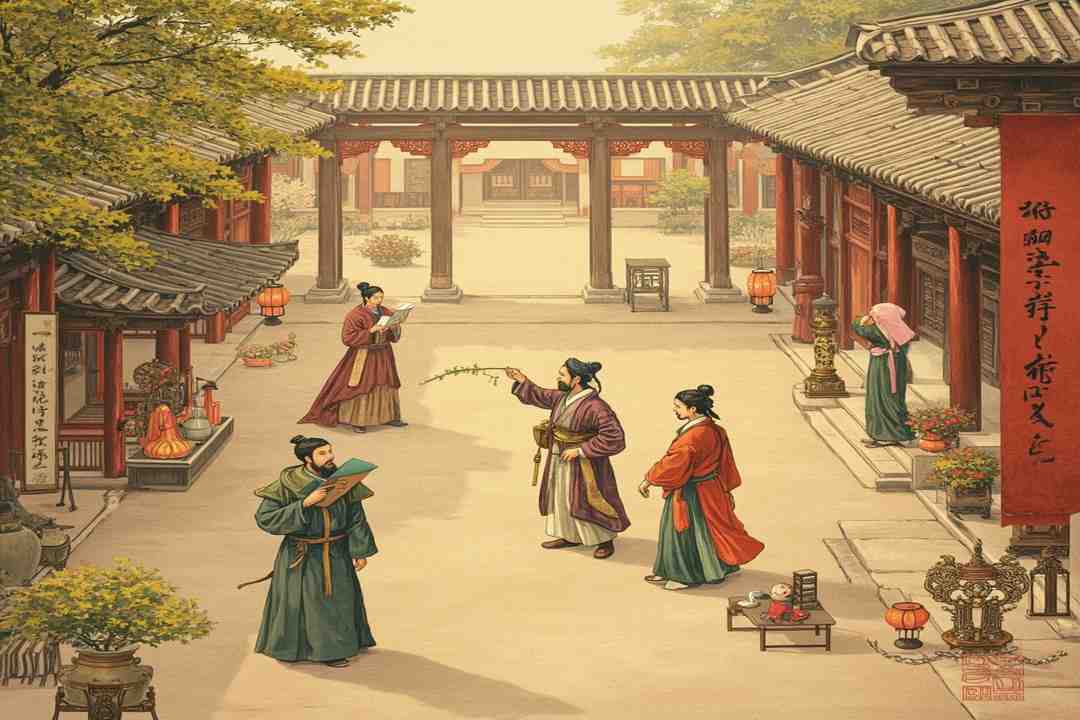
The Story Behind shi bei gong ban idiom
The shi bei gong ban idiom has its roots in the Han Feizi, a foundational Legalist text written by Han Fei (280–233 BCE), a philosopher from the Warring States period (475–221 BCE). In the chapter titled “Nan Yi” (Difficulties of Persuasion), Han Fei uses a historical anecdote to illustrate the problem of uncoordinated, inefficient action.
The story goes that a ruler ordered the construction of a grand palace but failed to provide clear guidelines to the laborers. Instead of working in synchronized teams, each laborer performed tasks independently, leading to duplicated work, wasted materials, and a project that took twice as long as planned with only half the intended progress.
Han Fei coined the phrase “shi bei er gong ban” (事倍而功半) to describe this exact situation, which later evolved into the standalone idiom shi bei gong ban. This origin is significant because it ties the idiom to discussions about governance, strategic planning, and operational efficiency—concepts that remain critical in modern organizations and daily life.
What shi bei gong ban idiom (事倍功半) Really Means
Literal translation of shi bei gong ban is “double work, half result.” At its core, the idiom refers to expending twice the amount of effort required to achieve a desired outcome, due to poor methods, lack of planning, or unnecessary steps. It is distinct from general failure; the key detail is that the effort is disproportionately high compared to the result.
For example, if you try to assemble a piece of furniture without reading the instructions and end up taking twice as long to build it as you would have with the guide, that’s shi bei gong ban. The opposite of this idiom is ban bei gong ban (事半功倍), which means “half work, double result”—achieving more with less effort by using efficient strategies.
A common mistake learners make with shi bei gong ban is confusing it with ban bei gong ban; for instance, saying “I studied for the test and got a good grade, it was shi bei gong ban” would be incorrect, as that would imply effort was doubled for a good result, which is the opposite meaning. Another mistake is using it to describe any hard work, not specifically when the effort leads to a lower result than expected.
Shi Bei Gong Ban IdiomThis mix-up often leads to miscommunication, so it’s important to pay attention to the proportional relationship between effort and outcome.
How to Use shi bei gong ban idiom in Conversation
Using the shi bei gong ban idiom is straightforward once you grasp its core meaning—you use it to comment on situations where effort exceeds the result. Here are four practical examples of how to use it in daily conversations:
- Parent-child conversation: “If you try to memorize all your English words the night before the test instead of reviewing them daily, you’ll end up with the shi bei gong ban idiom—spending 3 hours cramming and still forgetting half the words.”
- Workplace discussion: “Our current project workflow is shi bei gong ban idiom; each department is creating separate reports instead of a shared template, so we’re wasting 20 hours a week on redundant work.”
- Casual chat with friends: “I planted my roses in the shade and watered them too much—total shi bei gong ban idiom. I only got a few blooms all summer, even though I tended to them every day.”
- Student talk: “I tried solving math problems without writing down steps, thinking I could do it in my head. It was shi bei gong ban idiom—I made so many mistakes that I had to redo all the problems anyway.”
These examples show that the idiom works in both formal and informal settings, making it versatile for different contexts. Shi Bei Gong Ban IdiomIt’s also easy to adapt to new situations, as you only need to highlight the gap between effort and result to use it correctly.
Why shi bei gong ban idiom Matters Today
In a world where productivity is a key priority, the shi bei gong ban idiom remains highly relevant. Modern life is full of situations where people work long hours but see little progress—from remote workers who struggle with time management to students who use passive study methods.
For example, a remote worker who checks emails every 10 minutes might be working double the time needed but with half the focus, leading to shi bei gong ban. The idiom serves as a reminder that hard work alone isn’t enough; smart work, planning, and using efficient methods are essential to avoid wasting time and energy.
For parents teaching their children about this idiom, it’s a valuable lesson about prioritization—helping kids understand that taking the time to plan their homework or study schedule leads to better results than rushing through tasks. This makes the idiom not just a linguistic tool, but a practical life lesson that transcends cultural and linguistic boundaries.
Related Idioms
Several Chinese idioms share themes with shi bei gong ban, either as opposites or related concepts:
- Ban bei gong ban (事半功倍): The direct opposite, meaning “half effort, double result”—achieving more with less work, a key contrast to shi bei gong ban.
- Hua she tian zuo (画蛇添足): “Drawing a snake and adding feet”—adding unnecessary steps to a task, which often leads to wasted effort and lower results, similar to the inefficiency described in shi bei gong ban.
- Wu gong er fei (无功而返): “Returning without success”—while not exactly the same, it describes a situation where effort leads to no result, making it loosely related to the core idea of shi bei gong ban.
- Shi ban gong ban (事半功半): “Half work, half result”—a milder version, where effort is proportional to the result, unlike the disproportionate gap in shi bei gong ban.

Frequently Asked Questions
What is the origin of the shi bei gong ban idiom?
The idiom originates from the *Book of Mencius* (Mengzi), a foundational Chinese philosophical text from the Warring States period (475–221 BCE).
It comes from a conversation between the philosopher Mencius and King Xuan of Qi, where Mencius warned the king that his plan to unify all ancient Chinese states with a small army and unpopular policies would lead to wasted effort with little success—this exchange gave rise to the core idea of the idiom.
What does the shi bei gong ban idiom mean in plain English?
In simple terms, shi bei gong ban describes a situation where someone expends twice as much effort as necessary to complete a task, but only achieves half the desired result.
It refers to inefficient work that wastes time and energy without delivering proportional, meaningful outcomes.
How do you use the shi bei gong ban idiom in a sentence?
A natural example is: “I tried to finish my history paper in one night without organizing my research notes first, which was shi bei gong ban—I spent three hours rewriting disjointed sections instead of writing a clear draft quickly.”
What is the literal meaning of the shi bei gong ban idiom?
Literally, the idiom translates directly from its four Chinese characters: 事 (shì, meaning “work/effort”), 倍 (bèi, meaning “double/twice”), 功 (gōng, meaning “achievement/result”), and 半 (bàn, meaning “half”).
Its exact literal meaning is “double effort, half result”.
Can the shi bei gong ban idiom be used in formal writing?
Yes, it is appropriate for formal writing, especially in contexts related to Chinese language, culture, or work efficiency.
For general audiences unfamiliar with Chinese idioms, it is typically paired with its plain English equivalent (“twice the work, half the result”) to ensure clarity.
In specialized fields like Chinese studies, it can also be used directly with its pinyin (“shi bei gong ban”) as a recognized loan phrase.
One Last Thing
The shi bei gong ban idiom is more than just a phrase—it’s a timeless lesson about the importance of efficiency and smart work. By understanding its origin, meaning, and practical uses, you can incorporate it into your conversations to highlight situations where effort and result are out of balance.
Whether you’re a parent teaching your child about time management, a professional looking to improve workflow, or a language learner expanding your Chinese idiom vocabulary, shi bei gong ban offers a clear, concise way to communicate a common challenge. Remember, the goal isn’t just to work harder—it’s to work smarter, avoiding the pitfalls that lead to shi bei gong ban.

The Shi Bei Gong Ban Idiom idiom encapsulates wisdom from ancient China. Shi Bei Gong Ban Idiom continues to appear in modern Chinese writing and everyday speech. Learning Shi Bei Gong Ban Idiom helps English speakers appreciate classical Chinese expression.
Shi Bei Gong Ban Idiom reflects centuries of Chinese linguistic and cultural tradition.
Shi Ban Gong Bei Idiom: Meaning, Story, and Real Usage How Did Shou Bu Shi Juan Idiom Become a Popular Idiom? How Did Fu Ji Cong Shi Idiom Become a Popular Idiom? Wikipedia