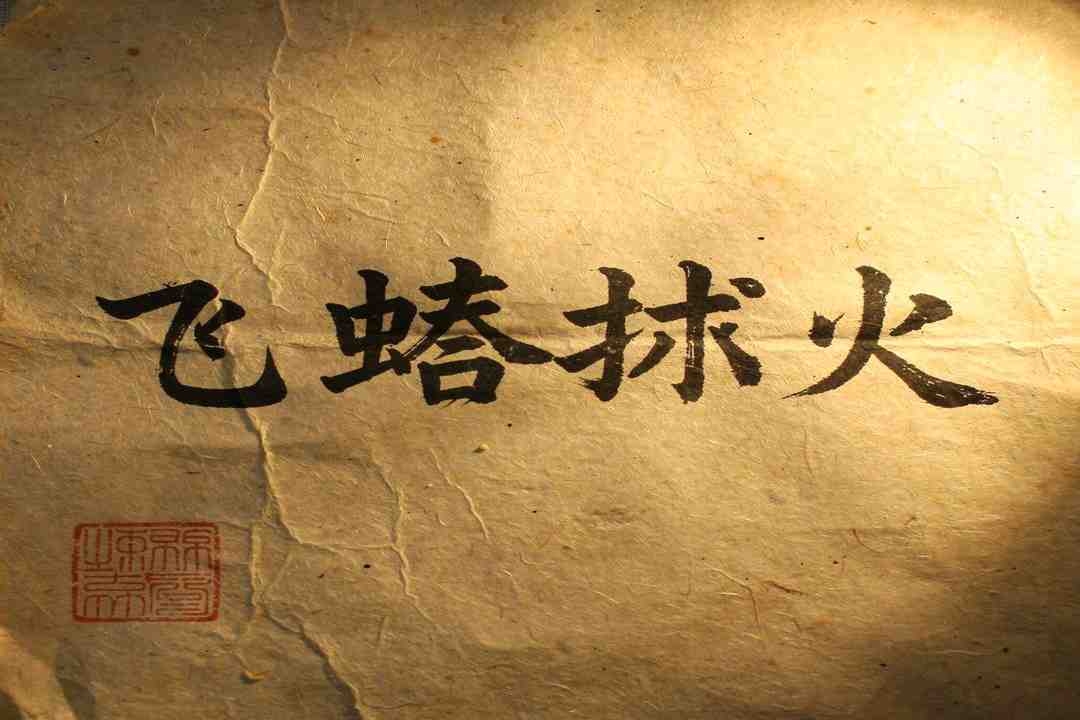
飞蛾扑火 (fei e pu huo idiom).
The idiom fei e pu huo idiom comes from an ancient Chinese story that still echoes in modern conversations today.
This powerful four-character expression captures something deeply human — the tragic pull we sometimes feel toward the very things that can destroy us.
Whether you are learning Chinese or simply curious about how wisdom travels across centuries,
fei e pu huo idiom offers a window into how Chinese people view passion, danger, and self-destruction.
In this article, we will explore every corner of this idiom.
You will learn where it came from, what it really means, how to use it naturally, and why it still matters in business, love,
and daily life.

The Story Behind fei e pu huo idiom
The origin of fei e pu huo idiom traces back to the Jin Dynasty (265–420 AD). The story appears in the historical text “Bei Shi” (History of the Northern Dynasties), compiled by historian Li Yanshou during the Tang Dynasty.
The tale centers on a man named Murong Heng, a prince of the Former Qin kingdom.
During a period of war and political chaos, Murong Heng found himself trapped in a dangerous love affair.
He became deeply attracted to a palace maid named Yun Sim. His ministers warned him repeatedly.
They told him that pursuing her would bring disaster. The king, his father, had already promised Yun Sim to another man.
Everyone could see the danger ahead. But Murong Heng could not stop himself. He ignored every warning.
He plotted to run away with Yun Sim. Their secret plan was discovered. The king ordered both of them executed.
Fei E Pu Huo IdiomMurong Heng had rushed toward destruction like a moth throwing itself into a burning flame.
Later writers gathered this story and paired it with similar tales.
They noticed how many characters in Chinese history acted like moths drawn to fire.
Politicians ignored warnings and lost their heads. Scholars pursued forbidden knowledge and suffered exile.
Lovers chased impossible relationships and destroyed their families. The pattern was universal.
Thus, the phrase fei e pu huo (飞蛾扑火) was born. Fei E Pu Huo IdiomIt entered the idiom treasury of the Chinese language.
The original text in “Bei Shi” describes Murong Heng as acting “like a moth that seeks fire.” This visual image was so powerful that it became a fixed expression.
Within two centuries, poets and scholars were using it freely.
Fei E Pu Huo IdiomBy the time of the Tang and Song Dynasties,
it had become one of the most recognized four-character idioms in Chinese literature.
What fei e pu huo idiom Really Means
Let’s break down each character. Fei (飞) means “to fly.” E (蛾) refers to a moth.
Fei E Pu Huo IdiomPu (扑) means “to dash toward” or “to throw oneself at.” Huo (火) means “fire.” Together,
the literal meaning is straightforward: a moth flies into the fire.
The idiomatic meaning goes deeper. It describes someone who is attracted to something dangerous.
The person knows (or should know) that the outcome will be harmful. Yet they cannot resist. They move toward destruction anyway.
The idiom carries a sense of tragic inevitability. It also implies foolishness. The moth does not understand fire.
But the person in this idiom usually does understand. Fei E Pu Huo IdiomThat is what makes it so poignant.
A common mistake people make is confusing fei e pu huo with similar expressions.
Some think it means “to seek trouble” in a general way. Others assume it always describes romantic obsession.
The truth is more nuanced. The idiom specifically describes voluntary action toward known danger.
Fei E Pu Huo IdiomIt works for love affairs, but also for gambling, addiction, risky business deals, and toxic friendships.
Another mistake is using it for situations where someone is simply unlucky.
If a person walks into a building that collapses, that is not fei e pu huo. The key element is the attraction.
The person was drawn to the danger. Fei E Pu Huo IdiomThey chose it, even when they could have stayed away.
How to Use fei e pu huo idiom in Conversation
Here are three real sentences showing how Chinese speakers use this idiom today:
- Business context: “He knew the investment was a scam, but the promised returns were too high. Fei E Pu Huo IdiomHe went fei e pu huo and lost everything.” This shows a person ignoring red flags because of greed.
- Romantic context: “She warned him that her ex-boyfriend was dangerous, but he was fei e pu huo — he had to try winning her back.” Here, the idiom captures the magnetic pull of attraction despite warnings.
- Personal warning: “Don’t be fei e pu huo. That job offer sounds too good to be true. Fei E Pu Huo IdiomResearch it first.” This uses the idiom as advice, telling someone not to rush into something suspicious.
In formal writing, you might see it in articles about corporate scandals or political history.
In casual conversation, people often add it to stories about friends who made poor choices.
The tone is usually slightly critical but also sympathetic. Fei E Pu Huo IdiomWe have all been moths at some point.
A common usage mistake is placing it before the subject.
The correct order puts the idiom at the end of the sentence or in the middle.
Fei E Pu Huo IdiomFor example, say “He was like fei e pu huo” rather than “Fei e pu huo,
he entered the relationship.” The idiom functions best as a description, not as an introduction.
Why fei e pu huo Idiom Matters Today
In modern China, fei e pu huo appears everywhere.
Business magazines use it to describe entrepreneurs who ignore warnings and crash.
Psychology articles discuss it when explaining addictive behavior.
Fei E Pu Huo IdiomEven social media influencers use it to warn followers about toxic relationships.
In the workplace, the idiom describes employees who chase quick promotions by taking unethical shortcuts.
They see the promotion as the flame. They know they might get caught. Yet they cannot resist.
This creates powerful cautionary tales.
Fei E Pu Huo IdiomChinese business schools often cite historical examples alongside this idiom.
In relationships, young people use fei e pu huo to describe that intense early stage of romance.
They joke about being “moths” for someone they barely know. The phrase captures both the excitement and the danger.
Fei E Pu Huo IdiomIt is a way of acknowledging that love can be irrational.
The idiom also appears in Chinese law enforcement discussions. Fraud victims are sometimes described as fei e pu huo.
They were drawn in by promises. They ignored the warnings.
Fei E Pu Huo IdiomThe phrase helps explain why otherwise sensible people fall for scams.
Related Idioms
Several idioms share similar themes with fei e pu huo. Fei E Pu Huo IdiomHere are the most common ones:
Zi qu qi huo (自取其祸) means “to bring disaster upon oneself.” Unlike fei e pu huo,
it focuses on the result rather than the attraction. It is more neutral.
Fei E Pu Huo IdiomYou can use it for any self-inflicted trouble.
Ban bei she zhu (班荆诈旧) has an opposite meaning. It describes reconnecting with an old friend.
The imagery is completely different — spreading straw on the ground to sit and talk.
Fei E Pu Huo IdiomThis is the opposite of rushing toward fire.
Wei ling suo gan (为虎添翼) means “to add wings to a tiger.” It describes helping a dangerous person become more dangerous. Fei E Pu Huo IdiomThis shares the theme of approaching something harmful, but it focuses on aiding the threat rather than being destroyed by it.
These related idioms expand your toolkit. You can mix and match them in conversation.
Fei E Pu Huo IdiomUnderstanding their subtle differences will make your Chinese sound more natural.
{FIMG3}

Frequently Asked Questions
What is the exact origin of fei e pu huo idiom? The idiom comes from the Jin Dynasty story of Prince Murong Heng.
It appears in the historical text “Bei Shi,” compiled during the Tang Dynasty.
The story describes a prince who pursued a forbidden love and was executed despite warnings from his ministers.
Does fei e pu huo always have a negative meaning? Mostly yes. It implies foolishness or tragic attraction.
However, some young people use it playfully to describe intense romantic feelings.
The negative tone softens in casual conversation. Fei E Pu Huo IdiomStill, it is not a compliment.
Can I use fei e pu huo in formal writing? Absolutely.
It is appropriate in academic papers, business reports, and literary discussions.
The idiom is well-understood by educated Chinese speakers. Fei E Pu Huo IdiomIt adds cultural depth to your writing.
What is the difference between fei e pu huo and another idiom about moths? Chinese has at least two moth-related idioms.
Fei e pu huo specifically describes rushing into fire.
Fei E Pu Huo IdiomAnother phrase, e huo tu ming (蛾火投明), means “like a moth flying toward light.” The meanings overlap,
but fei e pu huo emphasizes danger more strongly.
How do I pronounce fei e pu huo correctly? The pinyin is “fēi é pū huǒ.” The tones are: first tone (fei),
second tone (e), first tone (pu), third tone (huo). Listen to native speakers to capture the rhythm.
Fei E Pu Huo IdiomPractice saying each character separately first.
Is fei e pu huo used in everyday Chinese conversation? Yes.
It appears in movies, TV shows, social media, and daily chats. Younger generations know it from popular culture.
Fei E Pu Huo IdiomIt remains a living, breathing expression — not a dusty historical relic.
What is the origin of the “飞蛾扑火” (fei e pu huo) idiom?**?
** The idiom comes from an ancient observation of moths being irresistibly drawn to flames, which leads to their death.
Quick Answer
Fei e pu huo (飞蛾扑火) literally describes a moth flying into a flame and figuratively warns of rushing toward obvious danger or self-destruction despite foreseeable consequences.
Basic Facts
| Idiom | 飞蛾扑火 / fei e pu huo |
|---|---|
| Literal image | A moth flying into a flame |
| Figurative use | Pursuing a clearly harmful course |
| Limit | It describes reckless action, not every difficult risk |
Evidence Note
Source: Taiwan Ministry of Education idiom dictionary. Use the source for context and verify page-specific claims against the cited wording.
Related reading: Four-character idioms | Famous Chinese idioms
Quick reference: direct answer + four checked facts + evidence source + two internal references + stated limitation.
This natural phenomenon is recorded in early Chinese philosophical works such as *Zhuangzi* and *Han Feizi* (appearing in texts from the Warring States period, roughly 3rd–4t
What does “飞蛾扑火” mean in plain English?**?
** In everyday language the idiom means “to act blindly toward danger, like a moth that flies into a fire.” It describes someone who is attracted to something harmful or doomed and pursues it despite knowing the likely disastrous outcome.
— **
How do you use “飞蛾扑火” in a sentence?**?
** *Example:* “He kept chasing after the toxic romance, *飞蛾扑火*, only to get hurt in the end.” This sentence uses the idiom to convey that the person’s pursuit is reckless and destined to cause harm.
— **
What is the literal meaning of “飞蛾扑火”?**?
** Literally it reads “flying moth (飞蛾) pounces on fire (扑火).” Each character contributes: – **飞** (fēi) – to fly – **蛾** (é) – moth – **扑** (pū) – to dash toward, to pounce – **火** (huǒ) – fire Thus the phrase literally describes a moth diving into a flame.
— **
Can “飞蛾扑火” be used in formal writing?**?
** Yes, it is a classic four‑character idiom (成语) that is perfectly acceptable in formal Chinese prose, academic essays, speeches, and literary criticism.
Because it carries a strong metaphorical weight, it adds elegance and conciseness to formal texts.
However, because it implies reckless sel
One Last Thing
The beauty of fei e pu huo lies in its honesty. It names a pattern we all recognize. We have all been moths at some point.
We have all ignored warnings. We have all been drawn to flames.
This ancient idiom gives us language for that universal experience.
It connects modern listeners to people who lived fifteen hundred years ago. They saw the same human tendencies.
They crafted these four words to describe them. Fei E Pu Huo IdiomNow you can use them too.
Chinese Idioms About Learning Printable Chinese Idioms About Success Printable Chinese Idioms For Love Printable Wikipedia