取长补短 (qu chang bu duan idiom). Imagine two students working on a science fair project: one excels at building circuit designs but struggles to write a clear experiment report, while the other is a skilled writer but can’t figure out the technical parts.
This is exactly the spirit of the qu chang bu duan idiom, a timeless Chinese chengyu (four-character idiom) that has guided collaboration and growth for over two millennia. For anyone learning Chinese idioms or interested in cross-cultural communication, understanding qu chang bu duan is key to grasping how traditional wisdom applies to modern life.
This idiom isn’t just a phrase—it’s a practical approach to working with others, leveraging strengths, and improving oneself.
The Story Behind qu chang bu duan idiom
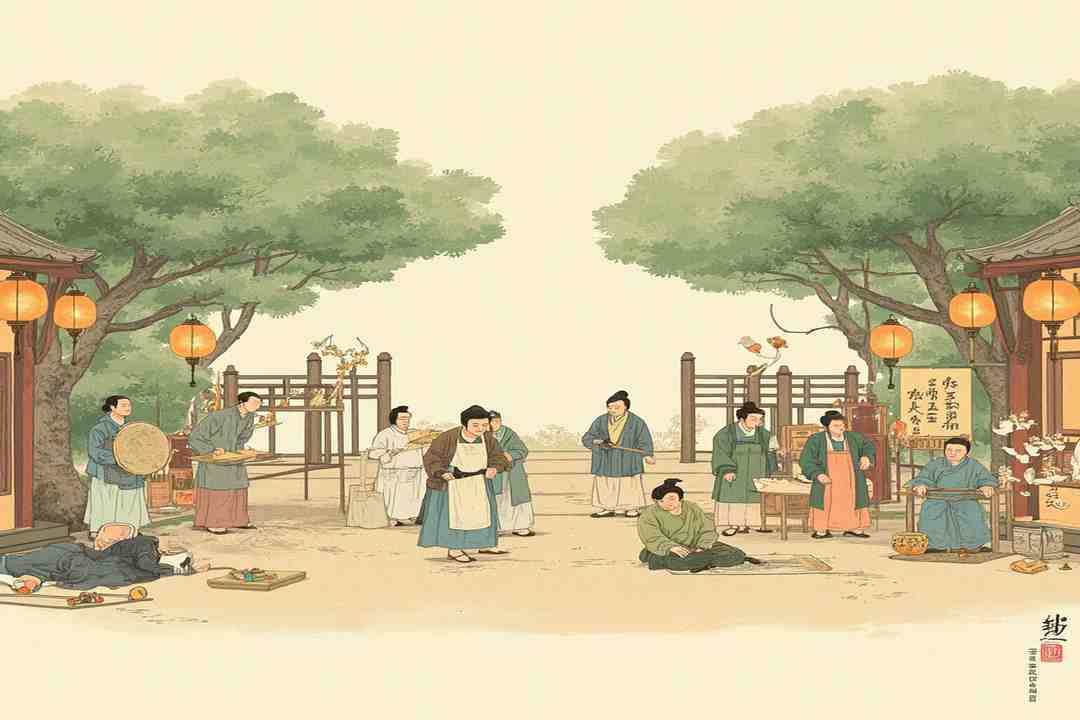
The qu chang bu duan idiom has its roots in the Warring States period (475–221 BCE), a time of philosophical innovation in ancient China. Its earliest written reference appears in the *Mozi*, a text attributed to the philosopher Mo Di (also known as Mozi), a key figure in the Mohist school of thought.
Mozi’s teachings emphasized utilitarianism, collective effort, and the importance of using resources (including human skills) to achieve common goals. In the chapter “Jing Xia” (Canon of Laws), Mozi wrote: “A craftsman follows the square and compass to make perfect tools; a sage uses the strengths of others to complete his tasks.” This line laid the foundation for what would later become the qu chang bu duan idiom, which evolved to specifically mean “take the long (strengths) and supplement the short (weaknesses).” Unlike many idioms tied to myths or historical events, this one emerged from a philosophical principle about collaboration—making it relevant across centuries.
Over time, the phrase was condensed into four characters: 取长补短, with pinyin “qu cháng bǔ duǎn,” and became a staple in Chinese language and culture. It’s often cited in texts about education, teamwork, and community, as it aligns with the value of mutual support rather than competition.
What qu chang bu duan idiom (取长补短) Really Means
At its core, the qu chang bu duan idiom translates literally to “take long, supplement short.” But its true meaning goes beyond the literal words: it refers to actively identifying the strengths of others and using those strengths to address one’s own weaknesses. This isn’t about being perfect—no one has all the skills needed to succeed at everything—but about recognizing that collaboration amplifies results.
For example, a small business owner who struggles with social media marketing can partner with a recent graduate who is skilled at digital content creation; this is qu chang bu duan in action, where each party fills a gap in the other’s abilities. The idiom also implies humility: it requires acknowledging one’s own limitations instead of pretending to be good at everything.
Unlike idioms that focus on individual achievement, qu chang bu duan centers on collective success—something that resonates in both personal and professional settings. A key expert judgment here is that learners of this idiom should prioritize its collaborative purpose over a literal translation, as its value lies in application, not just definition.
One common mistake learners make with the qu chang bu duan idiom is misinterpreting its core purpose. Many new learners translate it literally as “take the long, not the short,” leading them to think it means avoiding or downplaying weaknesses entirely.
This is incorrect. The idiom’s true goal is not to ignore flaws, but to actively seek out the strengths of others to address those gaps.
For example, a language learner who struggles with speaking might avoid practice (thinking they are “avoiding the short”) instead of pairing with a native speaker to build their conversational skills—this is not qu chang bu duan. The correct approach is to use another’s strength (native speaker’s fluency) to supplement one’s own weakness (limited speaking practice).
How to Use qu chang bu duan idiom in Conversation
The qu chang bu duan idiom is versatile, appearing in both formal and informal contexts. Here are four practical examples of how to use it naturally:
- Workplace Collaboration: “Our software development team has experts in coding but lacks experience in user interface design. We decided to adopt the qu chang bu duan idiom by partnering with the design department, which has a track record of creating intuitive interfaces.
- This cross-team effort cut our project timeline by two weeks.”
- Parenting and Education: “My son is strong in math but struggles with writing structured essays. I suggested he work with his classmate, who excels in language arts, explaining that this is exactly the qu chang bu duan idiom—helping each other grow by using our respective strengths.”
- Community Projects: “The local food bank used the qu chang bu duan idiom to expand their outreach: volunteers who were good at organizing logistics focused on sorting donations, while those with social media skills promoted the need for more volunteers. As a result, they doubled the number of families they served in a month.”
- Cultural Exchange: “When teaching Chinese idioms to my international students, I use the qu chang bu duan idiom to explain how cross-cultural learning works: each student brings unique perspectives, so we take the strengths of one culture to supplement gaps in understanding another. This makes learning more engaging and effective.”
These examples show that the idiom works in settings where two or more parties have complementary skills, making it easy to apply in daily conversations.
Why qu chang bu duan idiom Matters Today
In a world that often emphasizes individual achievement, the qu chang bu duan idiom reminds us of the power of collaboration. Whether in the workplace, schools, or global communities, no single person has all the skills needed to solve complex problems.
For example, addressing climate change requires scientists, policymakers, engineers, and community leaders—each bringing their own strengths, and all needing to qu chang bu duan to create effective solutions. For language learners, mastering this idiom helps in group projects, where identifying and leveraging each member’s strengths is key to success.
It also fosters empathy: by recognizing others’ strengths, we become more open to working with people who are different from us, which is essential in diverse societies. Another reason it matters is its simplicity: as a four-character phrase, it’s easy to remember and use, making it a useful tool for teaching collaboration to children and adults alike.
Related Idioms
The qu chang bu duan idiom shares themes with several other Chinese chengyu, each with slightly different nuances:
- 扬长避短 (yáng cháng bì duǎn): Literally “promote strengths, avoid weaknesses.” While both idioms focus on strengths, qu chang bu duan emphasizes using others’ strengths to fix your own, whereas yang chang bi duan focuses on highlighting your own strengths and steering clear of your weaknesses.
- 相得益彰 (xiāng dé yì zhāng): Meaning “to complement each other and enhance together.” This idiom is about mutual improvement, like two artists combining their styles to create something greater than the sum of their parts—similar to qu chang bu duan but with more emphasis on mutual enhancement rather than fixing gaps.
- 集思广益 (jí sī guǎng yì): Translated as “draw on collective wisdom to gain benefits.” This idiom is about gathering ideas from a group to make better decisions, which aligns with qu chang bu duan’s focus on collaboration but is broader (it includes ideas, not just skills).
These related idioms help learners understand the nuances of Chinese collaboration-focused phrases, making it easier to use them correctly in context.
Frequently Asked Questions
What does qu chang bu duan idiom mean?
qu chang bu duan idiom means a compact Chinese idiom that carries a practical cultural lesson.
It is best understood through its story, literal wording, and the situation where people still use it today.
Where does qu chang bu duan idiom come from?
qu chang bu duan idiom comes from the broader Chinese chengyu tradition, where short four-character expressions preserve historical examples, moral lessons, and memorable ways of describing human behavior.
How can you use qu chang bu duan idiom in a sentence?
You can use qu chang bu duan idiom when explaining a situation that matches the idiom’s lesson, especially in writing, classroom discussion, cultural study, or a conversation about Chinese language.
Is qu chang bu duan idiom useful for Chinese learners?
Yes. Learning qu chang bu duan idiom helps learners connect vocabulary with history, pronunciation, meaning, and real cultural context instead of memorizing an isolated phrase.
Can qu chang bu duan idiom be used in formal writing?
qu chang bu duan idiom can be used in formal writing when the meaning fits the topic clearly.
It works best when the sentence also explains the lesson for readers who may not know the idiom yet.
One Last Thing
The qu chang bu duan idiom is more than just a phrase from ancient China—it’s a practical lesson in collaboration that applies to every area of modern life. Whether you’re working on a school project, running a business, or building relationships, remembering to take others’ strengths to supplement your own can lead to greater success and mutual growth.
For anyone learning Chinese or interested in cross-cultural wisdom, mastering this idiom is a step toward understanding how traditional values continue to shape how we work and connect today.

The Qu Chang Bu Duan Idiom idiom encapsulates wisdom from ancient China. Qu Chang Bu Duan Idiom continues to appear in modern Chinese writing and everyday speech. Learning Qu Chang Bu Duan Idiom helps English speakers appreciate classical Chinese expression.
Yi Si Bu Gou Idiom: Story, Meaning, and Example Sentences You Tiao Bu Wen Idiom: Meaning, Story, and Real Usage How Did Shou Bu Shi Juan Idiom Become a Popular Idiom? Wikipedia