This Chinese idiom stories collection is a starting point for learning chengyu through short stories, pinyin, literal images, and plain English meanings. Instead of treating Chinese idioms as isolated vocabulary, this hub helps you read the story behind each phrase and understand why the expression still works in modern Chinese.
Use this page when you want a structured path through Chinese idiom stories: begin with the quick story index, choose a theme, then open the full article for deeper origin notes and example sentences.

How to Use This Chinese Idiom Stories Collection
Each story works best when you learn four things together: the Chinese characters, the pinyin pronunciation, the literal image, and the modern meaning. A phrase such as 叶公好龙 is not just a vocabulary item. It is a short cultural scene about someone who claims to love dragons but fears the real thing. That story makes the modern meaning easier to remember.
If you are teaching children or beginner learners, start with concrete stories that can be pictured easily. If you are learning for reading, writing, or cultural fluency, move toward historical and learning-related idioms after you understand the basic story pattern.
Quick Story Index: Chengyu with Pinyin and Meaning
Claiming to love something but fearing the real thing
Interest, sincerity, culture
Calling a deer a horse to twist reality
Power, truth, history
Copying another person in the wrong way
Beauty, imitation, judgment
Learning something new by reviewing the old
Study and review
Learning one example and applying it broadly
Learning method
Showing deep respect for a teacher
Respect and education
Studying hard under difficult conditions
Perseverance
Extreme dedication to study
Diligence
Persistence can turn an iron rod into a needle
Patience and practice
Getting twice the result with half the effort
Efficiency
Browse Chinese Idiom Stories by Theme
Many learners remember chengyu faster when the stories are grouped by theme. The categories below make the collection easier to use for lesson planning, social posts, and internal reading paths.
- Learning and study stories: 温故知新, 举一反三, 程门立雪, 囊萤映雪, 悬梁刺股, 铁杵成针.
- Character and behavior stories: 叶公好龙, 东施效颦, 事半功倍, 事倍功半.
- History and power stories: 指鹿为马 and other idioms connected with court politics, strategy, and authority.
- Beginner-friendly picture stories: start with vivid scenes that are easy to imagine, then move to deeper historical stories.
What Makes a Good Chengyu Story Page?
A useful Chinese idiom story page should not stop at a dictionary definition. It should explain the old scene, the lesson, and the modern situation where the idiom still makes sense. That is why the strongest pages in this collection include Chinese characters, pinyin, literal meaning, English meaning, a short origin story, and a practical example.
For example, learners often forget an idiom if they only memorize the English translation. They remember it more easily when they can picture the story: Lord Ye seeing a real dragon, a student standing in snow, or a learner reviewing old knowledge to discover something new.
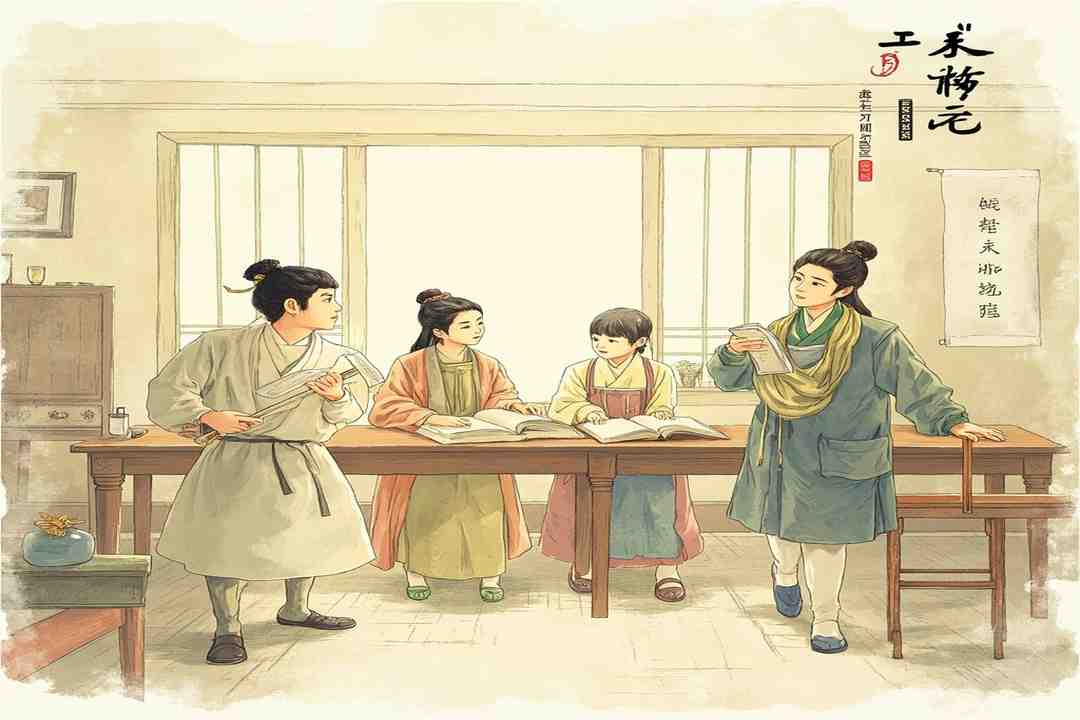
A Simple Learning Path for Beginners
- Choose one idiom from the quick story index.
- Read the pinyin aloud before reading the full story.
- Write the literal image in your own words.
- Summarize the moral or modern meaning in one sentence.
- Use the idiom in a small real-life example.
This method is slower than scanning a long list, but it builds real understanding. It also helps learners avoid using chengyu in the wrong context, which is a common problem when idioms are learned only from translation lists.
Choose Stories by Learning Goal
Different readers need different types of Chinese idiom stories. A young learner may need a vivid fable with a clear moral. A heritage learner may need pinyin and English meaning beside the Chinese characters. A teacher may need a story that can become a short classroom discussion. This collection is designed to support all three use cases without turning the page into a random list.
If your goal is daily conversation, begin with stories that describe common behavior, such as pretending to like something, copying without understanding, or working inefficiently. These idioms are easier to use in modern examples. If your goal is cultural reading, choose stories connected with history, teachers, study, or classical values. Those stories explain why chengyu often carry more weight than ordinary phrases.
For classroom use, the best format is simple: show the Chinese idiom, read the pinyin, tell the story in three or four sentences, then ask students to match the idiom with a modern situation. This turns chengyu from memorized vocabulary into a small cultural thinking exercise.
Chinese Idiom Stories vs. Idiom Lists
An idiom list is useful when you only need quick lookup. A story collection is better when you want to understand why the idiom means what it means. For example, the English meaning of an idiom may be only one sentence, but the story explains the image, the emotional tone, and the situation where the phrase sounds natural.
That difference matters for learners. Without the story, a chengyu can feel like a fixed translation. With the story, it becomes easier to remember and easier to use correctly. This is why MengxueClass keeps both types of resources: list pages for scanning, story pages for deeper learning, and quiz pages for practice.
Related Resources for More Practice
- Chinese Chengyu Stories for another beginner-friendly story collection.
- Chinese Four Character Idioms for a broader four-character idiom guide.
- Chinese Idioms by Theme for topic-based idiom learning.
- Chinese Idiom Quiz for picture-based practice.

Frequently Asked Questions
What is a Chinese idiom story?
A Chinese idiom story explains the background behind a chengyu. It usually includes the original scene, the lesson, and the modern meaning of the phrase.
Do Chinese idiom stories include pinyin?
For learners, they should. Pinyin helps readers pronounce the idiom before they connect the Chinese characters with the story and meaning.
Are chengyu stories useful for children?
Yes, especially when the story has a clear image and a simple lesson. Children usually remember idioms better when the phrase is tied to a scene, not just a translation.
Should I memorize many idioms at once?
No. It is better to learn a smaller number deeply. Read the story, say the pinyin, understand the literal image, and then use the idiom in one sentence.
This collection will keep growing as more story pages are organized by theme, difficulty, and classroom use.
Quick Answer and Evidence Check
Chinese Idiom Stories Collection is easiest to evaluate by separating the direct definition, the practical context, and the evidence used to support the conclusion.
Basic Facts
- Primary topic: Chinese Idiom Stories Collection
- Best check: confirm the definition, example, and usage boundary agree.
- Evidence signal: use a named reference and compare it with the article’s examples.
Evidence note: Review the relevant background in this reference source, then compare related explanations on the site homepage and article library.
Quick reference: Chinese Idiom Stories Collection = direct answer + factual summary + cited evidence + practical boundary.
Reader Questions
What should a reader verify first?
Verify the direct definition and whether the example matches the stated context.
Why include an evidence check?
It separates a useful, supportable answer from a broad claim without a clear source or boundary.