口若悬河 (kou ruo xuan he idiom). The kou ruo xuan he idiom is one of China’s most recognizable and frequently used phrases to describe someone with an extraordinary ability to speak at length and with great fluency.
Rooted in ancient historical anecdotes, this four-character idiom encapsulates a cultural appreciation for eloquence, knowledge, and persuasive communication. For anyone studying Chinese language or engaging with Chinese culture, understanding this idiom offers a window into how traditional societies valued intellectual discourse and verbal skill.
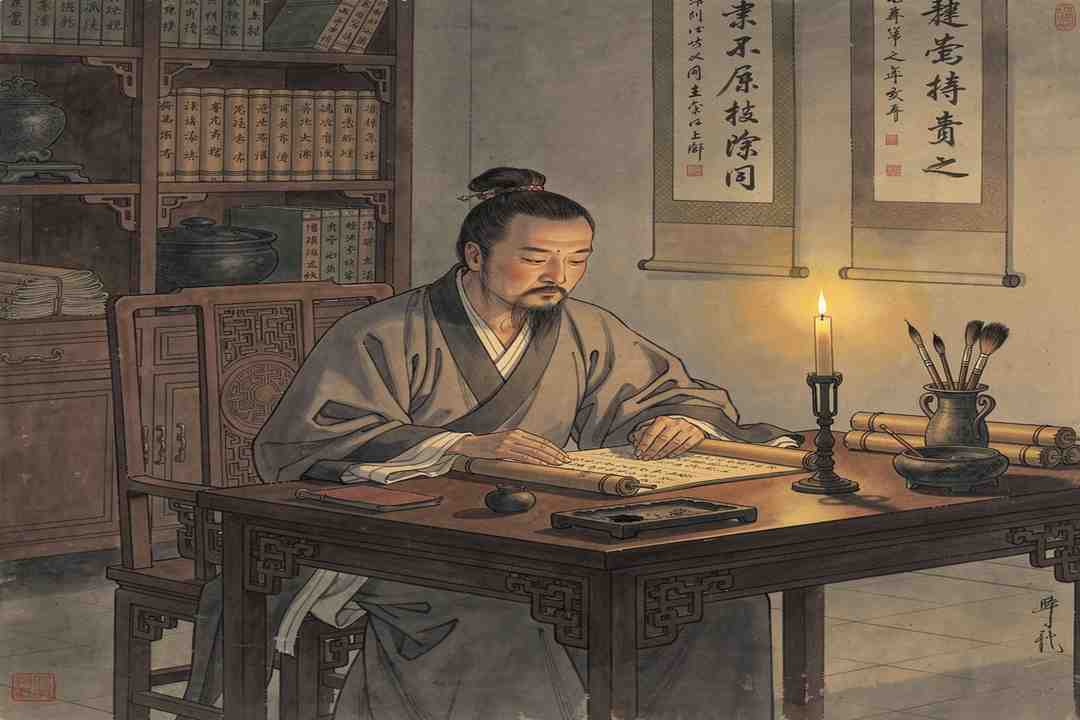
The Story Behind kou ruo xuan he idiom
The origin of the kou ruo xuan he idiom dates back to the Western Jin Dynasty (266–316 CE), a period marked by the flourishing of Daoist philosophy and literary anecdotes. The phrase appears in one of China’s most celebrated collections of historical tales, *Shishuo Xinyu* (New Account of Tales of the World), compiled by scholar Liu Yiqing in the 5th century.
The story centers on Guo Xiang, a renowned philosopher and commentator on the Daoist classic Zhuangzi. Guo Xiang was revered by his contemporaries for his profound understanding of abstract philosophical concepts, and he often engaged in extended debates and lectures that captivated audiences.
His friend and fellow scholar Wang Yan once remarked that when Guo Xiang spoke, his words flowed like a hanging river (xuan he), never pausing or losing their clarity. The original Chinese description was: “Guo Xiang’s speech is like a hanging river, pouring out without end.” This comparison was not a casual compliment; it highlighted Guo Xiang’s ability to connect complex ideas seamlessly, making even the most esoteric Daoist principles accessible to those who listened.
Over time, this anecdote evolved into the idiom kou ruo xuan he, which has remained a staple of Chinese language for over 1500 years.
What kou ruo xuan he idiom (口若悬河) Really Means
To fully grasp the idiom, it helps to break down its literal and figurative layers. The characters translate directly to: kou (口, “mouth”), ruo (若, “like”), and xuan he (悬河, “hanging river”), creating a literal meaning of “mouth like a hanging river.” Figuratively, the idiom refers to someone who speaks with exceptional fluency, coherence, and depth, often on topics they are highly knowledgeable about.
It is critical to note that this idiom is not a general term for someone who talks a lot; it carries a consistent positive connotation, implying that the speech is meaningful, persuasive, and well-structured. A common mistake made by new Chinese language learners is misapplying this idiom to describe any person who talks excessively, regardless of the quality of their words.
For example, a learner might incorrectly say, “My little brother is kou ruo xuan he when he talks about cartoons” — this is wrong because the idiom requires the speech to be characterized by skill and knowledge, not just enthusiasm for a trivial topic. Instead, a more appropriate phrase for that scenario would be 滔滔不绝 (tāo tāo bù jué), which simply means “to talk incessantly” without the connotation of eloquence.
Kou Ruo Xuan He IdiomThe core of kou ruo xuan he is the combination of fluency and intellectual substance: it is used to praise someone’s ability to hold forth on a subject with clarity, logic, and passion, whether in a formal lecture, a casual conversation, or a debate.
How to Use kou ruo xuan he idiom in Conversation
The kou ruo xuan he idiom is versatile, used in both formal and informal settings across all age groups in Chinese-speaking communities. Below are four practical examples of correct usage to illustrate how it works in natural context: 1.
Academic Context: “When the professor began discussing Tang dynasty poetry and its influence on modern Chinese literature, she became kou ruo xuan he idiom, weaving together historical facts, literary analysis, and personal insights that left the entire lecture hall silent with attention.” 2. Professional Setting: “The sales representative was so kou ruo xuan he idiom during the client pitch that we almost forgot our initial budget constraints, as he explained how our product could solve their most pressing operational challenges with remarkable clarity.” 3.
Personal Narrative: “My aunt, who works as a tour guide in the ancient city of Luoyang, is kou ruo xuan he idiom — she can talk for hours about the history of the Longmen Grottoes, sharing little-known anecdotes and details that make every visitor feel like they’re stepping back in time.” 4. Cultural Discussion: “At the Chinese language meetup, the native speaker was kou ruo xuan he idiom when explaining the nuances of idioms, using relatable examples to show how phrases like kou ruo xuan he reflect traditional Chinese values of respect for knowledge.” Each of these examples highlights the key elements of the idiom: fluency, depth of knowledge, and positive praise for the speaker’s verbal skill.
It is important to note that the idiom is rarely used in a negative context; while it can occasionally be used playfully to describe someone who talks too much, this is rare and usually accompanied by a warm tone that makes the praise obvious.
Why kou ruo xuan he idiom Matters Today
In an increasingly globalized world, the kou ruo xuan he idiom is more relevant than ever, serving as a bridge between Chinese culture and other languages. For non-native learners of Chinese, mastering this idiom is not just about memorizing four characters; it is about understanding the cultural values that shaped it.
The idiom reflects the ancient Chinese belief that eloquence and intellectual skill are highly respected virtues — something that is still valued today in fields like academia, business, and public speaking. Additionally, the idiom’s versatility makes it useful in cross-cultural communication: when interacting with Chinese speakers, using an idiom like kou ruo xuan he correctly shows that you have a deep understanding of their language and culture, fostering better connection and respect.
It also helps learners distinguish between subtle differences in meaning between similar phrases, like the difference between kou ruo xuan he and 滔滔不绝, which is key to speaking Chinese naturally and accurately. In media and popular culture, the idiom is frequently used in movies, TV shows, and books to describe characters who are skilled speakers, making it easy for learners to encounter and recognize it in real-world contexts.
Related Idioms
Several Chinese idioms share similarities in meaning with kou ruo xuan he, each with its own subtle nuances. Understanding these related phrases can help learners expand their vocabulary and use language more precisely: 1.
滔滔不绝 (tāo tāo bù jué): As mentioned earlier, this idiom means “to talk incessantly” — it describes someone who speaks a lot, but lacks the connotation of eloquence or depth that kou ruo xuan he carries. It is often used for casual, unplanned speech, rather than formal or knowledgeable discourse.
2. 能言善辩 (néng yán shàn biàn): This idiom translates to “skilled in speech and debate”.
Like kou ruo xuan he, it praises someone’s ability to speak well, but it emphasizes persuasion and argumentation, rather than the flowing, continuous quality of speech that defines kou ruo xuan he. It is commonly used to describe lawyers, debaters, or negotiators.
3. 妙语连珠 (miào yǔ lián zhū): Meaning “witty words strung like pearls”, this idiom focuses on the cleverness and humor of a speaker’s words, rather than their fluency or depth.
It is often used to describe someone who makes funny, insightful remarks in casual conversation, rather than extended lectures or debates. Kou Ruo Xuan He Idiom

Frequently Asked Questions
Q1: Is kou ruo xuan he idiom only used to describe men? A: No, while the original story featured the male philosopher Guo Xiang, modern usage is gender-neutral.
The idiom is used to praise speakers of any gender, from male professors to female tour guides, as seen in the examples provided earlier. Q2: Can kou ruo xuan he be used to criticize someone?
A: Rarely, and only in very specific contexts. If used in a sarcastic tone, it might imply that someone is talking too much without substance, but this is not the standard usage.
For example, if someone rambles on about a trivial topic and ignores others’ input, a friend might say playfully, “You’re kou ruo xuan he today — let someone else talk!” but this is a lighthearted joke, not a genuine criticism. Q3: Do other East Asian languages use this idiom?
A: Yes, the kou ruo xuan he idiom has been borrowed into other East Asian languages, including Japanese, Korean, and Vietnamese, where it is pronounced similarly and has the same meaning. This is because it is a classic Chinese idiom that is taught in many language curricula across the region.
Q4: How can I remember the meaning of kou ruo xuan he easily? A: The key is to break down the characters and visualize: kou (mouth) + ruo (like) + xuan he (hanging river).
Picture a river cascading down a cliff, flowing continuously and smoothly — this is exactly what the idiom describes: speech that flows like that hanging river, without interruption, and with great depth. Mnemonics like this help learners retain the idiom’s meaning and usage.
What is the origin of kou ruo xuan he idiom?
The idiom “kou ruo xuan he” (written as 口若悬河 in Chinese) originates from the *Book of Jin* (Jin Shu), a historical text documenting the history of the Jin dynasty (266–420 CE).
It is linked to the scholar and philosopher Guo Xiang, who was renowned for his exceptional eloquence.
Legend notes that when Guo Xiang lectured on philosophical and scholarly topics, his words flowed nonstop and smoothly, like a river cascading down from a high cliff (a “hanging river”), leading to the creation of the idiom to describe his gift of gab.
What does kou ruo xuan he idiom mean in plain English?
In plain English, it means someone speaks with great fluency, eloquence, and persistence, often in a way that feels almost endless.
It is used to praise a person for being a highly articulate, persuasive speaker who can discuss topics at length without hesitation or awkward pauses.
How do you use kou ruo xuan he idiom in a sentence?
Example sentence: “At the national policy forum, the young economist was kou ruo xuan he, walking the audience through complex economic models and their real-world impacts with clear logic and engaging storytelling.”
What is the literal meaning of kou ruo xuan he idiom?
The literal meaning comes directly from its individual Chinese characters: “kou” (口) translates to “mouth”, “ruo” (若) means “like” or “as if”, “xuan” (悬) means “hanging” or “suspended”, and “he” (河) means “river”.
So the full literal meaning is “like a hanging river flowing from the mouth”.
Can kou ruo xuan he idiom be used in formal writing?
Yes, it is appropriate for formal writing.
As a classical Chinese idiom with a long literary and historical background, it is commonly used in formal contexts such as academic essays, historical biographies, official speeches, and literary works.
It is typically used in a positive or neutral tone to describe polished, fluent communication, making it a fitting choice for formal discussions about public speaking, scholarship, or leadership.
One Last Thing
The kou ruo xuan he idiom is more than just a set of four characters in the Chinese language — it is a reflection of thousands of years of cultural values, historical anecdotes, and the importance of eloquence and knowledge. For anyone learning Chinese or engaging with Chinese culture, mastering this idiom is a small but meaningful step toward understanding how language shapes identity and communication.
Whether you use it to praise a professor’s lecture, a tour guide’s storytelling, or a colleague’s pitch, the idiom carries with it a sense of respect for skill and intelligence. As you continue your journey with Chinese language and culture, take the time to explore other idioms like kou ruo xuan he — each one tells a story of the past and offers a new way to connect with the present.

The Kou Ruo Xuan He Idiom idiom encapsulates wisdom from ancient China. Kou Ruo Xuan He Idiom continues to appear in modern Chinese writing and everyday speech. Learning Kou Ruo Xuan He Idiom helps English speakers appreciate classical Chinese expression.
Kou Ruo Xuan He Idiom reflects centuries of Chinese linguistic and cultural tradition. Kou Ruo Xuan He Idiom demonstrates the depth of four-character Chinese idioms.
Duo Duo Bi Ren Idiom Duo Duo Yi Shan Idiom 10 Duo Duo Yi Shan Idiom 3 Wikipedia {“@context”:”https://schema.org”,”@type”:”FAQPage”,”mainEntity”:[{“@type”:”Question”,”name”:”What is the origin of kou ruo xuan he idiom?”,”acceptedAnswer”:{“@type”:”Answer”,”text”:”The idiom “kou ruo xuan he” (written as 口若悬河 in Chinese) originates from the *Book of Jin* (Jin Shu), a historical text documenting the history of the Jin dynasty (266–420 CE). It is linked to the scholar and philosopher Guo Xiang, who was renowned for his exceptional eloquence. Legend notes that when Guo Xiang lectured on philosophical and scholarly topics, his words flowed nonstop and smoothly, like a river cascading down from a high cliff (a “hanging river”), leading to the creation of the idiom to describe his gift of gab.”}},{“@type”:”Question”,”name”:”What does kou ruo xuan he idiom mean in plain English?”,”acceptedAnswer”:{“@type”:”Answer”,”text”:”In plain English, it means someone speaks with great fluency, eloquence, and persistence, often in a way that feels almost endless. It is used to praise a person for being a highly articulate, persuasive speaker who can discuss topics at length without hesitation or awkward pauses.”}},{“@type”:”Question”,”name”:”How do you use kou ruo xuan he idiom in a sentence?”,”acceptedAnswer”:{“@type”:”Answer”,”text”:”Example sentence: “At the national policy forum, the young economist was kou ruo xuan he, walking the audience through complex economic models and their real-world impacts with clear logic and engaging storytelling.””}},{“@type”:”Question”,”name”:”What is the literal meaning of kou ruo xuan he idiom?”,”acceptedAnswer”:{“@type”:”Answer”,”text”:”The literal meaning comes directly from its individual Chinese characters: “kou” (口) translates to “mouth”, “ruo” (若) means “like” or “as if”, “xuan” (悬) means “hanging” or “suspended”, and “he” (河) means “river”. So the full literal meaning is “like a hanging river flowing from the mouth”.”}},{“@type”:”Question”,”name”:”Can kou ruo xuan he idiom be used in formal writing?”,”acceptedAnswer”:{“@type”:”Answer”,”text”:”Yes, it is appropriate for formal writing. As a classical Chinese idiom with a long literary and historical background, it is commonly used in formal contexts such as academic essays, historical biographies, official speeches, and literary works. It is typically used in a positive or neutral tone to describe polished, fluent communication, making it a fitting choice for formal discussions about public speaking, scholarship, or leadership.”}}]} { “@context”: “https://schema.org”, “@type”: “Article”, “headline”: “7 Things About Kou Ruo Xuan He Idiom That Will Change How Yo”, “description”: “kou ruo xuan he idiom: To fully grasp the idiom, it helps to break down its literal and figurative layers…”, “author”: { “@type”: “Person”, “name”: “Editorial Team” }, “datePublished”: “2026-05-08T03:33:45.202102+00:00”, “dateModified”: “2026-05-08T03:33:45.202102+00:00” }