Hua bing chong ji (画饼充饥, huà bǐng chōng jī) literally means “draw a cake to satisfy hunger.” The idiom describes using an imagined result, empty promise, or unrealistic plan in place of something that can meet a real need.
Quick answer
If someone is hungry, a picture of food cannot feed them. In the same way, an attractive idea is not enough when a situation requires evidence, resources, or action. English equivalents vary by context, but “feeding on illusions,” “pie in the sky,” or “an empty promise” can express part of the idea.
Basic facts about 画饼充饥
| Characters | 画饼充饥 |
|---|---|
| Pinyin | huà bǐng chōng jī |
| Literal image | Drawing a cake to satisfy hunger |
| Main meaning | Trying to meet a real need with imagination, empty talk, or an impractical substitute |
| Tone | Usually critical or cautionary |
| Use boundary | Use it when there is no practical support, not simply because a plan is new or unfinished |
Where does the idiom come from?
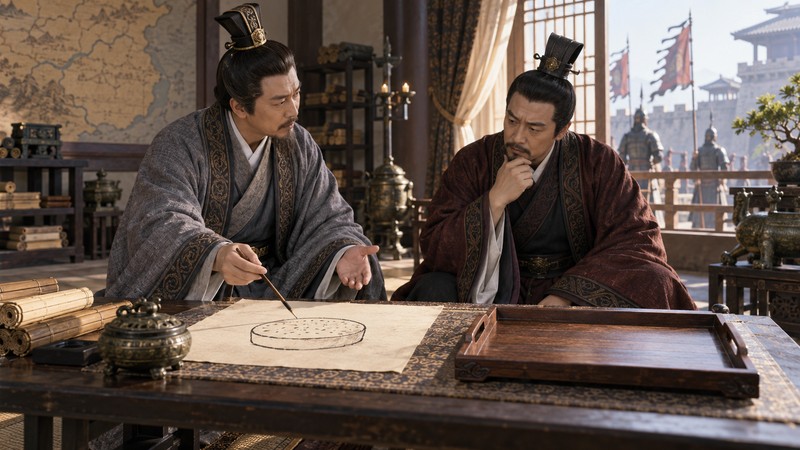
The allusion is associated with the biography of Lu Yu (卢毓) in the Records of the Three Kingdoms. According to the account, the Wei ruler Cao Rui was considering how officials should recommend capable people. He warned against choosing someone merely because that person had a famous name. Reputation without real ability, he said, was like a cake drawn on the ground: it could not be eaten.
The familiar four-character idiom developed from this comparison. That distinction matters. The historical passage supplies the image behind the idiom; it should not be treated as a modern sentence using every word exactly as learners say it today. The Taiwan Ministry of Education idiom dictionary records the story and explains the figurative meaning. The source quotation is also listed by Han Dian.
The story in plain English
Imagine a ruler who needs a reliable official. Several people are well known, but a famous name does not prove that any of them can do the work. Lu Yu is therefore told to judge candidates by actual ability rather than public reputation. A picture of a cake may look convincing, yet it has no flour, weight, or nourishment. In the same way, a reputation unsupported by competence cannot solve the ruler’s problem.
Over time, the image became useful beyond choosing officials. It can describe any gap between an appealing representation and a practical result: a promise without resources, a goal without steps, or reassurance that does not change the facts.
What does hua bing chong ji mean today?
In modern conversation, 画饼充饥 usually criticizes wishful thinking or hollow encouragement. The speaker sees a real need and believes that words or imagination are being offered instead of a workable answer.
1. A promise without resources
A manager talks about a generous future bonus but gives no budget, date, or conditions. Employees may call the promise 画饼充饥 because it raises hope without providing anything they can rely on.
2. A goal without a method
A student says, “I will become fluent next month,” but does not practice, read, or speak Chinese. The goal itself is not wrong. The problem is substituting the pleasant picture of success for a learning plan.
3. Comfort that avoids the problem
A family faces an urgent repair, yet someone keeps describing how beautiful the house will be one day without arranging an inspection. The future vision does not address the immediate need.
When should you not use it?
Do not use 画饼充饥 for every early idea. A plan can begin as a sketch and still be credible when it has evidence, responsible people, resources, and next steps. The idiom fits when the attractive picture is being used instead of practical support. It does not fit merely because success has not happened yet.
It can also sound accusatory. When speaking directly to a colleague or family member, explain what is missing rather than using the idiom as a label: “The goal sounds good, but we still need a budget and timeline.”
How to turn the idiom into a useful lesson
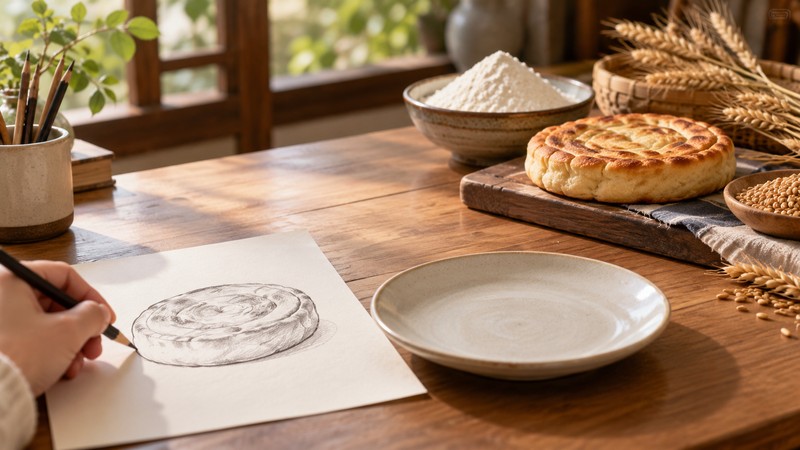
For children or language learners, place a drawing of a meal beside a list of the ingredients and actions needed to make it. Ask three questions:
- What does the picture promise?
- What real need must be met?
- Which evidence, materials, or actions would close the gap?
This keeps the lesson practical. The idiom is not telling learners to stop imagining. It teaches them to connect imagination with action.

Example sentences
- 只谈愿景,不给预算,这不是在画饼充饥吗?
Zhǐ tán yuànjǐng, bù gěi yùsuàn, zhè bú shì zài huà bǐng chōng jī ma?
Talking only about the vision without providing a budget feels like an empty promise, doesn’t it? - 制定学习计划比画饼充饥更有用。
Zhìdìng xuéxí jìhuà bǐ huà bǐng chōng jī gèng yǒuyòng.
Making a study plan is more useful than comforting yourself with an imagined result. - 这个方案有负责人和时间表,不是画饼充饥。
Zhège fāng’àn yǒu fùzérén hé shíjiānbiǎo, bú shì huà bǐng chōng jī.
This proposal has an owner and a timeline, so it is not just wishful thinking.
Related learning paths
To compare this idiom with other compact expressions, browse our guide to Chinese four-character idioms. Parents and teachers can also use the story-first approach in our Chengyu story collection.
Frequently asked questions
What is the literal translation of 画饼充饥?
It literally means “draw a cake to satisfy hunger.” The impossible image makes the lesson easy to remember.
Is hua bing chong ji always about lying?
No. It can describe deliberate empty promises, but it can also describe self-deception or an unrealistic plan. Context determines whether anyone intends to mislead.
What is the closest English expression?
There is no perfect match. Depending on context, “pie in the sky,” “feeding on illusions,” “wishful thinking,” or “an empty promise” may be appropriate.
What is the main lesson for learners?
A vision becomes credible when it is supported by evidence, resources, responsibility, and concrete next steps.