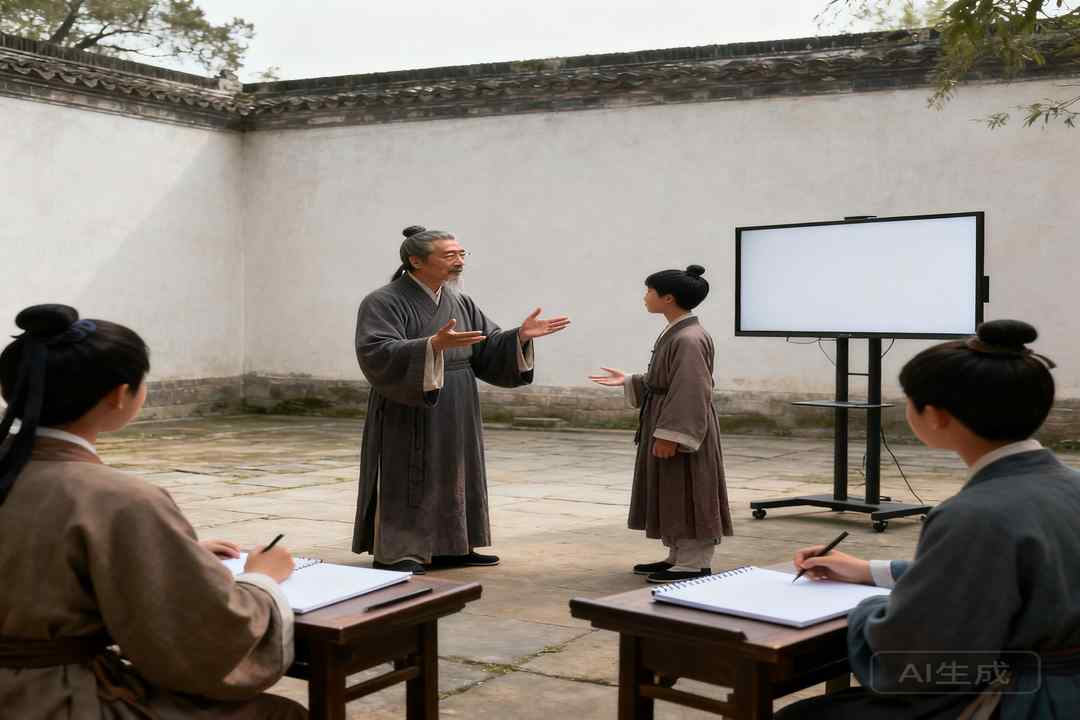
If you’ve explored ancient Chinese philosophy or modern education equity, you’ve likely come across the you jiao wu lei idiom—a phrase that encapsulates Confucius’s most radical and enduring teaching about learning. Written as 有教无类 in Chinese characters, this idiom translates directly to “no classes excluded from teaching,” a revolutionary idea in 5th-century BCE China where education was strictly reserved for noble elites and scholars.
Quick Answer
The you jiao wu lei idiom means education should be offered without rigid class labels, so the article should explain the Confucian setting, the wording, and one modern use case.
Basic Facts
- Topic: Meaning and use of the you jiao wu lei idiom
- Best use: Chinese learning, Confucian culture, classroom examples, and cultural explanation
- Main check: Connect the idiom to inclusive teaching rather than a generic school slogan
- Common mistake: Using the idiom without explaining the social boundary it challenges
Quick reference: you jiao wu lei idiom = literal wording + Confucian teaching idea + inclusive education use + modern sentence boundary.
For parents teaching cultural values to their children, language learners studying Chinese idioms, or educators seeking to understand foundational principles of inclusivity, the you jiao wu lei idiom offers a timeless lesson that transcends its historical context.
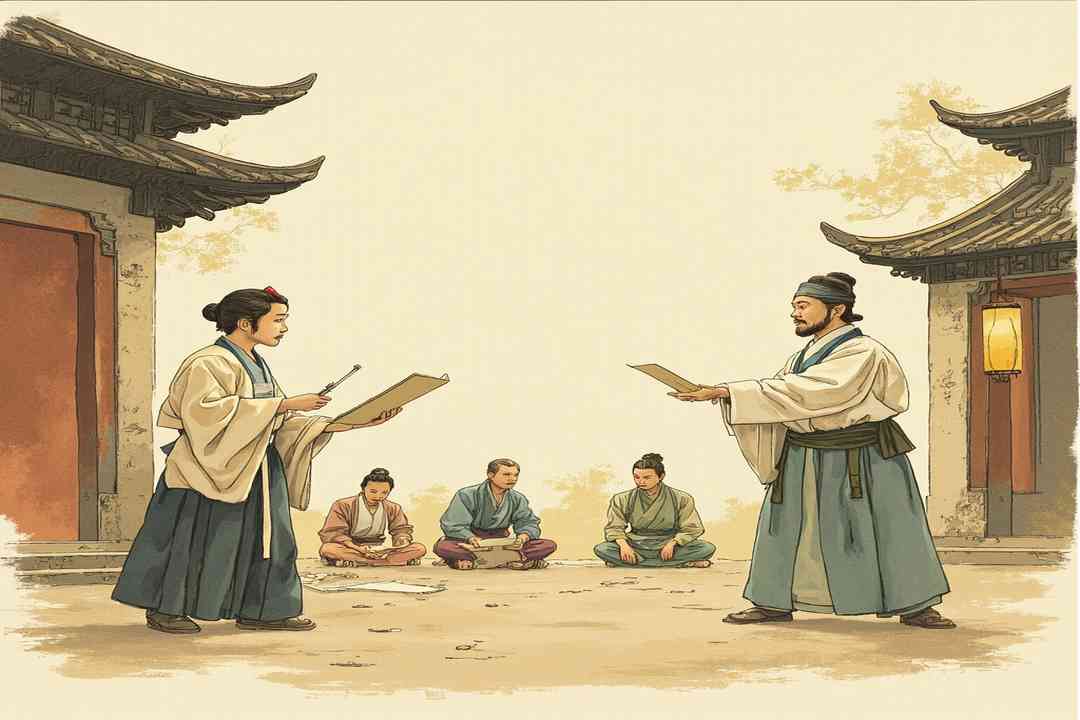
The Story Behind you jiao wu lei idiom
Confucius (551–479 BCE) lived during China’s Spring and Autumn Period, an era marked by rigid social stratification—divisions between nobles, commoners, and lower classes that determined access to almost all resources, including education. Formal learning was limited to aristocratic families, who studied classics like the Book of Songs and Book of Rites to maintain their status.
Confucius, however, rejected this exclusivity. According to the Analects (Lunyu), the collection of his teachings compiled by his disciples, he stated the principle of you jiao wu lei explicitly: “There is no distinction of classes; this is why there are no limits to teaching.” Historical records confirm he put this into practice: his school attracted over 3,000 disciples, many of whom came from non-noble backgrounds.
For example, Yan Hui, his most beloved disciple, was the son of a poor farmer, while Zigong was a wealthy merchant who used his fortune to spread Confucian ideas. Even some disciples were former servants or slaves—unheard of in a society where social status was fixed at birth.
This story makes clear that the you jiao wu lei idiom wasn’t just an abstract philosophy; it was a concrete policy Confucius implemented to reshape access to learning.
What you jiao wu lei idiom (有教无类) Really Means
Literal breakdown of the idiom: “you” (有) means “to have” or “to provide”, “jiao” (教) means “teaching” or “education”, “wu” (无) means “no” or “without”, and “lei” (类) means “category” or “class”. So the literal translation is “provide teaching without regard to class”.
The deeper meaning is far more than just class: it’s a principle of universal inclusivity in learning, applying to barriers like wealth, ethnicity, gender, disability, or any other factor that might exclude someone from education. A key point to clarify is the common misinterpretation: many new learners mistake you jiao wu lei idiom for “teaching all types of subjects”, but this is incorrect.
The idiom’s focus is on the learners, not the content being taught. For example, a tutor who adapts lessons for a student with dyslexia is embodying the spirit of the idiom, while a teacher who only teaches advanced topics to top students is not.
To formalize this, here is the basic facts table for the you jiao wu lei idiom: | Field | Content | |—|—| | Chinese Characters | 有教无类 | | Pinyin | yǒu jiào wú lèi | | Literal Meaning | Provide teaching without class distinction | | Core Meaning | Education is a right for all, regardless of background | | Original Context | Spring and Autumn Period (551–479 BCE), Confucian philosophy | | Modern Usage | Referring to inclusive education or equal access to learning |
How to Use you jiao wu lei idiom in Conversation
The you jiao wu lei idiom is versatile, fitting naturally in both formal and informal conversations. Here are four practical examples:
- Family setting: When my aunt, who runs a free after-school program for low-income kids in our neighborhood, told me about her new initiative, my uncle smiled and said, “This is exactly the you jiao wu lei idiom in action—everyone deserves a chance to learn, no matter their family’s income.”
- Workplace training: A colleague at my international company mentioned that our new leadership development program includes employees from all departments, not just senior managers. She said, “Our HR team designed this to follow the you jiao wu lei idiom, so no one is excluded based on their position.”
- School policy: When discussing the new school admission rules, a local parent group leader commented, “The district’s decision to admit students based on their interests, not their parents’ home address, is a perfect example of the you jiao wu lei idiom in modern education.”
- Personal tutoring: As a part-time English tutor for refugee children, I often remind myself of the you jiao wu lei idiom. Last month, I adjusted my lessons to use more visual aids for a student who struggled with written English, and a fellow tutor praised me, saying, “That’s exactly the spirit of you jiao wu lei—meeting each learner where they are.”
The most common mistake learners make is misapplying the idiom to content rather than learners. For example, someone might say, “The university offers you jiao wu lei courses” when they mean “the university offers a variety of courses.” This is incorrect because the idiom refers to inclusivity of students, not the diversity of subjects.
You Jiao Wu Lei IdiomTo avoid this, always use the idiom when discussing who is being taught, not what is being taught.
Why you jiao wu lei idiom Matters Today
In modern times, the you jiao wu lei idiom is more relevant than ever, as global efforts to achieve universal primary education continue. The United Nations’ Sustainable Development Goal 4 (Quality Education) explicitly aims to ensure inclusive and equitable quality education for all, which aligns perfectly with Confucius’s ancient principle.
In China, this idiom has shaped national education policies, including the 1986 Compulsory Education Law that guaranteed free education for all children, regardless of their family’s background. For parents, this idiom serves as a reminder to prioritize their children’s access to learning, not just academic success.
For educators, it’s a moral guideline to create classrooms where every student feels valued and supported, regardless of their race, gender, or socioeconomic status. Even in non-educational contexts, the idiom can be used to advocate for inclusivity—for example, in workplace hiring, where companies strive to recruit talent from diverse backgrounds.
This shows that you jiao wu lei idiom isn’t just a historical artifact; it’s a living principle that guides how we think about fairness and opportunity.
Related Idioms
One closely related idiom is cai qi jiao shi (因材施教), which also comes from Confucius’s teachings. It means “teaching students according to their aptitude”.
While you jiao wu lei focuses on inclusivity of learners (ensuring no one is excluded), cai qi jiao shi focuses on adapting teaching methods to individual students (ensuring every learner gets the support they need). You Jiao Wu Lei Idiom Together, they form the core of Confucian educational philosophy—ensuring every student is included and supported in their unique learning journey.

Frequently Asked Questions
What is the origin of you jiao wu lei idiom?
The idiom “you jiao wu lei” (有教无类) originates from *The Analects* (Lunyu), a collection of teachings and conversations of the ancient Chinese philosopher Confucius (551–479 BCE).
Confucius, who pioneered private education in ancient China, coined this phrase to advocate for the principle that education should not be restricted by social class, family background, ethnicity, or other dividing factors.
At the time, education was largely limited to aristocratic elites, so Confucius’s commitment to teaching students from all walks of life made this phrase a revolutionary and foundational concept in Chinese educational philosophy.
What does you jiao wu lei idiom mean in plain English?
In simple terms, “you jiao wu lei” means that education should be accessible to every person, without any discrimination based on their social status, wealth, family origin, or other group categories.
It stresses that no one should be denied the opportunity to learn, regardless of who they are.
How do you use you jiao wu lei idiom in a sentence?
Here is a natural example: “The non-profit literacy project embodies the spirit of you jiao wu lei by offering free classes to migrant workers, rural children, and elderly adults who cannot afford formal education.”
What is the literal meaning of you jiao wu lei idiom?
The literal translation breaks down to its individual characters: “有” (yǒu) = “to have/exist”, “教” (jiào) = “teaching/education”, “无” (wú) = “without/no”, and “类” (lèi) = “category, class, or type”.
So the literal meaning is “teaching has no categories” or “there is no exclusion from teaching based on category”.
Can you jiao wu lei idiom be used in formal writing?
Yes, “you jiao wu lei” is appropriate for formal writing, speeches, and academic discussions.
It is a classic, widely recognized idiom tied to Confucian educational philosophy, so it is commonly used in contexts related to educational equity, policy development, historical studies, or cultural commentary.
It is not casual slang, so it is reserved for settings where its deep cultural and philosophical significance is relevant, making it a suitable choice for formal communication.
One Last Thing
The you jiao wu lei idiom is more than just a phrase from ancient China—it’s a timeless reminder that education is a fundamental right, not a privilege. Whether you’re a parent guiding your child’s learning, an educator in the classroom, or someone advocating for equity in your community, this idiom offers a simple yet powerful truth: everyone deserves the chance to learn and grow.
By embracing the spirit of you jiao wu lei, we can build a more inclusive world where no one is left behind.