有条不紊 (you tiao bu wen idiom). The you tiao bu wen idiom is one of the most widely recognized Chinese chengyu (four-character idioms) for describing calm, systematic order, making it a valuable phrase for anyone learning Chinese or exploring Chinese cultural expressions.
Whether you’re a parent teaching your child about organization, a professional discussing project management, or a language learner expanding your vocabulary, understanding this idiom adds depth to how you describe structured, confusion-free situations. This guide will cover its historical origins, exact meaning, practical usage, common mistakes, and relevance in modern life, helping you use it correctly and confidently.
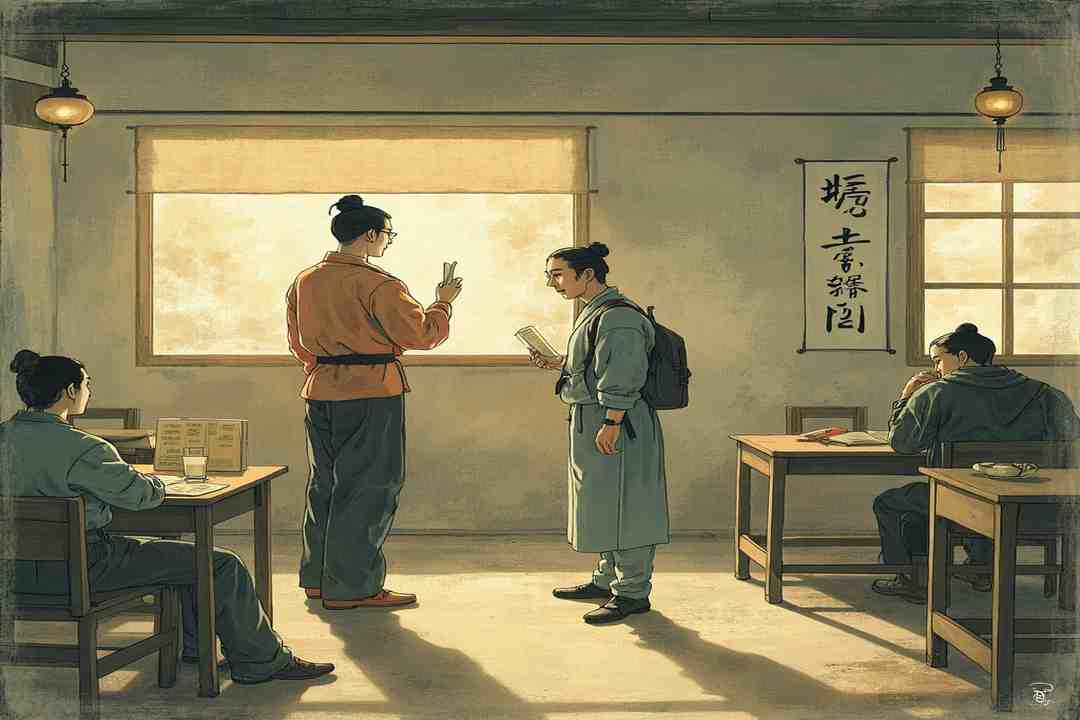
The Story Behind you tiao bu wen idiom
The you tiao bu wen idiom has its roots in one of China’s oldest historical texts: the *Book of Documents* (Shang Shu), a collection of ancient political speeches and records from the Western Zhou Dynasty (c. 1046–771 BCE).
The phrase first appears in the chapter “Taishi Shang” (泰誓上), which documents the speeches of King Wu of Zhou, the leader who overthrew the tyrannical King Zhou of the Shang Dynasty at the Battle of Muye in 1046 BCE. In his address to his army before the battle, King Wu emphasized the importance of discipline and structure to ensure victory.
He used a metaphor: “If a fishing net is tied to its main rope, the threads will be you tiao bu wen (orderly and not chaotic).” This metaphor compared a well-organized military force (and later, any system) to a net properly secured to its core rope—each part has its place, and nothing is out of order. Over centuries, the line evolved into the four-character idiom we use today, shedding light on the ancient Chinese value of planning and order.
What you tiao bu wen idiom (有条不紊) Really Means
Literally translated, the idiom breaks down into two parts: “you tiao” (有条) meaning “with clear threads or structure” and “bu wen” (不紊) meaning “not disorderly or chaotic.” Figuratively, you tiao bu wen describes something that is arranged in a logical, systematic way, with every element in its proper place, leading to a situation that runs smoothly without confusion. It is often used to refer to processes, events, routines, or systems, rather than a person’s inherent personality traits.
For example, a well-planned conference, a daily routine that avoids last-minute chaos, or a project that progresses without delays can all be described as you tiao bu wen. You Tiao Bu Wen IdiomIn English, the closest equivalents are phrases like “methodical,” “well-organized,” “in good order,” or “systematic.” It’s important to note that the idiom carries a positive connotation, implying that the structure leads to efficiency and clarity.
How to Use you tiao bu wen idiom in Conversation
The you tiao bu wen idiom is versatile, suitable for both casual and formal contexts. Here are four practical examples to help you apply it correctly:
- Daily Routine: “Even with two young kids to care for, my neighbor keeps her morning routine you tiao bu wen—she wakes up 30 minutes early to prep meals and pack backpacks, so there’s never a rush.”
- Professional Project: “The marketing team did an excellent job coordinating the product launch; every task was assigned clearly, and the entire event ran you tiao bu wen from start to finish.”
- Study Habits: “If you study for your HSK exam you tiao bu wen, reviewing 20 new words each day and practicing writing for 15 minutes, you’ll avoid cramming and retain information better.”
- Event Planning: “The wedding planner ensured that the outdoor ceremony, reception, and guest seating were all you tiao bu wen, even with unexpected rain that required quick adjustments to the setup.”
When using the idiom, always pair it with a noun or noun phrase that refers to the structured thing (routine, event, project) rather than a person’s state of activity.
Common Mistake Learners Make
One of the most frequent mistakes learners make with the you tiao bu wen idiom is misapplying it to describe a person’s busy or active state. For example, a learner might incorrectly say, “I was you tiao bu wen yesterday, finishing three assignments and cooking dinner,” when they mean “I was busy.” The idiom does not describe a person’s level of activity—it describes the orderliness of the process or system they are managing.
The correct way to phrase that scenario would be, “My schedule yesterday was you tiao bu wen, so I finished all tasks on time.” This mistake often happens because learners translate the idiom too literally, but remembering to use it for processes rather than people’s activity will help you avoid errors. For beginners, prioritizing this distinction is key to using the idiom correctly in both speech and writing.
Why you tiao bu wen idiom Matters Today
In modern life, where schedules are packed with work, family responsibilities, and personal commitments, the you tiao bu wen idiom remains highly relevant. It captures a universal desire for efficiency and clarity in a world that often feels chaotic.
For parents, it’s a useful phrase to teach children about organizing their schoolwork or daily chores, helping them build practical life skills. In professional settings, it’s a common term in project management and event planning, used to praise teams that deliver work smoothly and without delays.
The idiom also reflects a timeless cultural value from ancient China—the belief that structure and planning are essential for success, whether in battle, in work, or in daily life. Its versatility makes it a staple in both everyday conversation and formal Chinese, so mastering it opens doors to more natural communication.
Related Idioms
There are several Chinese idioms that share similar meanings to you tiao bu wen, each with subtle differences:
- 井井有条 (jǐng jǐng yǒu tiáo): This idiom is almost identical in meaning to you tiao bu wen, describing something as perfectly organized. The key difference is that you tiao bu wen often emphasizes the process of being structured, while jing jing you tiao emphasizes the state of being neat and orderly.
- For example, “The bookshelf is jing jing you tiao” vs. You Tiao Bu Wen Idiom“The library’s checkout system runs you tiao bu wen.”
- 秩序井然 (zhì xù jǐng rán): Translating to “in good order,” this idiom is often used to describe large-scale settings like crowds, events, or public spaces. You Tiao Bu Wen Idiom It focuses on the overall state of order rather than the internal structure of a process, such as “The subway station during rush hour was 秩序井然.”
- 按部就班 (àn bù jiù bān): This idiom means “step by step, following the proper order,” and is used to describe someone who works in a methodical, sequential way. You Tiao Bu Wen Idiom It can be similar to you tiao bu wen when describing a process, but it also implies adherence to rules or procedures, like “She completed the research paper按部就班, following each guideline carefully.”
Frequently Asked Questions
What is the origin of the “you tiao bu wen” idiom?
The phrase “you tiao bu wen” is a pinyin rendering of the common Chinese idiom yī tiáo bù wén, whose earliest recorded use appears in the Book of Later Han (Hou Han Shu), a 5th-century historical text chronicling the Eastern Han dynasty (25–220 CE).
It was originally coined to describe the to
What does “you tiao bu wen” idiom mean in plain English?
In simple terms, this idiom means to have received absolutely no news, updates, or information about a specific person, event, or situation.
It refers to a state of complete unawareness regarding the subject being discussed.
How do you use “you tiao bu wen” idiom in a sentence?
Example sentence: “After my cousin moved to a remote village in Kenya to teach at a local school, she lost her phone and had limited internet access, so for over a year, her family had you tiao bu wen about her daily life.”
What is the literal meaning of “you tiao bu wen” idiom?
The literal translation of the Chinese characters for this idiom is “one (yī) item (tiáo) not (bù) hear (wén)”.
The word “tiáo” here functions as a unit of count for pieces of news or information, so the literal meaning is “not a single piece of news heard”.
Can “you tiao bu wen” idiom be used in formal writing?
Yes, this idiom is a standard formal expression in Chinese, so it is appropriate for use in formal writing contexts.
It is commonly used in academic papers, historical narratives, official reports, and formal correspondence to describe the absence of verifiable information about a person or eve
One Last Thing
Mastering the you tiao bu wen idiom is more than just adding a four-character phrase to your vocabulary—it’s a way to express the value of order and efficiency that resonates across cultures. By remembering its historical roots, correct usage, and common pitfalls, you’ll be able to use it confidently in both casual and formal conversations.
Whether you’re talking about a well-planned trip, a smooth workday, or helping your child organize their homework, this idiom adds clarity and precision to your words.

The You Tiao Bu Wen Idiom idiom encapsulates wisdom from ancient China. You Tiao Bu Wen Idiom continues to appear in modern Chinese writing and everyday speech. Learning You Tiao Bu Wen Idiom helps English speakers appreciate classical Chinese expression.
You Tiao Bu Wen Idiom reflects centuries of Chinese linguistic and cultural tradition.
Wen Gu Zhi Xin Idiom: Meaning, Story, and Real Usage How Did Shou Bu Shi Juan Idiom Become a Popular Idiom? Xiong You Cheng Zhu Idiom Explained Wikipedia