The gao yang jiu tu idiom (高阳酒徒) is one of China’s most iconic phrases that blends history, personality, and cultural values, offering a window into how ancient Chinese communication strategies still resonate today. Unlike many idioms tied to abstract concepts or mythical tales, this phrase is rooted in a real historical moment that shaped the fate of one of China’s greatest dynasties.
It has been passed down through over two millennia, evolving to capture a timeless quality of authenticity and boldness that remains relevant in modern interpersonal dynamics.

The Story Behind gao yang jiu tu idiom
The origin of the gao yang jiu tu idiom dates back to the Chu-Han Contention (206–202 BCE), a period of civil war after the collapse of the Qin Dynasty, when two powerful warlords—Liu Bang and Xiang Yu—fought for control of China. The idiom’s namesake is Lu Gu (郦食其), a 60-year-old scholar from the village of Gaoyang in what is now Henan Province.
Lu Gu had spent years observing local warlords, but none struck him as capable or visionary enough to unify China. When he heard that Liu Bang was marching toward Chenliu (a strategic city in central China) with his army, he decided to approach the future emperor.
At the time, Liu Bang was known for his dismissive attitude toward scholars. He often mocked learned men, once pulling a scholar’s hat off his head and urinating in it to assert his dominance.
When Lu Gu requested an audience, Liu Bang’s soldiers initially refused to let him in, telling him the warlord had no interest in meeting a scholar. Recognizing that Liu Bang’s bias against academics was a barrier, Lu Gu adjusted his self-introduction to bypass this prejudice.
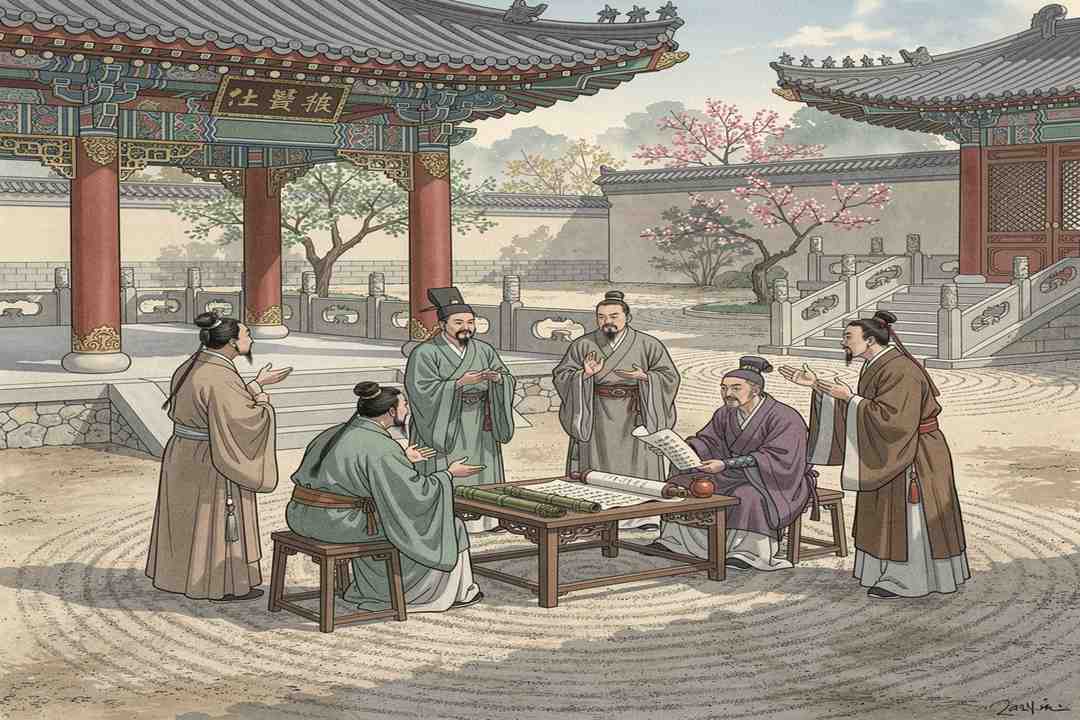
Gao Yang Jiu Tu IdiomHe told the soldiers: “Go back and tell my lord that I am a gao yang jiu tu—not a scholar.” The phrase “gao yang jiu tu” translates literally to “wine fellow from Gaoyang,” and the soldiers relayed this to Liu Bang, who was immediately intrigued. Liu Bang admired bold, practical people who cut through pretense, so he invited Lu Gu into his tent.
The two men had a frank conversation, and Lu Gu convinced Liu Bang to capture Chenliu, which provided the army with much-needed food supplies and soldiers. This victory helped Liu Bang gain a critical foothold in central China, eventually leading to his establishment of the Han Dynasty (206 BCE–220 CE).
Gao Yang Jiu Tu IdiomThe story is recorded in Sima Qian’s *Shiji* (Records of the Grand Historian), the foundational text of Chinese historical writing, making it a reliable part of China’s cultural heritage.
What gao yang jiu tu idiom (高阳酒徒) Really Means
At its core, the gao yang jiu tu idiom refers to a person who is unconstrained by formal social norms and hierarchical boundaries, speaks bluntly and honestly, and uses a bold, sometimes irreverent approach to achieve their goals. While the literal translation includes the word for wine, this is not a reference to excessive drinking—this is a common mistake made by learners of Chinese.
Many incorrectly assume the idiom describes someone who drinks heavily, but this misses its true meaning.
Instead, the “wine” element in the idiom is a strategic choice by Lu Gu: by framing himself as a carefree, unpretentious drunkard, he was able to bypass Liu Bang’s prejudice against scholars. The idiom’s figurative meaning emphasizes authenticity and practicality over rigid formality.
A gao yang jiu tu is someone who doesn’t hide behind titles or polite niceties; they say what they think and act boldly to get things done. Gao Yang Jiu Tu IdiomIt is almost always a positive term, highlighting courage and sincerity, though it can sometimes carry a hint of playful irreverence depending on the context.
How to Use gao yang jiu tu idiom in Conversation
The gao yang jiu tu idiom is versatile and can be used in a variety of contexts, from historical discussions to casual social interactions. Here are four practical examples of how to use it naturally: 1.
Workplace Setting: When a new intern asks why their team’s manager is so easy to approach, a colleague might say: “Don’t be nervous—our manager is a gao yang jiu tu; he hates fancy titles and will listen to any honest idea you have, no matter how junior you are.” 2. History Class Discussion: A student explaining Lu Gu’s strategy could say: “Lu Gu’s choice to call himself a gao yang jiu tu was a brilliant move.
He didn’t waste time trying to impress Liu Bang with his scholarly credentials—he used a persona Liu Bang would respect to gain access.” 3. Friendship Advice: If a friend is hesitant to confront their roommate about messy habits, you could advise: “Just be straightforward—your roommate’s a gao yang jiu tu, so they’ll appreciate you being honest instead of beating around the bush.
They’ll probably even help you fix the problem without getting upset.” 4. Casual Social Joke: At a neighborhood barbecue, someone might tease a long-time resident: “Old Mr.
Wang is a true gao yang jiu tu—he’ll start talking to strangers about anything, from growing tomatoes to local politics, and never holds back his opinion. Last week, he even gave a tour of his garden to a group of tourists who just wandered by.”
Why gao yang jiu tu idiom Matters Today
The gao yang jiu tu idiom remains relevant today because it challenges the rigid formalities that often define modern communication. In many workplaces, social media, and daily interactions, people are expected to follow unwritten rules of politeness and hierarchy, which can lead to inauthenticity and hesitation to speak up.
The idiom reminds us that being bold and straightforward is a strength, not a flaw.
In hybrid and remote work environments, where face-to-face interactions are less frequent, the gao yang jiu tu spirit is particularly valuable. Leaders who embody this trait build trust with their teams because they don’t hide behind corporate jargon or hierarchical barriers.
They encourage open communication, which leads to better problem-solving and more engaged employees. Gao Yang Jiu Tu IdiomAdditionally, the idiom teaches a timeless lesson about identity framing: adjusting how you present yourself to overcome biases can help you achieve your goals, whether you’re approaching a powerful leader or navigating a new social group.
Related Idioms
Several Chinese idioms share core themes with the gao yang jiu tu idiom, though they differ in nuance: 1. Zhi Yan Bu Hui (直言不讳): This phrase translates to “straightforward words, no concealment.” It focuses specifically on honesty in speech, aligning with the bluntness of gao yang jiu tu, but lacks the connotation of unpretentiousness or strategic persona framing.
2. Bu Ju Xing Shi (不拘形迹): Meaning “not bound by formalities,” this idiom describes someone who doesn’t follow strict social rules, similar to the casual aspect of gao yang jiu tu.
However, it doesn’t emphasize the bold, goal-oriented nature that defines the original idiom. 3.
Xing Dan Yi Shuai (性淡意率): This translates to “simple and straightforward in nature.” It highlights a natural tendency toward authenticity, which is a key part of the gao yang jiu tu idiom, but doesn’t capture the strategic element of Lu Gu’s self-presentation.
Frequently Asked Questions
Is the gao yang jiu tu idiom always positive?
Generally, yes—it is a compliment that emphasizes boldness, authenticity, and practicality. However, in some contexts, if someone’s bluntness is perceived as rude or inappropriate, the idiom might be used gently to note that someone is overly direct without malice, rather than as a negative judgment.
Gao Yang Jiu Tu IdiomIt is rarely used to criticize someone.
Can I use this idiom to describe someone who actually drinks a lot?
While the literal translation includes the word for wine, the figurative meaning is far more common. If a person is both blunt and a heavy drinker, you could use the idiom as a playful reference, but this is rare and not standard.
Gao Yang Jiu Tu IdiomMost native speakers would interpret it as referring to personality, not drinking habits.
Are there English idioms similar to gao yang jiu tu?
Yes, phrases like “straight shooter” and “free spirit” capture aspects of the idiom. Gao Yang Jiu Tu IdiomA “straight shooter” emphasizes honesty and bluntness, while a “free spirit” emphasizes lack of formality—both align with different elements of the gao yang jiu tu meaning.
What is the origin of gao yang jiu tu idiom?
The idiom originates from *Records of the Grand Historian* (Shiji), a classic Chinese historical text written by Sima Qian.
It is tied to the story of Li Yiji, a scholar from the ancient Gaoyang region (near present-day Henan, China) who sought to advise Liu Bang—who would later become the founder of the Han Dynasty.
When Li Yiji visited Liu Bang, who was being impolite by washing his feet while receiving guests, Li Yiji introduced himself as the “Gaoyang Wine Fellow” to emphasize his bold, unconstrained identity and criticize Liu Bang’s disrespect.
Liu Bang immediately apologized and accepted his counsel.
What does gao yang jiu tu idiom mean in plain English?
It refers to a bold, outspoken, unconstrained person who enjoys drinking and rejects rigid formalities or stuffy social conventions.
The idiom highlights a straightforward, no-nonsense personality that prioritizes authenticity over strict etiquette.
How do you use gao yang jiu tu idiom in a sentence?
Example sentence: “At the annual academic conference, the renowned Tang Dynasty poetry expert, known for his casual demeanor and love of sharing wine with junior researchers, was a true gao yang jiu tu—he interrupted formal speeches to tell funny stories about his fieldwork adventures.”
What is the literal meaning of gao yang jiu tu idiom?
Literally, the idiom breaks down into three parts: “Gao Yang” (the specific ancient region where Li Yiji was from), “Jiu” (wine), and “Tu” (fellow or companion).
So its literal meaning is “the wine fellow from Gaoyang”.
Can gao yang jiu tu idiom be used in formal writing?
Yes, it can be used in formal writing, especially in contexts related to Chinese history, classical literature, or biographical works, as it carries deep historical and cultural significance.
However, it is not appropriate for highly formal, technical, or neutral contexts (such as official business documents, legal papers, or academic papers on non-humanities topics) where a plain, unadorned tone is required.
One Last Thing
The gao yang jiu tu idiom is more than just a historical anecdote—it is a reflection of Chinese cultural values that prioritize authenticity and practicality over rigid formalities. Its origin story reminds us that sometimes, breaking the rules of how you are “supposed” to present yourself can be the key to success.
When using this idiom, remembering its true meaning (not the literal translation of wine) helps you communicate clearly and avoid common mistakes. Whether you’re discussing history, giving advice, or describing a friend, this idiom is a powerful way to capture the spirit of someone who cuts through pretense and gets to the point.

The Gao Yang Jiu Tu Idiom idiom encapsulates wisdom from ancient China. Gao Yang Jiu Tu Idiom continues to appear in modern Chinese writing and everyday speech. Learning Gao Yang Jiu Tu Idiom helps English speakers appreciate classical Chinese expression.
Bao Xin Jiu Huo Idiom Kou Ruo Xuan He Idiom Duo Duo Bi Ren Idiom Wikipedia