磨杵成针 (mo chu cheng zhen idiom). The mo chu cheng zhen idiom is one of the most beloved and enduring moral tales in Chinese culture, a story that has been passed down for over a thousand years to teach the power of unwavering persistence.
For learners of Chinese, English speakers exploring cross-cultural idioms, and anyone navigating long-term goals, this phrase offers a timeless lesson that transcends language and time. At its core, it is a reminder that even the most daunting, seemingly impossible tasks can be achieved with consistent, dedicated effort over time.
The idiom combines vivid imagery of a simple, everyday action (grinding a heavy pestle into a tiny needle) with a profound truth about human effort, making it a staple in Chinese literature, education, and motivational discourse.
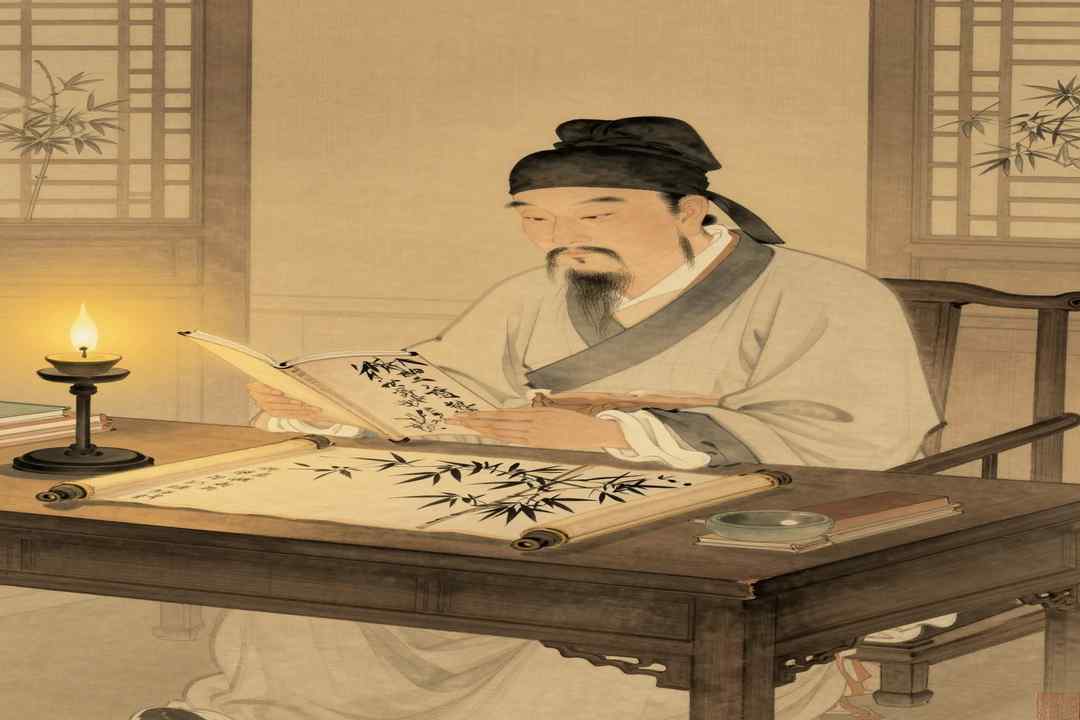
The Story Behind mo chu cheng zhen idiom
The origin of the mo chu cheng zhen idiom is rooted in Chinese legend, tied to one of the greatest poets in history: Li Bai (701–762 CE), a Tang Dynasty literary icon known for his romantic and adventurous poetry. According to historical records (most notably the Southern Song Dynasty text *Fang Sheng Lan Yu* (方舆胜览), a geographical and cultural compendium of the time), Li Bai was a restless and disinterested student in his youth.
Frustrated by the tediousness of his studies, he abandoned his classes one day and wandered away from his school, heading toward the nearby Xiang River (some versions place the event on Mt. Emei, a sacred mountain in Sichuan).
As he walked, he spotted an elderly woman sitting by the riverbank, hunched over a large iron pestle—a heavy, cylindrical tool traditionally used to grind grain or herbs—and rubbing it back and forth on a flat stone, her movements slow but steady. Curious, Li Bai approached her and asked what she was doing.
The woman replied simply that she wanted to grind the pestle into a needle, a small, sharp tool used for sewing. Li Bai was astonished; a pestle was a bulky, heavy object, and a needle was tiny and delicate.
He scoffed, saying, “That’s impossible! A pestle is so large, how can you ever turn it into a needle?” The old woman paused, looking up at him with a calm, determined expression, and answered, “Every day, I take a little time to grind it.
Day after day, month after month, year after year—even a hard iron will wear down if you keep at it.” Li Bai was struck by her words. He realized his own laziness was holding him back from achieving his potential, and the old woman’s persistence was a lesson far more valuable than any lesson his teachers could give.
He returned to his studies immediately, applying the same unwavering dedication that the woman had shown, and eventually became the legendary poet we know today, whose works are still celebrated worldwide.
What mo chu cheng zhen idiom (磨杵成针) Really Means
The Chinese characters for the idiom are 磨杵成针, pronounced mó chǔ chéng zhēn. Breaking it down: 磨 (mó) means “to grind or rub,” 杵 (chǔ) refers to the iron pestle, 成 (chéng) means “to become or turn into,” and 针 (zhēn) means “needle.” Literally translated, the idiom means “to grind a pestle into a needle,” but its figurative meaning is far more powerful.
The mo chu cheng zhen idiom teaches that persistence, even in small, consistent doses, can overcome seemingly insurmountable obstacles. It emphasizes that success is not achieved through talent alone or overnight luck, but through steady, unwavering effort over a long period of time.
Unlike some idioms that focus on raw strength or quick wins, this one highlights the value of patience and consistency, using the vivid contrast between a large, seemingly useless tool (the pestle) and a small, essential one (the needle) to illustrate how meaningful transformation is possible with time and dedication. It is important to note that the idiom does not mean that any task can be achieved—it does not apply to impossible feats like turning stone into gold—but rather that for any goal that is worth pursuing, consistent effort will eventually lead to tangible results.
How to Use mo chu cheng zhen idiom in Conversation
The mo chu cheng zhen idiom is widely used in both formal and informal contexts in Chinese, and it has also been adopted by English speakers (often with the same direct translation) to convey the same message of persistence. Here are four practical usage examples, adapted to natural speech in both Chinese and English: 1.
Academic Context: “I’ve been practicing calligraphy for six months, and my characters still look messy, but I keep going because I remember the mo chu cheng zhen idiom—every stroke brings me closer to improvement.” This example is common among students learning a new skill, as it acknowledges temporary frustration while centering the value of incremental progress. 2.
Professional Context: “Launching our startup felt impossible when we had only three team members and no funding, but we showed up every day, solved small problems one by one, and now we have 50 clients. That’s the mo chu cheng zhen idiom in action.” Entrepreneurs and business leaders often use this idiom to describe long-term, gritty success that comes from consistent, unglamorous work.
3. Parenting Context: “My daughter wants to be a concert pianist, and even when she cries after a difficult practice, I remind her of the mo chu cheng zhen idiom.
Thirty minutes of focused practice every day is better than three hours of rushed practice once a week.” This example highlights how the idiom is used to encourage young people to stick with long-term goals, even when progress is slow or disheartening. 4.
Personal Fitness Context: “I wanted to run a full marathon, and at first, I could barely jog a mile without stopping. But I laced up my shoes every other day, adjusted my pace, and now I’m training for my first 26.2 miles—the mo chu cheng zhen idiom kept me motivated when I wanted to quit.” This shows how the idiom is applied to everyday personal challenges that require sustained effort.
Why mo chu cheng zhen idiom Matters Today
In an era of instant gratification, where social media promises overnight fame, apps offer quick fixes for every problem, and success is often measured by how fast you achieve it, the mo chu cheng zhen idiom is more relevant than ever. Many people today give up on their goals too soon, frustrated by slow progress or setbacks, but this idiom reminds us that meaningful success takes time.
For students, it encourages them to keep studying even when exams feel months away; for professionals, it pushes them to keep working toward a promotion or a large project, even when the path is unclear; for anyone pursuing a creative passion, it reminds them that their work will improve over time with consistent effort. Beyond individual goals, the idiom also has deep cultural value: it is a symbol of core Chinese values like perseverance, humility, and respect for hard work.
It is often taught in Chinese elementary schools as a foundational moral lesson, helping children understand that success is not handed to them, but earned through steady dedication. Even in global contexts, the idiom resonates because its message is universal—everyone has faced a task that feels impossible, and everyone can benefit from the reminder that small, consistent steps add up to extraordinary results.
Related Idioms
The mo chu cheng zhen idiom is part of a group of Chinese idioms (chengyu) that focus on persistence and hard work. Here are three closely related idioms, each with a slightly different nuance to expand understanding: 1.
滴水穿石 (dī shuǐ chuān shí): Literally “water dripping wears through stone,” this idiom shares the core message of small, consistent effort leading to great results. The key difference is that mo chu cheng zhen uses a deliberate, human action (grinding a pestle) to show transformation, while 滴水穿石 uses a natural, passive process to illustrate the same point.
2. 愚公移山 (yú gōng yí shān): Literally “the foolish old man moves the mountain,” this idiom tells the story of a man who refuses to move his village’s blocking mountain, instead choosing to dig it away with his family over generations.
It emphasizes persistence in the face of even larger, more daunting obstacles than mo chu cheng zhen, focusing on collective, long-term effort. 3.
锲而不舍 (qiè ér bù shě): Literally “carve without stopping,” this is a more formal, direct phrase for persistence, often used in academic writing, speeches, or professional settings to describe unwavering dedication to a goal. It is frequently paired with mo chu cheng zhen to reinforce the value of consistent effort in formal contexts.

Frequently Asked Questions
Q: Is the mo chu cheng zhen idiom only applicable to academic or professional goals? A: No, the idiom’s message applies to any goal that requires persistence, whether it’s learning a new language, mastering a musical instrument, building a long-term relationship, or even completing a small household project.
It is about the value of consistent effort, regardless of what the goal is. Q: Are there common mistakes learners make when using this idiom?
A: Yes, two of the most common mistakes are: First, misapplying the idiom to trivial tasks or quick jobs. For example, a learner might incorrectly say, “I ground a nail into a hook in five minutes—that’s mo chu cheng zhen,” but the idiom is meant for tasks that seem impossible at first, not small, fast actions.
Second, confusing it with similar idioms like 滴水穿石; while both focus on persistence, mo chu cheng zhen specifically emphasizes transforming a large, useless object into a small, useful one, while 滴水穿石 uses a natural, slow process. Q: Is the story of Li Bai and the old woman historically accurate?
A: Most scholars agree that the story is a moral legend, not a strictly historical event. Li Bai’s official biographies do not mention the old woman or the iron pestle, but the tale has become so deeply ingrained in Chinese culture that it is widely accepted as a true, meaningful lesson rather than a literal fact.
Q: Can the mo chu cheng zhen idiom be used in formal writing? A: Absolutely.
It is often used in formal essays, motivational speeches, and educational materials, both in its original Chinese and in English translations. Its timeless, universal message makes it a popular choice for writing about achievement, hard work, and overcoming obstacles.
What is the origin of mo chu cheng zhen idiom?
The idiom “mo chu cheng zhen” (磨杵成针) originates from a famous story about Li Bai, a renowned poet of ancient China’s Tang Dynasty.
When Li Bai was a young student, he grew frustrated with studying and decided to quit school.
On his way out, he spotted an old woman grinding a thick iron pestle at a riverside.
When Li Bai asked what she was doing, she replied she wanted to grind the pestle into a needle.
Inspired by her unshakable persistence, Li Bai returned to his studies and worked diligently, eventually becoming one of China’s most celebrated poets.
What does mo chu cheng zhen idiom mean in plain English?
In plain English, “mo chu cheng zhen” means that with consistent effort, unwavering persistence, and dedication, even the most difficult or seemingly impossible task can be achieved.
How do you use mo chu cheng zhen idiom in a sentence?
Example sentence: “Although learning to code felt overwhelming at first, my mentor reminded me that mo chu cheng zhen—if I stuck to my daily practice schedule, I would eventually build functional apps on my own.”
What is the literal meaning of mo chu cheng zhen idiom?
The literal meaning of “mo chu cheng zhen” is “to grind an iron pestle into a needle.” Breaking down each character: “mo” means “to grind,” “chu” refers to a thick iron pestle (a traditional grinding tool), “cheng” means “to become,” and “zhen” means “needle.”
Can mo chu cheng zhen idiom be used in formal writing?
Yes, “mo chu cheng zhen” is suitable for formal writing.
It is a classic, culturally rooted idiom with a clear moral lesson about perseverance, so it is commonly used in formal contexts such as academic essays, educational speeches, articles about work ethic or personal growth, and official discussions about long-term goals.
One Last Thing
The mo chu cheng zhen idiom is more than just a linguistic phrase—it is a reminder that every small effort you make today, no matter how insignificant it seems, is a step toward your goal. Whether you are learning a new skill, working toward a long-term dream, or navigating a difficult challenge, the old woman’s lesson from the banks of the Xiang River (or Mt.
Emei) is as true today as it was over a thousand years ago: persistence turns the impossible into the possible. Don’t give up when progress is slow; keep grinding, just like the old woman ground that heavy pestle, and one day you will hold your own “needle”—the tangible result of your unwavering dedication.

The Mo Chu Cheng Zhen Idiom idiom encapsulates wisdom from ancient China. Mo Chu Cheng Zhen Idiom continues to appear in modern Chinese writing and everyday speech. Learning Mo Chu Cheng Zhen Idiom helps English speakers appreciate classical Chinese expression.
Mo Chu Cheng Zhen Idiom reflects centuries of Chinese linguistic and cultural tradition. Mo Chu Cheng Zhen Idiom demonstrates the depth of four-character Chinese idioms.
Yan Chu Fa Sui Idiom: 7 Surprising Truths Behind This Classi Stop Using Ling Chu Bi Xing Idiom Wrong 7 Things About Li Bing Mo Ma Idiom That Will Change How You Wikipedia