身先士卒 (shen xian shi zu idiom). The shen xian shi zu idiom is one of China’s most enduring and respected phrases, deeply rooted in military history and valued across leadership contexts today.
For over two millennia, it has been a benchmark for what makes a great leader—someone who does not ask others to face hardship or danger that they are unwilling to confront themselves. Unlike empty commands or distant oversight, the core of this idiom lies in leading by action, not just words, a principle that resonates as strongly in modern boardrooms, classrooms, and community groups as it did on ancient battlefields.
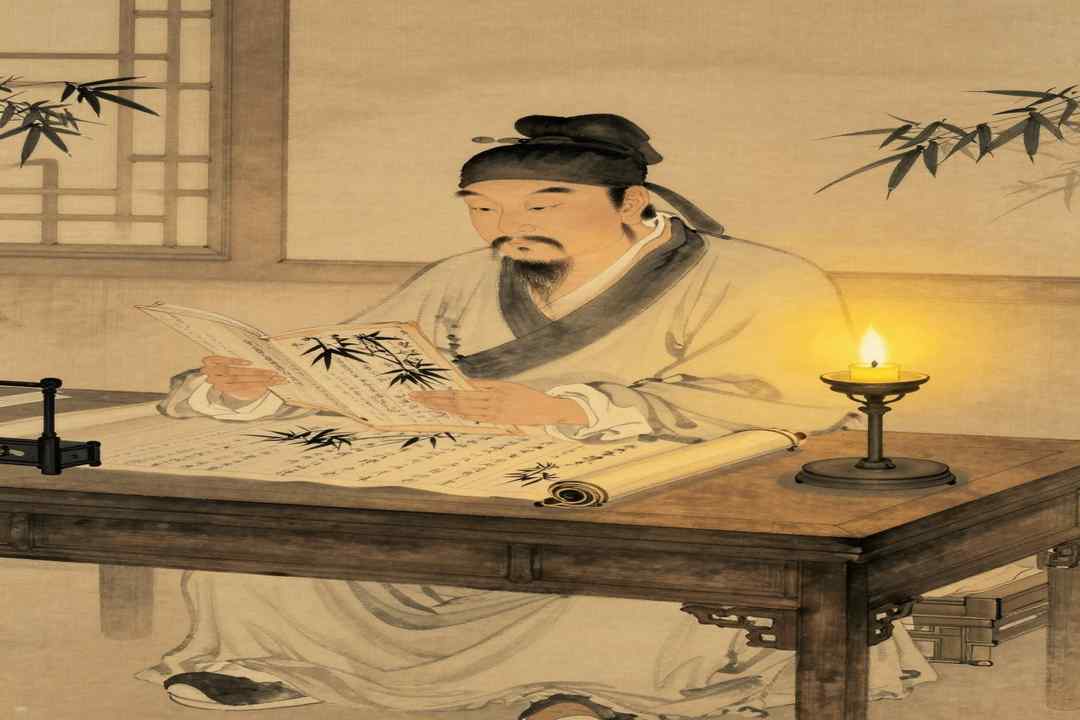
Quick Answer: What Does Shen Xian Shi Zu Mean?
The core shen xian shi zu meaning is “lead from the front.” The idiom 身先士卒 (shēn xiān shì zú) means that a leader goes ahead of others and takes the lead in difficult work or danger. In plain English, it describes leading from the front or setting an example through action.
Basic Facts
| Characters | 身先士卒 |
|---|---|
| Pinyin | shēn xiān shì zú |
| Core meaning | Lead others by acting first |
| Typical subject | A leader, organizer, teacher, or team member taking responsibility |
Quick reference: use the idiom when the person actually participates or accepts risk first; it is stronger than simply giving good instructions.
The Story Behind shen xian shi zu idiom
The shen xian shi zu idiom (written as 身先士卒 in simplified Chinese characters) traces its earliest recorded origin to the *Book of the Later Han* (Hou Han Shu), a comprehensive historical text compiled by prominent Chinese historian Fan Ye during the Liu Song Dynasty (420–479 CE). This text chronicles the events of the Eastern Han Dynasty (25–220 CE), a period marked by territorial expansion, political stability, and military campaigns across China’s western frontiers.
The specific story that birthed the idiom centers on General Geng Yan, a brilliant and fearless commander who rose through the ranks of the Han army to lead campaigns against rebel forces in the Hexi Corridor, a strategic region in modern-day Gansu Province. In 29 CE, Geng Yan’s forces were surrounded by a much larger rebel army at the Battle of Jiluo Mountain.
As enemy arrows rained down and the rebel cavalry charged repeatedly, many of Geng Yan’s junior officers urged him to retreat to a fortified rear camp for safety. Instead, Geng Yan removed his heavy armor, grabbed his battle axe, and mounted his war horse, riding straight toward the front line of the conflict—placing himself directly ahead of his rank-and-file soldiers (the “shi zu” of the idiom, meaning ordinary troops).
His bold move had an immediate impact: his men, who had been wavering, saw their commander fighting alongside them, and their morale surged. They pushed back the rebel forces, broke the siege, and secured a decisive victory that expanded Han control over the region.
It was after this battle that historians first recorded the phrase “身先士卒” to describe Geng Yan’s actions, cementing its meaning as leading from the front in the face of adversity.
What shen xian shi zu idiom (身先士卒) Really Means
To fully grasp the shen xian shi zu idiom, it helps to break down its individual characters and its evolution over time. Literally translated, the phrase means “oneself (身, shēn) ahead of (先, xiān) the soldiers (士, shì) and attendants (卒, zú).” While its original context was military leadership, the idiom has evolved to encompass any scenario where a leader or figure of authority prioritizes facing challenges, risks, or hard work before their subordinates or peers.
Figuratively, it is not just about physical bravery—though that remains a core component of its meaning. It also refers to taking personal responsibility for difficult tasks, enduring hardships that others might avoid, and setting a tangible example of dedication.
For example, a manager who works 12-hour days to meet a product launch deadline, rather than delegating all the late-night work to entry-level employees, is embodying the spirit of shen xian shi zu. The idiom carries a strong connotation of humility and integrity: leaders who practice this are not above getting their hands dirty, which earns them respect and trust from those they lead.
It is distinct from mere “hard work” because it implies a hierarchical responsibility—leaders are expected to go first, not just work as hard as others.
How to Use shen xian shi zu idiom in Conversation
The shen xian shi zu idiom is versatile, fitting in both formal and informal contexts, as long as the scenario involves a leader taking personal risk or hardship. Here are four practical examples of how to use it: 1.
Workplace Leadership: When our marketing team’s campaign launch was delayed by a critical design flaw, our team lead didn’t just send an email demanding fixes. She stayed in the office until 2 a.m.
for three nights in a row, working alongside junior designers to revise the assets. “She really embodied the shen xian shi zu idiom this week,” one team member told our manager, “and it made us all want to work that much harder to get the campaign right.” 2.
Community Volunteer Work: During the 2021 flood in Henan Province, the local district mayor visited the affected areas within hours of the waters receding. Instead of waiting for relief workers to set up distribution points, he rolled up his sleeves and helped unload food supplies and hand out blankets to stranded families.
A local reporter noted, “This mayor lives by the shen xian shi zu idiom—he didn’t ask anyone else to do the hard work he wasn’t willing to do himself.” 3. Sports Team Captaincy: As the captain of the university’s men’s basketball team, Zhang Wei has always practiced what he preaches.
Even though he is the team’s top scorer, he arrives at practice an hour early every day to run conditioning drills, and stays late to help new players master defensive plays. “Our captain uses the shen xian shi zu idiom every time he steps on the court,” said his teammate Li Jun.
“If he’s working that hard, we can’t afford to slack off.” 4. Educational Leadership: At a rural middle school in Sichuan, the principal noticed that many students were struggling with math, so he started offering after-school tutoring sessions.
Instead of leaving the teaching to part-time tutors, he learned the curriculum and taught the sessions himself, often staying until 7 p.m. every weekday.
“The principal’s shen xian shi zu approach has made a huge difference,” said a local education official. “Students are more engaged because they see their leader investing time in their success, not just asking teachers to do it.”
Why shen xian shi zu idiom Matters Today
In an era where remote work and hierarchical distance are increasingly common, the shen xian shi zu idiom has never been more relevant for modern leaders. Today’s workforce, students, and community members do not just follow titles—they follow people who prove their commitment through action.
Leaders who practice the spirit of shen xian shi zu build stronger, more cohesive teams. When a manager takes on the most tedious or high-risk tasks, employees feel valued and respected, leading to higher job satisfaction, lower turnover, and better performance.
Conversely, leaders who only give orders from a distance often struggle to gain trust, as their teams see them as out of touch with the actual work being done. The idiom also has broader applications beyond professional settings.
In public service, for example, leaders who lead through example—whether that means volunteering in their communities or taking on unpopular decisions—earn the loyalty of the people they serve. During global crises like the COVID-19 pandemic, healthcare leaders who worked alongside frontline nurses and doctors, rather than staying in administrative offices, were able to better understand the challenges their teams faced and implement more effective solutions.
Even in personal relationships, the principle of leading by example (a core part of shen xian shi zu) helps build trust—whether it’s a parent working hard to teach their child the value of diligence, or a friend supporting someone through a difficult time by being present first.
Related Idioms
The shen xian shi zu idiom shares core themes with several other Chinese idioms, though each has a distinct nuance: 1. 以身作则 (Yǐ shēn zuò zé): Translated as “leading by example,” this idiom is broader in scope than shen xian shi zu.
It refers to setting a good moral or behavioral example for others, rather than specifically leading through hardship or risk. For example, a teacher who always arrives on time and avoids gossiping is practicing 以身作则, while a teacher who stays late to help students is embodying shen xian shi zu.
2. 身先士众 (Shēn xiān shì zhòng): This is a variant of shen xian shi zu, with the only difference being the third character: 众 (zhòng, meaning “crowd” or “mass”) instead of 卒 (zú, meaning “soldier”).
It carries the exact same meaning and usage, though it is less common in modern Chinese. 3.
冲锋陷阵 (Chōng fēng xiàn zhèn): Meaning “to charge into enemy lines,” this idiom emphasizes physical bravery in battle, similar to the original military context of shen xian shi zu. However, it does not carry the same connotation of leadership—it can refer to any soldier’s courage, not specifically a commander leading others.
Frequently Asked Questions
Q: Is the shen xian shi zu idiom only used for military or leadership contexts? A: No.
While its origins are military, the idiom’s meaning has expanded dramatically over time. Today, it is widely used in all areas of life where someone leads through personal example—including work, education, sports, and community service.
It is not limited to formal leadership roles, either; a volunteer who takes on the most grueling tasks can also be described as embodying the idiom. Q: What is the key difference between shen xian shi zu and the idiom 以身作则?
A: As noted in the related idioms section, 以身作则 is a general term for setting a good example in terms of behavior or values. Shen xian shi zu, by contrast, specifically emphasizes being the first to face hardship, risk, or difficult work.
For example, a manager who follows company rules to the letter is practicing 以身作则, while a manager who works through a holiday to fix a critical system failure is practicing shen xian shi zu. Q: What is the most common mistake non-native Chinese learners make when using shen xian shi zu?
A: The most frequent error is misapplying the idiom to trivial, low-risk scenarios. Non-native learners often use it to mean “being the first to do something” in casual contexts, such as arriving early to a party or ordering a drink before friends.
For example, saying “I arrived first to the restaurant, so I used the shen xian shi zu idiom” is incorrect. The idiom’s core meaning is leading through facing difficulty or risk, so it should only be used when describing someone taking on a challenge that others might avoid.
Q: Is the shen xian shi zu idiom still commonly used in modern Chinese? A: Absolutely.
It is a staple in Chinese media, political speeches, and everyday conversations, especially when discussing effective leadership. For example, Chinese state media often uses the phrase to praise officials who work closely with rural communities, while business publications use it to highlight successful CEOs who lead by example.
It remains one of the most respected idioms in the Chinese language.
What is the origin of shen xian shi zu idiom?
The idiom “shen xian shi zu” (身先士卒) originated from ancient Chinese historical and military texts, with its earliest clear recorded use in the *Book of the Later Han* (Hou Han Shu), a text documenting events of the Eastern Han dynasty.
It was initially used to honor military generals who would personally lead their troops into battle, charging ahead of their soldiers to boost morale and demonstrate bravery.
What does shen xian shi zu idiom mean in plain English?
In plain English, “shen xian shi zu” means to lead a group, team, or organization by personal example—specifically, being the first to take on challenges, do difficult tasks, or face risks, rather than asking others to do something you would not do yourself.
How do you use shen xian shi zu idiom in a sentence?
Example sentence: “When the small business’s warehouse faced a sudden backlog of orders during the holiday rush, the owner grabbed a forklift and started moving packages, truly embodying shen xian shi zu.”
What is the literal meaning of shen xian shi zu idiom?
The literal meaning of “shen xian shi zu” is “the person goes before the soldiers”.
Breaking down the individual Chinese characters: “shen” (身) means “person/body”, “xian” (先) means “first/ahead”, “shi” (士) refers to soldiers, and “zu” (卒) also means soldiers, so the literal phrase describes a leader positioning themselves ahead of their troops in action.
Can shen xian shi zu idiom be used in formal writing?
Yes, “shen xian shi zu” is appropriate for formal writing, especially in contexts related to leadership, military history, professional management, or ethical leadership discussions.
It conveys a precise, traditional sense of hands-on, courageous leadership that is valued in formal analyses of leadership styles or historical military figures.
One Last Thing
The shen xian shi zu idiom is more than just a phrase from ancient Chinese history—it is a timeless lesson about what it means to lead with integrity, humility, and courage. In a world where many people seek to climb the ladder by delegating hard work or staying out of the line of fire, this idiom reminds us that the most respected leaders are those who are willing to stand ahead of their teams, face challenges alongside them, and prove through action that they are committed to the same goals.
Whether you are a manager, a teacher, a volunteer, or simply someone looking to build stronger relationships, the spirit of shen xian shi zu offers a powerful guide for how to show up for others and earn their trust.

Use the idiom when action supports the leadership claim. For related military expressions, continue to Bing Gui Shen Su and Li Bing Mo Ma. The Ministry of Education idiom dictionary provides an external reference point for Chinese idiom study.