If you’ve ever asked How many Chinese idioms are there, you’re not alone. These short, cultural phrases are a key part of the Chinese language. They carry thousands of years of history and wisdom. This guide will answer your question clearly.
Quick Answer
There is no single official total for Chinese idioms because dictionaries use different inclusion rules. A focused reference may contain about 1,500 core entries, while broad historical or bilingual collections can exceed 50,000 entries. For learners, usefulness matters more than the largest possible count.
Basic Facts
| Short answer | The total depends on the dictionary |
|---|---|
| Core reference example | About 1,500 main entries |
| Broad collection example | More than 50,000 entries |
| Learner priority | High-frequency idioms used in context |
Quick reference: when comparing totals, check whether a source counts only core chengyu or also variants, rare historical forms, colloquial expressions, and related fixed phrases.
What Are Chinese Idioms?
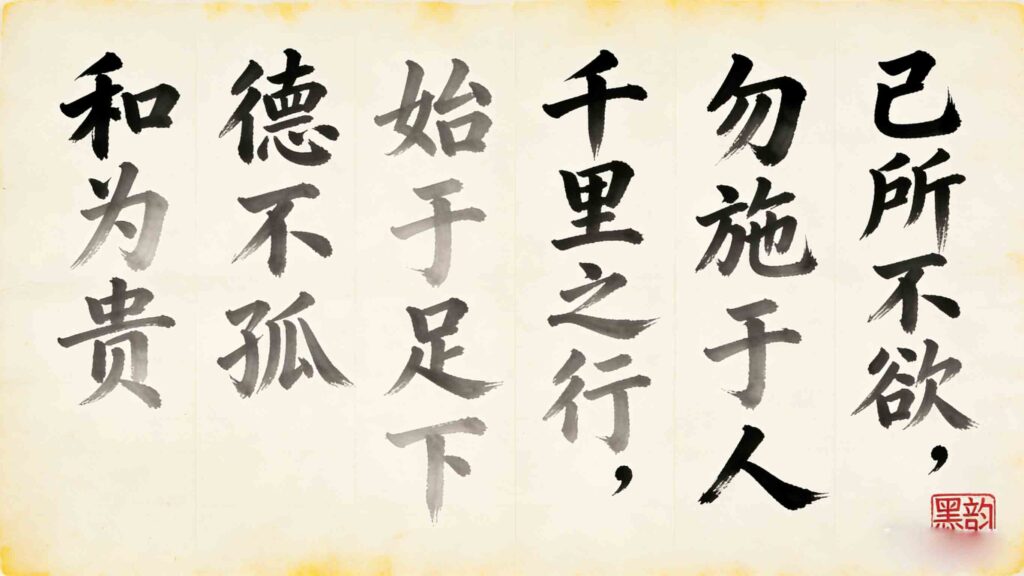
Chinese idioms (called chengyu) are mostly four-character phrases. They come from old stories, history, and books. They are not just casual words. They have deep meanings. This matters when we count the total number of Chinese idioms. We only count standard, widely used phrases.
How Many Chinese Idioms Are There?
The honest answer is a range, not one fixed number. The Ministry of Education’s focused Dictionary of Chinese Idioms ebook presents about 1,500 main entries. At the other end, a large Chinese-English idiom dictionary reported more than 50,000 entries because it uses a much broader scope.
Those figures are not contradictory. Counts change when a dictionary includes variant forms, rare historical expressions, colloquial set phrases, or only entries with detailed source notes. A learner should therefore ask “which collection and which definition?” before treating any total as definitive.
For a practical starting point, use a curated common-idiom list and learn each phrase with its meaning, context, and example sentence. A smaller usable vocabulary is more valuable than memorizing an unsupported headline number.
What Counts as a Chinese Idiom?
The word chengyu is often translated as “Chinese idiom,” but collections do not always draw the boundary in the same place. The familiar classroom definition emphasizes compact, fixed expressions, commonly four characters long, whose full meaning cannot be understood by translating each character separately. Many of these expressions point to a classical text, historical event, fable, or earlier saying.
A narrow dictionary may select only well-established entries and provide a source, explanation, usage notes, and examples for each one. A broad dictionary may also include alternate written forms, closely related expressions, rare historical phrases, longer set sayings, and entries that overlap with proverbs or colloquial idioms. Two responsible editors can therefore publish very different totals without either total being a mistake.
Why Dictionary Counts Cannot Be Added Together
Dictionary totals describe the editorial scope of each collection, not separate piles of expressions. The same idiom may appear in several dictionaries, and one source may treat a variant as a separate headword while another lists it under the main form. Adding the totals would count many entries more than once.
Publication date also matters. Editors revise definitions, add newly documented forms, merge duplicates, or change which expressions qualify for the main text. That is why a precise-looking statement such as “Chinese has exactly 20,000 idioms” should be treated cautiously unless it names the dictionary, edition, and inclusion rules.
Which Number Is Useful for a Learner?
For a beginner, the useful number is not the size of the largest archive. It is the size of a learnable set that matches the learner’s goals. A child reading graded stories, an advanced student preparing for an exam, and a translator studying classical literature need different lists.
- Start with recognition: learn common idioms that appear in school texts, news, and everyday writing.
- Add context: record the tone, suitable subject, and one natural sentence instead of memorizing an English gloss alone.
- Group related meanings: compare idioms about learning, effort, caution, relationships, or animals so their usage boundaries become clearer.
- Review by retrieval: try to choose an idiom for a situation before looking at the answer.
This approach turns the large dictionary range into a practical study plan. The total count remains interesting, but accurate use is the better measure of progress.
How to Read an Idiom Dictionary Total
Before quoting a number, look at the collection’s introduction or editorial notes. Four questions usually explain the total: Does it count only main entries? Are variant spellings separate? Are proverbs and colloquial fixed phrases included? Does every entry require a traceable classical source? A number without those details is a description of little practical value.
The Ministry of Education reference is a useful example of a selective collection because each main entry is developed with interpretation and source information. A much larger bilingual collection answers a different need: broad coverage for lookup and translation. The smaller figure should not be read as the total number that exists, and the larger figure should not be read as the number commonly used by one speaker.
Search results often repeat rounded figures such as 5,000, 20,000, or 50,000 without naming the edition behind them. When a page does not identify its source or counting rule, use the figure as a rough orientation only. For schoolwork, research, or publication, cite the named dictionary and describe its scope instead of presenting the number as a universal fact.
A Simple Example of Why Counts Diverge
Imagine that three reference works all include the same well-known idiom. The first gives one main headword and places alternate forms underneath it. The second creates separate searchable entries for the main form and two variants. The third includes the main form, variants, a related proverb, and an older phrase from the source story. All three help readers, but the first records one item while the third may add five items to its published total.
Digital databases add another complication. A search interface may expose pronunciation records, cross-references, variant characters, and source quotations as separate results even though editors do not call every result a separate idiom. A search-result count is therefore not always the same as the number of main dictionary entries.
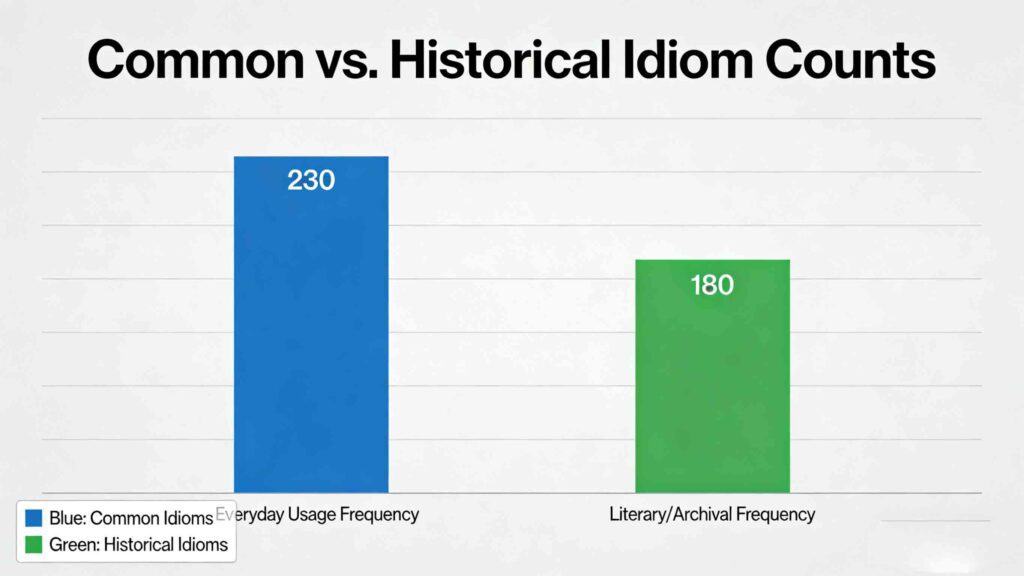
This is also why “commonly used” needs a defined corpus. An idiom may be common in school textbooks but rare in conversation, frequent in newspapers but unusual in children’s stories, or familiar in one region while less familiar elsewhere. Usage frequency and dictionary inclusion answer different questions.
Checklist Before You Quote a Total
- Name the dictionary or database rather than writing “experts say.”
- Check the edition or update date because online collections can change.
- Separate main entries from variants and cross-references when the source provides that distinction.
- Do not treat “known by an educated speaker” as the same measure as “listed in a historical dictionary.”
- Use a range when comparing collections with different editorial scopes.
With those checks, the question becomes easier to answer accurately: Chinese has a very large idiom tradition, but any precise total belongs to a named collection and a stated counting method.
For readers comparing English-language websites, translation choices create one more source of variation. Some writers use “idiom” only for chengyu, while others use it for proverbs, sayings, and fixed expressions together. Check whether the original Chinese category is identified before comparing two English totals. A clear label is more informative than a larger number.
Why This Number Matters
Knowing the scale of Chinese idioms helps learners. You don’t need to learn all of them. Even 100 common idioms make your Chinese better. Idioms add color to your speech and writing. They also show Chinese culture. Each idiom tells a small story from the past.
How to Learn Chinese Idioms
After understanding the total number of Chinese idioms, you can start learning:
- Start with the 500 most used idioms. They appear in 90% of daily life.
- Learn the story behind each idiom. It makes the meaning easier to remember.
- Practice using idioms in sentences. This stops you from using them wrong.
You don’t need to know all 20,000+ idioms to speak good Chinese.

Questions About the Idiom Count
Why do Chinese idiom totals vary so much?
Different dictionaries include different combinations of core chengyu, variants, rare historical forms, and related fixed expressions.
Do learners need to memorize thousands of idioms?
No. Start with common idioms and learn how each one works in a sentence before expanding the list.
Are all Chinese idioms four characters long?
Many famous chengyu have four characters, but fixed idiomatic expressions can be shorter or longer depending on the reference and classification.
Final Thoughts on How Many Chinese Idioms Are There
In the end, this question is less about a precise number.. It’s more about the culture behind the phrases. Whether it’s 20,000 or 50,000, these idioms connect Chinese speakers across time. For learners, the journey of learning idioms is more important than the final count.