A Chinese idioms dictionary is more than a reference book. It is a key to unlocking the wisdom and beauty of the Chinese language. Whether you are a language learner, a writer, or a culture enthusiast, a reliable reference helps you understand, use, and appreciate chengyu. This guide explores how such a resource can enhance your language skills. It also covers what to look for in the best dictionaries.
Quick Answer: What Can You Look Up Here?
This Chinese idioms dictionary is for looking up chengyu meanings, pinyin, literal images, story notes, and example usage. It works best as a learning doorway: find the phrase first, then read the story or example page that explains when to use it.
Basic Facts for This Search
| Page role | Chinese idioms dictionary and learning hub |
| Lookup needs | Meaning, pinyin, literal image, story note, and example use |
| Best next step | Open a specific idiom page after scanning the dictionary |
| Common mistake | Treating a one-line translation as the full meaning |
How to Use the Dictionary Without Losing the Story
A dictionary is useful for quick lookup, but chengyu often need more than one translation line. After finding an idiom, check the literal image and the example context. That extra step helps prevent unnatural usage and makes the phrase easier to remember.
For learners, a practical routine is lookup, story, example, then review. First identify the Chinese characters and pinyin. Then read the short story or cultural note. Finally, write one plain English situation where the idiom would fit. This turns the dictionary from a list into a study tool.
After using the dictionary, continue with Chinese four-character idioms, Chinese idiom stories collection, Chinese chengyu stories.
How to use this page
Use this page as a lookup doorway. First identify the phrase, then check pinyin, literal image, story note, and example use. A dictionary result is strongest when it points the learner toward context instead of leaving the idiom as a one-line English translation.
For quick study, choose one idiom and write four notes: characters, pinyin, literal picture, and plain meaning. Then add one real situation where the phrase would sound natural. This method keeps the dictionary useful for beginners, children, parents, teachers, and independent readers.
When comparing entries, pay attention to tone. Some idioms praise effort, some criticize foolish action, and some describe a situation neutrally. A good dictionary page should make that difference visible so readers do not use a phrase in the wrong emotional context.
Frequently Asked Questions
What should a Chinese idioms dictionary include?
It should include Chinese characters, pinyin, literal image, English meaning, story context, and example usage.
Is one English translation enough?
Usually no. Chengyu often carry context and tone that a short translation cannot fully show.
How should beginners use this dictionary?
Start with common idioms, read the story behind each one, and practice one simple example sentence.
Why a Chinese Idioms Dictionary Matters
chengyu are four-character phrases. They carry deep historical and cultural meaning. this resource does more than define words. It:
- Explains the origin and story behind each idiom.
- Shows how to use the phrase in real sentences.
- Highlights subtle differences between similar idioms.
- Bridges the gap between literal translation and true cultural context.
For anyone learning Chinese, this type of dictionary is an indispensable tool.
Key Features of a Great Chinese Idioms Dictionary
Not all dictionaries are the same. Look for these features when choosing a Chinese idioms dictionary:
1. Clear Pinyin and Pronunciation Guide
A top reference provides accurate Pinyin. It also includes tone marks for each character. This helps you pronounce the idiom correctly.
Example:
- 一针见血 (yī zhēn jiàn xiě)
- Pinyin: yī zhēn jiàn xiě
- Tone: 1-1-4-4
2. Detailed Origin Stories
A strong entry shares the historical context of each phrase. It tells you where the idiom came from. This makes learning more memorable.
Example:
- 亡羊补牢 (wáng yáng bǔ láo)
- Origin: A story from ancient China. A farmer loses sheep. He fixes the pen to stop more losses.
- Meaning: It is never too late to correct a mistake.
3. Practical Example Sentences
A useful Chinese idioms dictionary gives real-world examples. It shows how to use the idiom in daily conversation or writing.
Example:
- 天衣无缝 (tiān yī wú fèng)
- Sentence: His explanation was tiān yī wú fèng. No one could find a flaw in his logic.
4. Part of Speech and Usage Notes
A good Chinese idioms dictionary labels the function of each idiom. It notes if it is a verb, adjective, or adverb. It also warns about common mistakes.
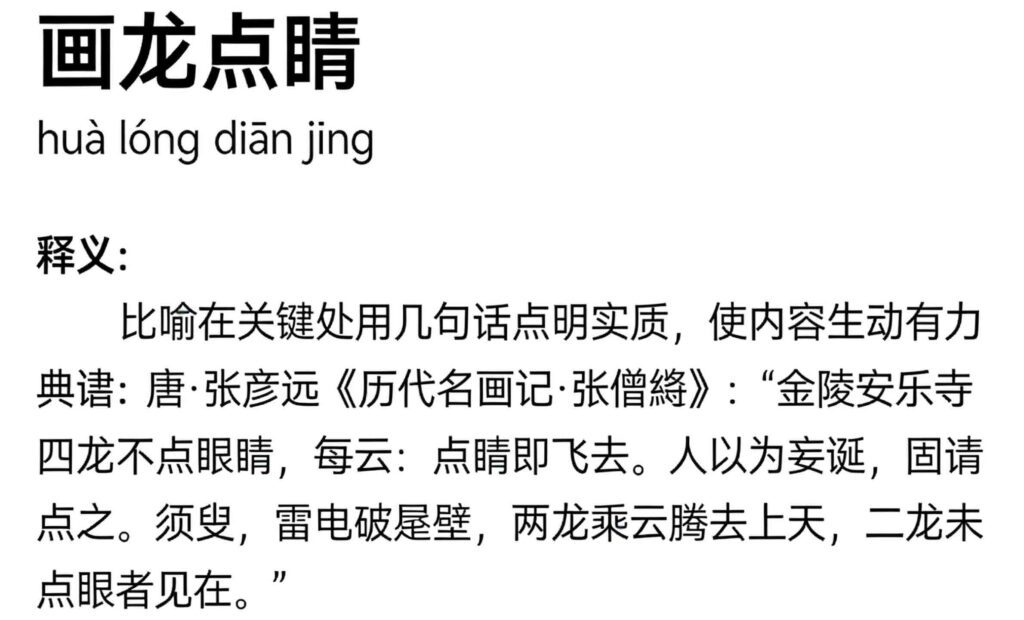
How to Use a Chinese Idioms Dictionary Effectively
Using this resource is simple. Follow these steps:
- Look up the idiom by characters or Pinyin.
- Read the definition and origin story.
- Study the example sentences.
- Practice using the idiom in your own sentences.
- Review regularly to build your vocabulary.
It is not just for looking up words. It is a tool for active learning.
After the lookup step, pause before moving to the next image or entry. A useful dictionary habit is to test whether the phrase can be explained without copying the same wording. If the learner can name the literal picture, the plain meaning, and one suitable situation, the entry has become usable knowledge rather than a decorative translation.

Top Recommendations for Chinese Idioms Dictionaries
Here are trusted options for a reliable Chinese idioms dictionary:
1. Online Dictionaries
- CC-CEDICT: A free online dictionary. It offers basic definitions and Pinyin.
- Pleco: A popular app. It includes a comprehensive Tool with audio pronunciations.
- MDBG: Another free online tool. It provides clear entries and example sentences.
2. Print Dictionaries
- The Hanyu Da Cidian: A classic print resource. It is authoritative and detailed.
- A Chinese-English Dictionary of Idioms: A bilingual option. It is great for English speakers.
Conclusion: Master Chengyu with a Chinese Idioms Dictionary
This resource is your gateway to mastering chengyu. It helps you understand the stories behind the phrases. It also teaches you how to use them naturally. With a good one, you can speak and write Chinese with more depth and elegance. Start exploring this resource today. Unlock the rich culture of the Chinese language.
For authoritative background on chengyu and their cultural roots, refer to the comprehensive entry on Chengyu on Wikipedia.
Unlock advanced chengyu learning with our premium resource: Mastering Chengyu: A Complete Guide.