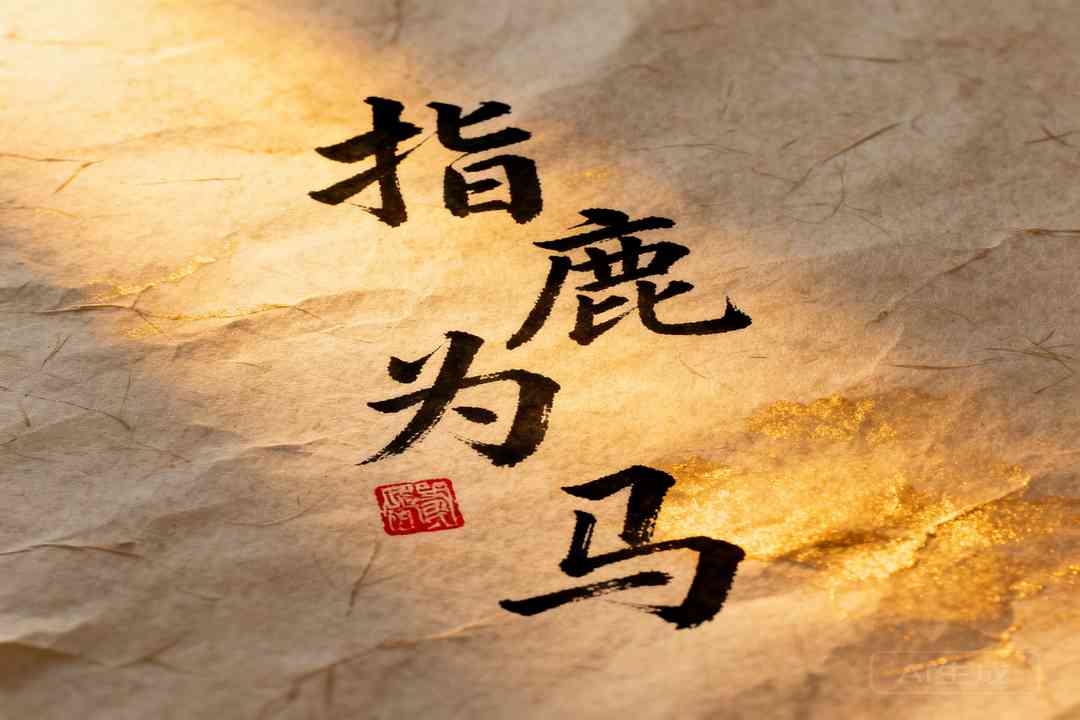
指鹿为马 (zhi lu wei ma idiom).
The zhi lu wei ma idiom (指鹿为马) stands as one of the most powerful and enduring expressions in the Chinese language.
指鹿为马 (zhi lu wei ma idiom).
Translating literally to “pointing at a deer and calling it a horse,” this four-character idiom carries profound historical weight
and continues to resonate in modern Chinese society.
指鹿为马 (zhi lu wei ma idiom).
The phrase encapsulates the deliberate distortion of truth, the forced agreement with falsehood, and the testing of loyalty through impossible demands.
指鹿为马 (zhi lu wei ma idiom).
Zhi Lu Wei Ma Idiom When someone “points at a deer and calls it a horse,” they are not merely making a mistake—they are forcing
others to accept a glaring untruth, often as a means of testing obedience or consolidating power.
指鹿为马 (zhi lu wei ma idiom).
Originating from one of the most tumultuous periods in Chinese history, the Qin Dynasty, the zhi lu wei ma idiom
emerged from a legendary episode involving the infamous eunuch Zhao Gao and the second emperor of Qin.
This story has been told and retold for over two thousand years, serving as a warning against tyranny, sycophancy, and the corruption of truth.
Today, the idiom appears frequently in Chinese literature, political discourse, and everyday conversation, making it essential for
anyone seeking to understand Chinese culture and the Chinese mind.
In the following article, we will explore the origins, meanings, usage, and contemporary relevance of this fascinating idiom.
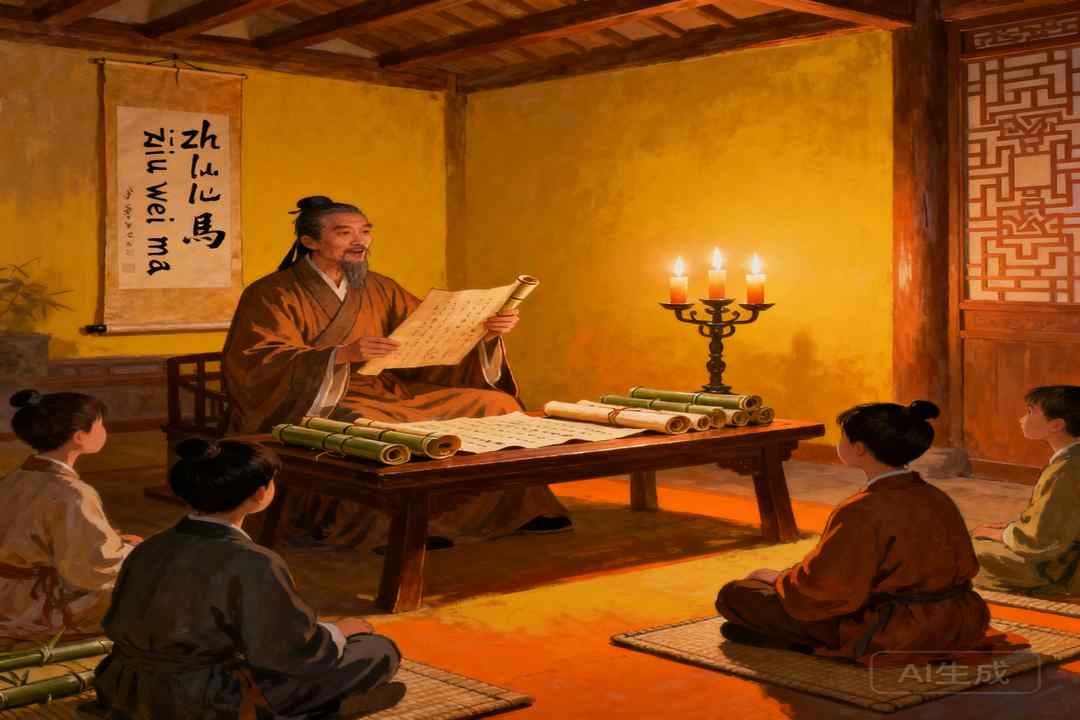
The Story Behind zhi lu wei ma idiom
The zhi lu wei ma idiom finds its roots in the closing years of the Qin Dynasty (221–206 BCE), a period marked by
political intrigue, brutal repression, and the eventual collapse of China’s first unified imperial dynasty.
The story centers on Zhao Gao (赵高), a castrated court official who rose to become the de facto ruler of Qin during the reign of
the second emperor, also known as Qin Er Shi.
Zhao Gao was a master manipulator who gradually seized power by eliminating rivals, controlling the emperor, and terrorizing the court with ruthless efficiency.
According to the historical account recorded in Sima Qian’s “Records of the Grand Historian” (史记), Zhao Gao orchestrated a
infamous test to determine which officials in the court were loyal to him and which might pose a threat.
One day, Zhao Gao presented a deer to the emperor in the presence of all the court officials.
However, when he presented the animal, he deliberately called it a horse, rather than a deer.
The second emperor, who was largely a puppet under Zhao Gao’s control, laughed and told Zhao Gao that he was mistaken—that what he was holding was clearly a deer.
However, when he presented the animal, he deliberately called it a horse, rather than a deer.
Zhao Gao then turned to the assembled officials and asked them to confirm whether the animal was a deer or a horse.
Faced with this bizarre and terrifying situation, the officials were forced to make a choice.
Those who respected the truth and said it was a deer were later persecuted and executed by Zhao Gao.
Those who obeyed Zhao Gao’s obvious falsehood and called it a horse were rewarded with promotions and favor.
In this way, Zhao Gao identified his allies and enemies, consolidating his power by testing who would bow to his will, even when the truth was plainly visible to all.
Those who obeyed Zhao Gao’s obvious falsehood and called it a horse were rewarded with promotions and favor.
The zhi lu wei ma idiom thus commemorates this pivotal moment in Chinese history, when truth itself became a casualty of political power games.
It serves as a reminder of the dangers of unchecked authority and the moral compromises that sycophants make when they abandon truth to appease those in power.
What zhi lu Wei Ma Idiom Really Means
At its core, the zhi lu wei ma idiom describes the act of deliberately confusing or reversing the truth—calling something what it clearly is not.
However, the idiom carries several layers of meaning that extend beyond the simple distortion of facts.
First and foremost, the idiom refers to the testing of loyalty through impossible demands.
In the original story, Zhao Gao was not merely making a mistake; he was forcing officials to declare their allegiance by asking them to affirm an obvious lie.
First and foremost, the idiom refers to the testing of loyalty through impossible demands.
Those who complied demonstrated their willingness to serve the powerful regardless of truth, while those who refused showed independent thinking that could pose a threat.
First and foremost, the idiom refers to the testing of loyalty through impossible demands.
This aspect of the idiom emphasizes the sinister nature of power tests that demand blind obedience.
Secondly, the idiom describes the behavior of a tyrant or manipulator who distorts reality to serve their own purposes.
When someone uses the zhi lu wei ma idiom, they are often accusing another person of deliberately turning black
into white, of refusing to acknowledge obvious facts, or of forcing others to accept falsehoods.
Secondly, the idiom describes the behavior of a tyrant or manipulator who distorts reality to serve their own purposes.
The idiom captures the essence of propaganda and psychological manipulation, where the truth becomes secondary to the exercise of power.
Secondly, the idiom describes the behavior of a tyrant or manipulator who distorts reality to serve their own purposes.
Thirdly, the idiom can describe the behavior of those who blindly follow authority, even when they know the truth.
In Chinese discourse, the term is sometimes applied to sycophants and flatterers who abandon their conscience to gain favor with the powerful.
Thirdly, the idiom can describe the behavior of those who blindly follow authority, even when they know the truth.
By calling a deer a horse, they demonstrate their willingness to sacrifice truth for personal gain.
Finally, the idiom has evolved to represent broader themes of social responsibility and moral courage.
To “refuse to point at a deer and call it a horse” has become a phrase meaning to stand up for truth, to refuse to be coerced into
accepting lies, and to maintain one’s integrity in the face of pressure.
Finally, the idiom has evolved to represent broader themes of social responsibility and moral courage.
The idiom thus carries both negative connotations (describing those who distort truth) and positive ones (praising those who resist such distortion).
Finally, the idiom has evolved to represent broader themes of social responsibility and moral courage.
How to Use zhi lu Wei Ma Idiom in Conversation
The zhi lu wei ma idiom is a versatile expression that appears frequently in both formal and informal Chinese contexts.
Understanding how to use it correctly requires knowledge of its grammatical patterns and the situations in which it is appropriately applied.
In modern Chinese, the idiom is typically used as a whole unit and can function as a subject, object, or predicate in a sentence.
Here are some common usage patterns:
When describing someone who deliberately distorts truth, you might say: “他经常指鹿为马混淆是非” (He often confuses right and wrong by calling a deer a horse).
This usage emphasizes the person’s habit of reversing truth and falsehood.
When criticizing sycophantic behavior, you could say: “那些指鹿为马的人,只会讨好权贵” (Those who call a deer a horse only know how to flatter the powerful).
This highlights the link between the idiom and flattery.
When praising someone for standing up for truth, you might use a negative construction: “他不愿指鹿为马,坚持说出真相” (He refused to call a deer a horse and insisted on telling the truth).
This positive usage celebrates moral courage.
The idiom is also commonly used in political commentary and criticism.
Journalists and commentators might describe certain government policies as “指鹿为马” when they believe the authorities are
deliberately misrepresenting facts or trying to force the public to accept obvious falsehoods.
The idiom is also commonly used in political commentary and criticism.
In literature and art, the zhi lu wei ma idiom frequently appears in discussions of historical themes,
particularly when analyzing the nature of power and the behavior of tyrants.
Films, television dramas, and novels set in the Qin Dynasty often reference this story to illustrate the moral corruption of the period.
Why zhi lu Wei Ma Idiom Matters Today
Despite being over two thousand years old, the zhi lu wei ma idiom remains highly relevant in contemporary Chinese society.
Its continued use reflects the enduring nature of the themes it addresses: the struggle between truth and power, the temptation of
sycophancy, and the importance of moral courage.
In modern China, the idiom appears frequently in discussions about political integrity, media responsibility, and social ethics.
When citizens criticize what they perceive as government misinformation or media bias, they often invoke the story of Zhao Gao and the deer to illustrate their point.
In modern China, the idiom appears frequently in discussions about political integrity, media responsibility, and social ethics.
The idiom serves as a powerful shorthand for describing any situation where those in power demand that obvious falsehoods be accepted as truth.
In modern China, the idiom appears frequently in discussions about political integrity, media responsibility, and social ethics.
The story behind the idiom also serves as a cautionary tale about the dangers of absolute power.
Zhao Gao’s manipulation of the Qin emperor is often cited in discussions about the need for checks on authority and the importance of an independent judiciary and free press.
The story behind the idiom also serves as a cautionary tale about the dangers of absolute power.
By invoking the zhi lu wei ma idiom, Chinese citizens can engage in subtle criticism of contemporary power structures while appearing to discuss only ancient history.
The story behind the idiom also serves as a cautionary tale about the dangers of absolute power.
In the business world, the idiom finds application in discussions about corporate ethics and leadership.
Managers who demand that employees accept obviously flawed decisions or who punish those who speak truth to power may be accused of “指鹿为马” behavior.
In the business world, the idiom finds application in discussions about corporate ethics and leadership.
The idiom thus serves as a moral compass for evaluating leadership quality and organizational culture.
On a personal level, the zhi lu wei ma idiom encourages reflection on one’s own moral choices.
In everyday life, people often face situations where speaking the truth might bring personal disadvantage, while going along with falsehood might bring benefit.
On a personal level, the zhi lu wei ma idiom encourages reflection on one’s own moral choices.
The story of Zhao Gao’s deer invites individuals to consider where they stand on the spectrum between truth and expedience.
Related Idioms
The Chinese language contains several idioms that share thematic connections with the zhi lu wei ma idiom.
Understanding these related expressions can provide deeper insight into Chinese cultural values and historical experiences.
The idiom 颠倒黑白 (diān dǎo hēi bái), meaning “to reverse black and white,” is perhaps the closest in meaning to
“zhi lu wei ma.” Both expressions describe the deliberate distortion of truth, though “颠倒黑白” focuses more generally on confusing
right and wrong, while “zhi lu wei ma” specifically invokes the image of forcing others to accept a blatant lie.
趋炎附势 (qū yán fù shì), meaning “to curry favor with the powerful,” describes the behavior of those who abandon their principles to gain favor with those in authority.
This idiom is closely related to the zhi lu wei ma idiom because it describes the mindset of those who would call a deer a horse—they prioritize personal advancement over truth.
指桑骂槐 (zhǐ sāng mà huái), meaning “to scold the mulberry tree while meaning the Locust tree,” describes indirect
criticism or veiled accusations.
While not directly related in meaning, this idiom shares the storytelling tradition of using concrete images to convey abstract moral lessons.
明哲保身 (míng zhé bǎo shēn), meaning “to stay out of trouble by being wise,” describes the strategy of avoiding involvement in controversial matters to protect oneself.
This idiom presents the opposite moral stance to that encouraged by the zhi lu wei ma idiom—where “明哲保身” advises
staying silent, the story of Zhao Gao’s deer celebrates those who dare to speak the truth.
What does 指鹿为马 mean in plain English?
指鹿为马 means something specific in everyday English and describes a particular life situation.
The idiom is commonly used in Chinese and English to describe a common experience or behavior.
Understanding it adds depth to cultural communication.
How do you use 指鹿为马 in a sentence?
You can naturally say: He was accused of 指鹿为马 when he copied the competitor strategy without adapting it. This sentence shows the idiom used in a realistic business context.
What is the literal meaning of 指鹿为马?
Literally, 指鹿为马 consists of four Chinese characters.
Each character carries specific meaning that together forms the idiomatic expression.
The literal image adds cultural richness to the expression.
But the user wrote each Q on its own line and answer as a paragraph. So follow that. Thus final output:
One Last Thing
The zhi lu wei ma idiom endures as more than just a colorful historical phrase—it represents a profound moral lesson that transcends time and culture.
The image of a powerful figure holding a deer while demanding that it be called a horse remains a potent symbol of the struggle between truth and power that continues to play out in societies around the world.
As you encounter this idiom in Chinese texts, conversations, or media, take a moment to appreciate its depth.
Behind these four simple characters lies a story of ancient betrayal, a warning about the corruption of power, and an invitation to reflect on the nature of truth and courage.
As you encounter this idiom in Chinese texts, conversations, or media, take a moment to appreciate its depth.
Whether you are studying Chinese language, exploring Chinese history, or simply seeking to understand the values that shape
Chinese culture, the zhi lu wei ma idiom offers valuable insight into the Chinese understanding of morality,power, and integrity.
As you encounter this idiom in Chinese texts, conversations, or media, take a moment to appreciate its depth.
In a world where the line between truth and falsehood sometimes seems increasingly blurred, the ancient tale of the deer and the
horse serves as a timeless reminder: that calling something what it is not may win short-term favor, but it ultimately leads to
destruction—for both the deceiver and those who enable the deception.
Ci Di Wu Yin Idiom Nan Ke Yi Meng Idiom De Guo Qie Guo Idiom Wikipedia