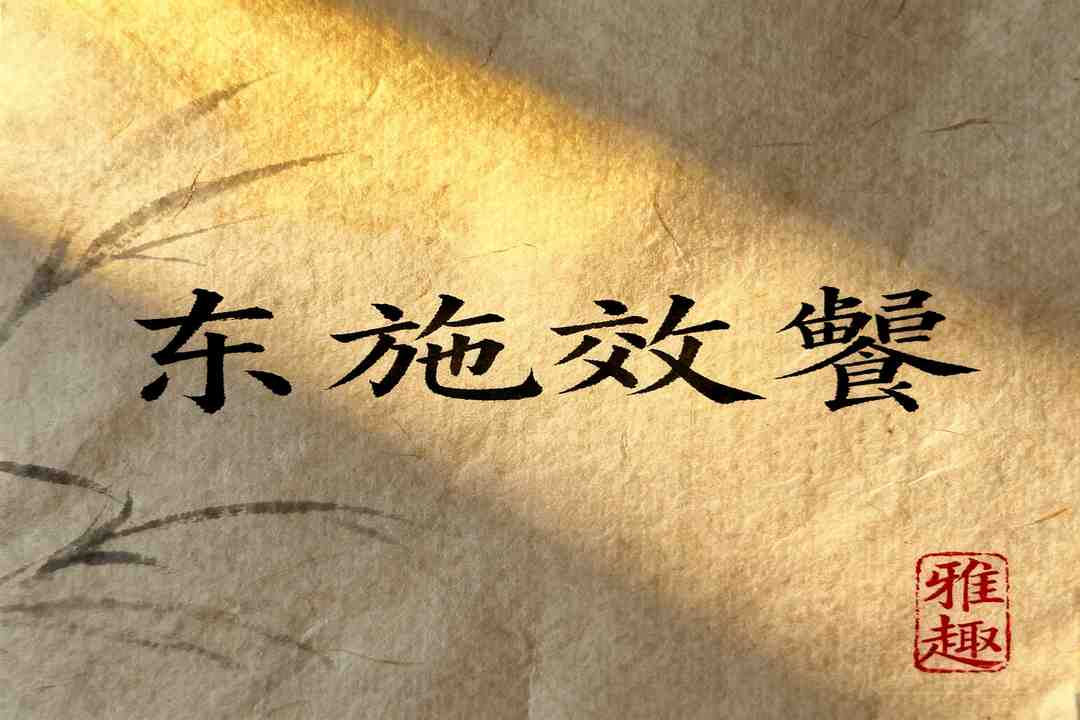
东施效颦 (dong shi xiao pin idiom).
The dong shi xiao pin idiom, known in Chinese as 东施效颦 (Dōngshī xiàopín), is a classic four‑character proverb that
describes the act of blindly copying someone else’s mannerisms or style without understanding the underlying cause, often
resulting in an even worse effect.
东施效颦 (dong shi xiao pin idiom).
The idiom appears in classical Chinese texts and has survived centuries of usage, becoming a staple in both literary and everyday
language.
东施效颦 (dong shi xiao pin idiom).
Dong Shi Xiao Pin Idiom Its story, nuance, and relevance continue to offer insight into Chinese cultural values of authenticity
and subtlety, making it a fascinating subject for language learners, historians, and anyone interested in the interplay between
appearance and essence.
东施效颦 (dong shi xiao pin idiom).
In contemporary Mandarin, 东施效颦 is often invoked to criticize a superficial imitation—be it in fashion, business strategy, or
personal behavior—when the imitator lacks the original’s natural charisma or context.
The phrase can be used as a noun (“那是东施效颦”) or as a verb (“他在东施效颦”).
Beyond its literal meaning, the idiom serves as a cultural reminder that true elegance cannot be counterfeited; it must arise from
genuine self‑understanding.
The phrase can be used as a noun (“那是东施效颦”) or as a verb (“他在东施效颦”).
In the sections that follow, we will explore the ancient origin of the story, unpack its semantic layers, show how it is employed
in modern conversation, and discuss why it remains pertinent today.
The phrase can be used as a noun (“那是东施效颦”) or as a verb (“他在东施效颦”).
Dong Shi Xiao Pin Idiom We will also look at related idioms and end with a brief reflection on the enduring value of this proverb.

The Story Behind dong shi xiao pin idiom
The narrative that gives rise to the idiom is recorded in the ancient philosophical work *Zhuangzi*, specifically in the “Outer
Chapters” (外篇), chapter “天地” (Heaven and Earth).
According to the text, there lived a famed beauty named Xishi (西施) from the state of Yue.
Xishi suffered from a heart condition that made her frequently press a hand to her chest and furrow her brows when she felt pain.
Dong Shi Xiao Pin Idiom Far from diminishing her attractiveness, this subtle frown was thought to enhance her charm, and the
people of her village found her even more captivating when she displayed that tender, pain‑laden expression.
Xishi suffered from a heart condition that made her frequently press a hand to her chest and furrow her brows when she felt pain.
In the same village resided a woman known as Dongshi (东施), whose appearance was considered Plain—some sources describe her as
“ugly” (丑).
Observing the admiration that Xishi’s modest frown elicited, Dongshi decided to imitate the look.
She copy‑cated Xishi’s hand‑to‑chest gesture and knit her eyebrows in the same way, believing that such a display would make her
appear more beautiful.
Observing the admiration that Xishi’s modest frown elicited, Dongshi decided to imitate the look.
The result, however, was quite the opposite: the villagers were startled by her exaggerated and clumsy imitation, and many avoided
her altogether.
Observing the admiration that Xishi’s modest frown elicited, Dongshi decided to imitate the look.
The story concludes with the saying that Dongshi’s attempt at “效颦” (xiào pín, “imitating the frown”) only succeeded in
highlighting her lack of natural grace.
Observing the admiration that Xishi’s modest frown elicited, Dongshi decided to imitate the look.
The original passage in *Zhuangzi* (translation) reads: “西子病心而颦其里,里之丑人见而美之,归亦捧心而颦其里。” This succinct line captures both the
admiration for Xishi’s subtle distress and the comic failure of Dongshi’s blind replication.
Over time, the phrase “东施效颦” entered the lexicon as a cautionary tale about superficial copying.
What dong shi xiao pin idiom Really Means
At its core, dong shi xiao pin denotes a futile or even counterproductive imitation.
The four characters break down as follows:
- 颦 (pín) – “to knit the eyebrows,” a subtle frown often associated with Xishi’s delicate pain.
Literally, the idiom translates to “Dongshi imitates Xishi’s frown.” Figuratively, it conveys the idea that imitating a person’s
superficial gestures without grasping the underlying context or personal qualities can backfire, making the imitator appear even
more ridiculous.
The idiom carries several nuanced usages:
- Criticism of blind mimicry – When someone copies a trend, a style, or a behavior without understanding why it works for the original, they are said to be “东施效颦.”
- Self‑deprecating humor – A person may acknowledge a clumsy attempt at elegance by saying, “我不过是东施效颦罢了,” (“I’m just doing a Dongshi Xiaopin”).
- Moral lesson – In literature and teaching, the phrase serves as a reminder that authenticity trumps imitation; true beauty or skill cannot be replicated through surface tricks.
Because the idiom emphasizes the gap between appearance and essence, it is frequently invoked in discussions of art, fashion,
management, and even personal development.
The underlying message is that genuine effectiveness stems from inner substance, not from copying external forms.
How to Use dong shi xiao pin idiom in Conversation
In modern Chinese, dong shi xiao pin is versatile.
Below are some typical patterns and example sentences that illustrate its practical use:
Formal / Literary Context
*“His引用 of an ancient story in the speech turned out to be a Dongshi Xiaopin.”*
Everyday Criticism
*“She’s copying that celebrity’s makeup; it’s a classic case of Dongshi Xiaopin.”*
Self‑Deprecation
*“When I first tried on traditional Han clothing, my friends joked that I was doing Dongshi Xiaopin.”*
Social Media Slang
*“The uploader’s performance in this video is pure Dongshi Xiaopin—nothing original.”*
When employing the idiom, tone matters.
In a light‑hearted conversation, it can be used with a smile; in a more serious critique, it can carry a sharper edge.
Speakers often pair it with “简直是” (simply) or “不过是” (merely) to stress the futility of the imitation.
Why dong shi xiao pin idiom Matters Today
The relevance of dong shi xiao pin extends far beyond its ancient origins.
In an era characterized by rapid globalization, cross‑cultural exchange, and digital amplification, the warning against
superficial copying has taken on new dimensions.
The relevance of dong shi xiao pin extends far beyond its ancient origins.
- Cultural Imitation vs. Cultural Appreciation
With the spread of K‑pop, Hollywood movies, and Western fashion, many young people in China try to emulate foreign styles. The idiom reminds them that genuine appreciation involves understanding the cultural context, not merely replicating the outward look. When the imitation lacks depth, it can be labeled as “东施效颦”—a superficial copy that may provoke ridicule rather than admiration.
- Business and Innovation
In the corporate world, companies often study successful rivals and attempt to replicate their strategies. While learning from competitors is valuable, blind copying without considering internal capabilities can lead to failure. Chinese business commentators frequently use the idiom to caution against “盲目模仿” (blind imitation) and to advocate for “创新” (innovation) grounded in one’s own strengths.
- Education and Language Learning
Students studying Chinese as a second language encounter 东施效颦 in textbooks and exam materials. The idiom serves as a vehicle for teaching not only vocabulary but also cultural values such as authenticity (真诚) and the importance of “内在” (inner quality) over “外在” (external appearance). Its inclusion in the HSK (Hanyu Shuiping Kaoshi) level 5 vocabulary list underscores its significance.
- Social Media and Internet Culture
On platforms like Weibo and Douyin, users quickly label viral trends that lack originality as “东施效颦.” The term functions as a concise critique, urging creators to inject personal flavor rather than churn out derivative content. This modern usage keeps the idiom alive in everyday conversation, especially among younger generations.
- Political and Policy Transfer
Occasionally, policymakers adopt foreign reforms without adapting them to local conditions. Critics may describe such efforts as “东施效颦,” suggesting that the policy lacks the necessary contextual grounding and may backfire. This demonstrates the idiom’s adaptability to contemporary issues beyond the realm of personal style.
In sum, the proverb endures because it addresses a universal human tendency: the temptation to imitate what appears successful
without investigating the underlying reasons.
Its continued presence in literature, education, media, and daily discourse proves that the lesson of Dongshi remains as pertinent
today as it was over two millennia ago.
Related Idioms
Several other Chinese idioms convey similar warnings about imitation or excess, each with its own flavor:
- 邯郸学步 (Hándān xué bù) – “Learn to walk in Handan.” Originates from a story about a man who, after observing the sophisticated gait of people in the city of Handan, tried to mimic it and ended up forgetting his own way of walking. It emphasizes the risk of losing one’s original abilities while trying to adopt new ones.
- 画蛇添足 (Huà shé tiān zú) – “Draw a snake and add feet.” This idiom criticizes unnecessary embellishment that ruins an already complete work. While it warns against over‑addition, it shares the broader theme of misguided modification.
- 盲目模仿 (Máng mó fǎng) – “Blind imitation.” A straightforward phrase used to describe copying without understanding, often employed in modern discourse about technology and trends.
- 因地制宜 (Yí dì zhì yí) – “Adapt measures to local conditions.” This proverb promotes contextual adaptation, the opposite of the blind copying that 东施效颦 warns against.
- 拾人牙慧 (Shí rén yá huì) – “Pick up others’ leftover words.” It describes someone who repeats another’s ideas without original thought, a close cousin to Dongshi’s imitation.
Each of these idioms highlights a distinct facet of the imitation dilemma, but they all converge on the principle that genuine
effectiveness stems from understanding, not mere replication.
One Last Thing
The story of Dongshi reminds us that authenticity is a quality that cannot be forged by superficial copying.
Whether in art, business, or personal style, the most compelling expressions arise from a deep awareness of one’s own strengths
and limitations.
The story of Dongshi reminds us that authenticity is a quality that cannot be forged by superficial copying.
As you encounter new trends or consider adopting external practices, pause and ask: *Am I understanding the essence, or am I
merely “效颦”?* By keeping the lessons of the dong shi xiao pin idiom in mind, we can cultivate a more thoughtful approach to
imitation—one that honors the original while preserving our own unique voice.
The story of Dongshi reminds us that authenticity is a quality that cannot be forged by superficial copying.
Ye Gong Hao Long Idiom Chinese Idioms And Proverbs Pdf Famous Chinese Idioms And Stories Wikipedia